A bite can look acceptable in the mirror yet feel wrong every time you chew. You may avoid one side of your mouth, struggle with a denture that lifts during meals, notice a crown hitting first, or wake with sore jaw muscles. If you are researching how to improve bite alignment, the answer is rarely a quick adjustment made in isolation. A stable result starts with understanding why your teeth no longer meet comfortably.
Your bite, also called occlusion, is the relationship between your upper and lower teeth when you close, chew and move your jaw. It is shaped by the teeth themselves, the supporting bone, the jaw joints, muscles, existing restorations and, where teeth are missing, the spaces left behind. Improving it requires careful planning because changing one part can affect the whole system.
What an unbalanced bite can feel like
Bite problems do not always cause sharp pain. More often, they appear as small but persistent changes: food catching in one area, teeth that feel tender when biting, repeated chipping of porcelain, or a sense that your jaw must search for a comfortable closing position. Some people with multiple missing teeth find that their facial support has changed and that chewing has become increasingly restricted.
Teeth can drift or over-erupt into spaces left by missing teeth. Worn teeth may become shorter, reducing the support that once helped maintain a comfortable bite. Older fillings, crowns or bridges may also no longer match the way your teeth now contact. For denture wearers, gradual changes in the gums and underlying bone can make a once acceptable denture unstable.
These signs do not prove that the bite is the sole cause of discomfort. Jaw pain, tooth sensitivity and headaches can have several possible causes. That is precisely why a proper examination matters before treatment is recommended.
How to improve bite alignment: begin with a complete assessment
A reliable plan does not start by simply grinding down the tooth that feels high. Minor adjustment can be appropriate in selected cases, but it must be based on clear findings. Removing too much tooth structure can create a new problem and may compromise a tooth that was otherwise healthy.
A specialist assessment considers how your teeth meet when you bite together, how they slide against each other during chewing movements, and whether the contacts are evenly shared. It also examines tooth wear, cracks, loose restorations, missing teeth, gum and bone support, jaw function and the condition of any dentures or implants.
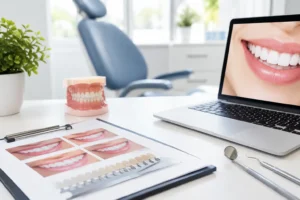
Photographs, digital scans, radiographs and diagnostic models may be used to build a more accurate picture. For more complex rehabilitation, a proposed bite can be tested before final restorations are made. This allows decisions about tooth shape, appearance, speech and chewing function to be made thoughtfully rather than during treatment.
The goal is not a textbook-perfect arrangement of teeth. It is a bite that is comfortable, stable, cleanable and appropriate for your own anatomy and dental condition.
Treatment depends on the cause
There is no single procedure for correcting bite alignment. The most conservative approach that can provide predictable long-term function is usually the right one.
When a restoration is causing the problem
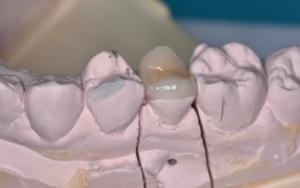
A new or existing filling, crown, bridge, inlay or onlay may be slightly too high, worn, fractured or poorly supported. In some cases, a precise adjustment is sufficient. In others, replacement is the more responsible option, particularly if the restoration is damaged, repeatedly breaks or no longer protects the remaining tooth.
The replacement should be designed as part of the full bite, not merely to fit the individual tooth. A crown that looks natural but takes excessive force every time you close is unlikely to provide lasting value.
When teeth are worn or weakened
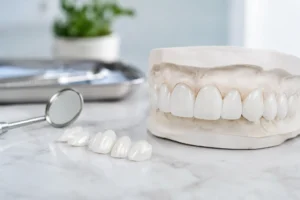
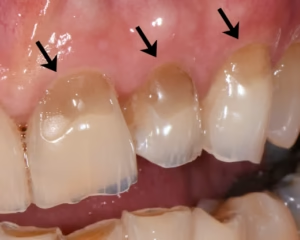
Significant wear can reduce the height and shape of the biting surfaces. This may make chewing less effective and place greater strain on remaining teeth. Rebuilding worn teeth can involve carefully planned crowns, veneers, onlays or bonded restorations, depending on how much healthy tooth structure remains and what needs to be restored.
This is not about making every tooth look identical. It is about restoring appropriate form while respecting your natural appearance and preserving as much tooth tissue as possible. In many cases, treatment is staged so that the proposed bite can be assessed for comfort before final restorations are completed.
When missing teeth have changed the way you chew
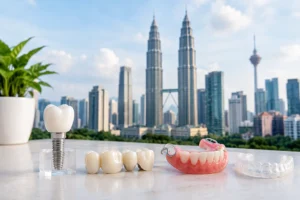
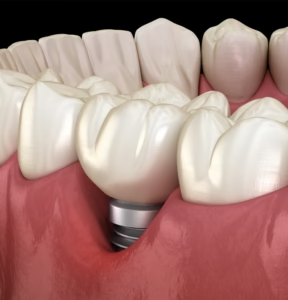
Missing teeth can place excess load on the teeth that remain. Over time, this may lead to shifting, wear, fracture or uneven chewing. Replacing missing teeth with a carefully planned bridge, denture or dental implants can help restore support and distribute chewing forces more evenly.
For patients missing most or all teeth, full-arch implant rehabilitation may provide a stable fixed alternative to a loose conventional denture. All-on-Four, All-on-Six and other All-on-X concepts are not interchangeable products. The number and position of implants, bone availability, restorative space, bite forces and aesthetic requirements must all be considered before a recommendation is made.
A well-planned full arch is designed around more than the ability to chew. It must support the lips and face appropriately, allow clear speech, permit cleaning, and meet the opposing teeth in a controlled way. These details directly affect comfort and longevity.
When a denture no longer feels stable
A denture that rocks, drops during conversation or makes eating difficult should not simply be endured. The fit may need reassessment, the bite may have altered, or the denture teeth may be worn. Depending on your situation, relining, remaking the denture, improving the opposing dentition or considering implant-supported options may be appropriate.
The best choice depends on health, anatomy, expectations and the level of stability you need. A removable denture remains a valuable treatment for some patients, provided it is designed and fitted with care.
Why bite adjustment should not be a do-it-yourself fix
It can be tempting to keep testing your bite, forcing the jaw into a preferred position, or using temporary products to alter how teeth meet. These approaches can mask symptoms without resolving the underlying cause. They may also encourage clenching or place pressure on the wrong teeth.
If a tooth suddenly feels high after a filling or crown, contact the treating clinician promptly. If you have gradual changes, broken restorations, difficulty chewing or a denture that no longer functions well, arrange a proper review rather than waiting until more damage occurs.
A useful consultation should give you clarity: what is causing the problem, which teeth or restorations are involved, whether treatment is necessary now, and what may happen if you defer it. You should also understand the trade-offs. For example, a conservative repair may preserve more tooth structure but require monitoring, while a more extensive reconstruction may offer better long-term support where wear or tooth loss is advanced.
Protecting a newly balanced bite
Once bite alignment has been improved, maintenance is part of the treatment. Regular reviews allow restorations, implants, dentures and natural teeth to be checked before minor wear becomes a larger problem. Professional cleaning and good daily hygiene are equally important, particularly around crowns, bridges and implant restorations.
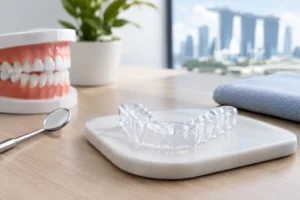
If grinding or clenching is contributing to wear, a protective appliance may be recommended after a detailed assessment. It is not a substitute for correcting an unstable bite, but it can help protect teeth and restorations from excessive forces once the bite has been stabilised.
For complex restorative care, the quality of planning is often what determines whether the result continues to feel comfortable years later. At Maison Dentaire, bite function is assessed alongside aesthetics and oral health, so treatment is planned around the person rather than a standard template.
A comfortable bite should let you eat, speak and smile without constantly thinking about your teeth. If yours no longer does, the most useful next step is not guessing which treatment you need, but having the whole picture assessed with precision.