
A new crown can look natural and still feel completely wrong when you close your teeth together. Crown bite problems are often described as a tooth that feels “too high”, but the issue may be more subtle: a sharp contact during chewing, a crown that hits before the other teeth, or a gradual sense of jaw fatigue after treatment. These symptoms deserve careful assessment rather than a quick adjustment based on guesswork.
A crown is not simply a replacement for visible tooth structure. It must work within a highly coordinated system of teeth, muscles, jaw joints and, where present, implants. The aim is to restore strength and appearance while allowing the bite to function comfortably and predictably over time.
What crown bite problems can feel like
Many patients notice a bite issue soon after a crown is fitted. The tooth may meet first when they bring their teeth together, or they may feel that they have to shift their jaw slightly to find a comfortable closing position. Others only notice the problem when eating firmer food, particularly if the crown receives a heavy sideways force.
Common signs include tenderness when biting, sensitivity around the crowned tooth, a dull ache in the jaw muscles, headaches, or repeated chipping of porcelain. You may also find yourself avoiding chewing on one side. A crown should not demand your attention every time you bite. While it can take a short period to become accustomed to the feel of a restored tooth, persistent discomfort is not something to simply tolerate.
Why crown bite problems happen
The most straightforward cause is an excessive contact. If the crown is fractionally higher than the surrounding teeth, it can receive the first and strongest bite force. Even a very small discrepancy can matter because teeth meet thousands of times a day through eating, swallowing and clenching.
However, bite problems are not always caused by a crown being visibly too high. A tooth may have an appropriate contact in a static bite but receive damaging force during chewing movements. This is particularly relevant for back teeth, where the shape and angle of the chewing surfaces influence how forces are directed.
The bite is dynamic, not a single contact point
A proper bite assessment considers more than asking a patient to close on coloured marking paper. It should include how the teeth meet when the jaw closes, how they glide during side-to-side and forward movements, and whether the forces are shared sensibly across the mouth.
If a patient clenches or grinds their teeth, a crown may be exposed to forces far beyond normal chewing. In these cases, simply reducing one point may not address the underlying pattern. The crown, opposing tooth, jaw muscles and jaw joints all need consideration.
Changes in neighbouring or opposing teeth
Teeth can move, wear down or erupt slightly over time. A crown that functioned well for years may begin to feel different after changes elsewhere in the mouth. Loss of a tooth, a failing restoration, gum disease and untreated tooth wear can all alter the way forces are distributed.
The opposing tooth matters too. A strong ceramic crown placed against a heavily worn natural tooth, for example, needs careful planning. Material choice, crown shape and bite design should protect both sides of the bite rather than focus on the crown in isolation.
Crowns on implants need particular precision
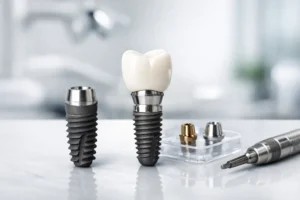
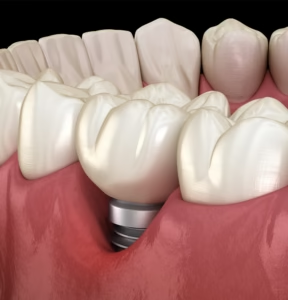
An implant crown does not have the same shock-absorbing ligament as a natural tooth. It is firmly connected to the jawbone, so bite forces need to be managed with particular care. A heavy contact on an implant crown can place unnecessary stress on the restoration, implant components and surrounding bone.
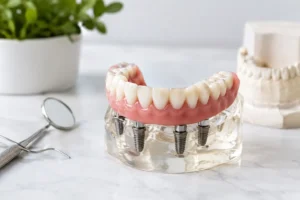
For patients with multiple implant crowns or an All-on-Four, All-on-Six or full-arch restoration, bite planning is even more fundamental. The goal is not merely to make the teeth look even. It is to create a stable, balanced pattern that supports speech, chewing comfort and the long-term integrity of the prosthesis.
When a new crown needs adjustment
A brief period of awareness after local anaesthetic wears off is common, especially if you have had a large restoration or have not bitten normally on that tooth for some time. But a crown should settle into comfortable function, not cause escalating pain or force you to change how you close your jaw.
Contact your dentist promptly if the crown feels high, hurts when biting, causes a sharp jolt on release, or is associated with new jaw soreness. It is also sensible to arrange a review if the crown repeatedly chips, becomes loose, or if the tooth feels tender to touch. These signs may relate to the bite, but they can also indicate inflammation around the tooth, a crack, cement failure or another issue that requires examination.
Do not try to adapt by filing the crown yourself or by persistently chewing around it. This can create further imbalance and delay an accurate diagnosis.
How a careful bite assessment is carried out
A precise assessment starts with listening to the symptoms. When did the problem begin? Is it present only during chewing, first thing in the morning, or after a stressful day? Is there a history of clenching, grinding, headaches or previous jaw-joint symptoms? These details help distinguish a local contact problem from a broader bite or muscle issue.
The clinician will then examine the crown, adjacent teeth, gums and supporting structures. Bite marks can show where contacts occur, but they are interpreted alongside the way the jaw moves and the patient’s own feedback. The crown should also be checked for cracks, looseness, contour problems and whether food is being trapped around it.
Where appropriate, radiographs may be used to assess the root, bone level and fit of the restoration. For more complex cases, particularly full-mouth rehabilitation or implant work, diagnostic records may be needed to evaluate the overall bite relationship before any irreversible adjustment is made.
A minor adjustment can sometimes resolve a clear high spot quickly. Yet repeated grinding of a crown without a complete assessment is not a substitute for treatment planning. Removing too much ceramic can weaken the restoration, affect its polish or alter the shape needed to guide chewing movements. The right solution depends on the source of the problem.
Treatment may involve more than the crown
If the crown itself is well made but the bite has changed, treatment may involve selective adjustment of other contacts, management of tooth wear, or replacement of a failing neighbouring restoration. If clenching is a contributing factor, a professionally designed night guard may help protect the teeth and restorations, although it will not correct a crown that is clearly out of balance.
Occasionally, the crown needs to be remade. This may be the most conservative long-term choice when its shape, fit, material or position cannot be corrected without compromising strength or appearance. A well-planned replacement should be designed from the outset around the tooth, gumline, opposing dentition and functional bite.
For patients with extensive wear, multiple failing crowns or missing teeth, isolated adjustments can become a cycle of short-term fixes. A wider restorative plan may be needed to restore the correct tooth positions and chewing support. This is where specialist prosthodontic planning can be valuable: the bite is assessed as a complete system, with attention to aesthetics, function and longevity.
A crown should feel part of your natural bite
The best crown is usually the one you stop noticing. It should allow you to chew confidently, speak normally and clean around it comfortably, without creating pain or drawing excessive force to one tooth. Achieving that result requires more than matching a shade or taking an impression. It requires detailed planning and careful review of how the restoration functions in your mouth.
If your bite has felt wrong since receiving a crown, or a previously comfortable crown has changed, arrange an assessment before the discomfort becomes a larger restorative problem. A measured examination can identify whether a small correction is appropriate or whether the bite needs more comprehensive attention.