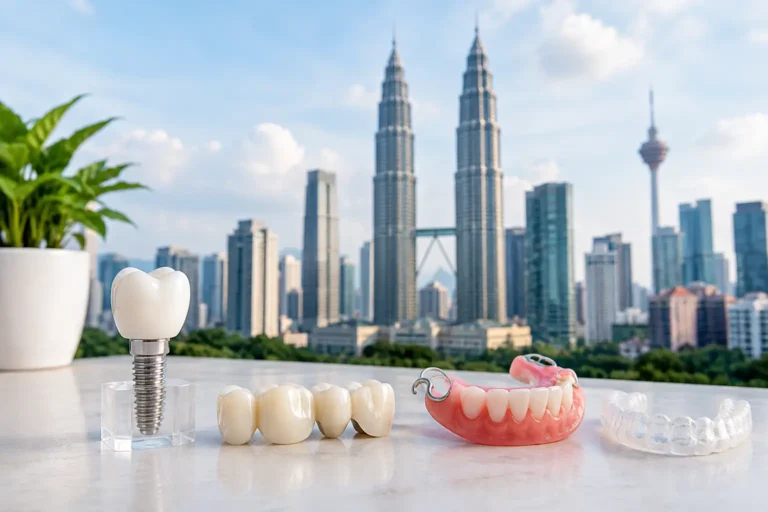
A missing tooth is not always an automatic reason for an implant. Patients researching Kuala Lumpur implant alternatives are often trying to answer a more useful question: what will restore the way I eat, speak and smile without creating problems for the teeth and bite that remain?
The right answer depends on far more than the gap itself. The condition of neighbouring teeth, bone levels, gum health, bite forces, habits such as clenching, appearance expectations and ability to maintain the restoration all matter. For a single tooth, a carefully designed bridge may be sensible. For extensive tooth loss, a removable denture or a full-arch implant solution may be more appropriate. The aim is not to recommend the same treatment for every patient, but to select the option with the best long-term balance of function, biology and appearance.
When an implant may not be the first choice
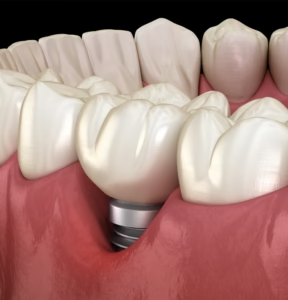
Dental implants are highly successful when planned and maintained properly, but they are not always the most conservative or practical route. An implant requires adequate bone, healthy tissues and sufficient space for a replacement tooth that works comfortably within the bite. It also requires surgery and a treatment timetable that may not suit every medical, personal or travel situation.
There are occasions where retaining and restoring a natural tooth is preferable to extracting it for an implant. A tooth with a crack, previous root treatment or a large filling needs a careful prognosis, not an automatic verdict. If it can be predictably restored with a crown, onlay or other suitable treatment, preserving it may be the more minimal intervention.
An implant may also be less straightforward where there has been substantial bone loss, uncontrolled tooth wear, heavy clenching, active disease or several failing teeth across the mouth. These are not necessarily reasons to rule out implants. They are reasons to plan more thoroughly. Bite analysis and a full-mouth view are particularly important, because placing isolated implants into an unstable bite can lead to repeated chipping, loosening or damage to surrounding teeth.
Kuala Lumpur implant alternatives for one missing tooth
A conventional dental bridge
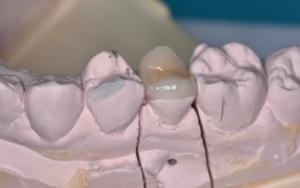
A conventional bridge replaces a missing tooth by joining a replacement tooth to crowns on one or both neighbouring teeth. It can provide a fixed, natural-looking result and is often completed without implant surgery. When adjacent teeth already have large fillings, old crowns or significant damage, using them as bridge supports may be a logical choice rather than a compromise.
The trade-off is that supporting teeth must be prepared for crowns. This is not ideal if they are healthy and untouched. A bridge also relies on the strength and long-term health of those supporting teeth, so the design, bite and cleansability must be assessed carefully. A poorly shaped bridge that traps plaque or is overloaded during chewing can create avoidable trouble later.
A resin-bonded bridge
A resin-bonded bridge, sometimes called an adhesive bridge, is a more conservative fixed option. It is typically attached to the back of an adjacent tooth with a finely designed wing, requiring little or no reduction of tooth structure. It can be particularly suitable for a front tooth where bite forces allow and the neighbouring teeth are otherwise sound.
Its limitations are practical. It may not suit a deep bite, pronounced tooth wear or a patient who clenches heavily. It can occasionally debond, although this can often be managed. For the right case, however, it preserves valuable enamel and avoids surgery, making it an excellent option to consider before committing to an implant.
Leaving the space temporarily
Not every space needs immediate permanent replacement. After an extraction, a temporary tooth may be used while healing takes place, while a patient considers options or while a wider restorative plan is organised. This can be especially relevant when travel needs to be coordinated over more than one visit.
Leaving a space indefinitely is different. Teeth can drift, bite contacts can change and chewing may become uneven. Whether a gap can be monitored safely depends on its location, the opposing tooth, the bite and the patient’s comfort. It should be a deliberate clinical decision, not simply a delay that becomes permanent by default.
Alternatives when several teeth are missing
Removable partial dentures
A partial denture can replace several missing teeth and may be made from acrylic, metal or a combination of materials. Modern dentures can look natural when designed with attention to tooth position, lip support and the character of the smile. They can also be easier to repair or modify if future dental changes are expected.
The adjustment period is real. A removable appliance may feel bulkier than fixed teeth, and it must be removed for cleaning. Stability varies considerably according to the design, the number and position of remaining teeth, and the shape of the supporting ridges. A well-designed partial denture should distribute forces thoughtfully and avoid placing unnecessary stress on the teeth that remain.
Fixed bridges across several teeth
A longer bridge can be considered when suitable natural teeth remain in strategic positions. It may avoid multiple implant placements and provide a fixed solution, but it demands careful judgement. Long spans flex more under biting forces, and support teeth need to be assessed for their periodontal condition, root shape, previous treatment and ability to carry the load.
For patients with worn or heavily restored teeth, the bridge cannot be planned in isolation. It needs to work within the overall bite. Sometimes the better answer is staged rehabilitation: stabilising vulnerable teeth first, establishing a predictable bite, then deciding which spaces need fixed replacement.
Full-arch choices for failing or missing teeth
When most teeth in an arch are missing, loose or repeatedly breaking down, the decision becomes broader than replacing individual gaps. A conventional full denture remains a valid treatment for many people. It avoids surgery, can restore facial support and can be adjusted over time as the mouth changes. It is also often the most appropriate option where medical circumstances or anatomy make implant treatment unsuitable.
Its principal limitation is stability, particularly in the lower jaw. Movement while eating or speaking can affect confidence, and hard or sticky foods may remain difficult. Denture design matters greatly here. A specialist assessment considers jaw relationships, available space, muscle activity, facial support and the position of teeth, rather than simply taking an impression and fitting a standard appliance.
For patients seeking greater stability, implant-retained dentures use implants to secure a removable denture. The denture still comes out for cleaning, but it is held more firmly during daily use. This can offer a meaningful improvement in comfort and confidence without committing to a fixed full arch.
A fixed full-arch implant restoration, often described as All-on-Four, All-on-Six or All-on-X, may be suitable where a patient wants teeth that remain in place. The number and placement of implants should never be selected from a marketing label alone. Bone quality, jaw shape, bite forces, smile line and the material planned for the final teeth all influence the appropriate design. A full arch is a major restorative commitment, and it should be planned around long-term cleansability and repairability as well as immediate appearance.
How to choose between implants and alternatives
A sound decision begins with diagnosis rather than preference. Clinical examination, photographs, radiographs or scans where indicated, and a detailed evaluation of the bite help reveal factors that are not visible in a quick consultation. This is particularly important for patients who have undergone repeated crowns, bridge repairs or denture adjustments without a lasting solution.
Ask whether the proposal protects healthy tooth structure, how it will affect cleaning, what maintenance it will require and what happens if one component fails. A treatment plan should also explain the sequence of care. For international and outstation patients, the number of appointments and the intervals between them need to be realistic, especially when healing or laboratory stages are involved.
There is no universally superior replacement for a missing tooth. An implant can be the best option in one mouth and unnecessarily invasive in another. Similarly, a bridge or denture should not be viewed as a lesser solution when it is the option that best protects natural teeth, supports the bite and meets the patient’s needs.
At Maison Dentaire, treatment planning is led personally by specialist prosthodontist Dr. Lee Pei Nee, with the restoration considered as part of the whole mouth rather than a single isolated gap. The most reassuring plan is usually the one that explains not only what can be done, but why it is appropriate for your teeth, bite and future.
A carefully chosen alternative is not a second-best outcome. When it is designed around your individual oral health and maintained well, it can be the treatment that lets you eat, speak and smile with confidence for years to come.