
A missing tooth can affect far more than a smile. The neighbouring teeth may drift, chewing can become uneven, and the bone beneath the gap gradually reduces without stimulation. When considering a bridge or implant for a missing tooth, the right choice is not simply the quickest option or the one with the lowest initial fee. It is the treatment that protects your remaining teeth, supports a stable bite and suits your health, priorities and long-term plans.
Bridge or implant for a missing tooth: the core difference
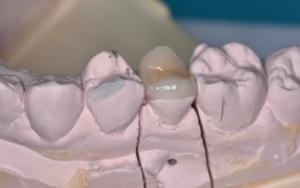
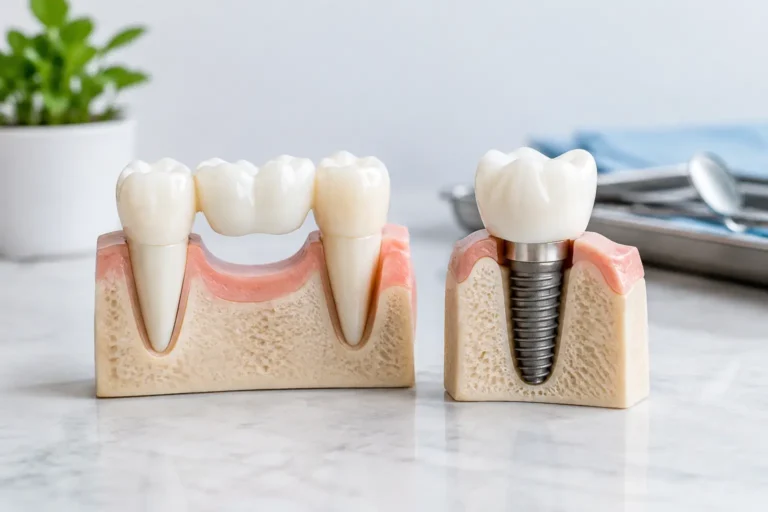
A dental bridge replaces the visible part of the missing tooth by attaching an artificial tooth to the teeth on either side of the gap. In a conventional bridge, the supporting teeth are shaped to receive crowns, which are joined to the replacement tooth in the middle. It is fixed in place and cannot be removed by the patient.
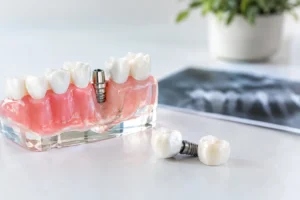
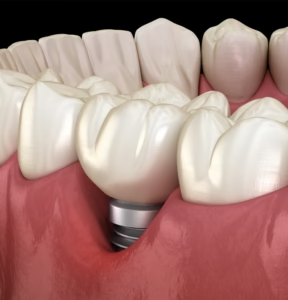
A dental implant replaces the tooth root as well as the visible tooth. A small titanium implant is placed in the jawbone, allowed to integrate with the bone, and then restored with a carefully designed crown. Because it stands independently, an implant does not usually require the neighbouring teeth to be cut down.
Both can look natural and restore chewing ability well. The more meaningful distinction is what each option asks of your existing teeth and underlying bone.
When a bridge may be the sensible choice
A bridge can be an appropriate, reliable solution in the right circumstances. Treatment is generally completed more quickly than an implant, since there is no healing phase for implant integration. It may also suit a patient who is not medically suitable for surgery, has insufficient bone and does not wish to undergo grafting, or needs to avoid a longer treatment timetable.
It can also make clinical sense when the teeth next to the gap already need crowns because they are heavily filled, fractured or worn. In this situation, preparing those teeth for a bridge may not represent significant additional sacrifice of healthy tooth structure.
A well-made bridge depends on careful planning. The supporting teeth must be strong enough, the gums need to be healthy, and the bite must be assessed properly. A bridge that is too bulky, poorly contoured or exposed to excessive biting forces can place undue strain on its supporting teeth. This is particularly relevant for patients who clench or grind their teeth.
There are also adhesive bridges, often called resin-bonded or Maryland bridges. These are bonded to the back of an adjacent tooth with minimal preparation and can be excellent for selected front-tooth cases. They are more conservative, but they are not suitable for every position in the mouth or every bite pattern.
Why an implant is often preferred for a single missing tooth
Where conditions are favourable, an implant is often the most conservative option for the neighbouring teeth. It fills the gap without joining or crowning adjacent natural teeth, allowing them to remain independent. This can be valuable when those teeth are healthy and unrestored.
An implant also transfers chewing forces into the jawbone, helping to preserve bone volume in the area. It cannot stop all natural changes in the jaw over time, but it offers stimulation that a conventional bridge cannot provide. This matters aesthetically as well as functionally, especially in visible areas where loss of bone and gum support can alter the shape around a replacement tooth.
However, an implant is not automatically the best answer for every patient. It requires adequate bone, healthy gums and a commitment to meticulous cleaning and review appointments. Smoking, uncontrolled diabetes, active gum disease and certain medications can affect healing or long-term success. These factors do not always rule out implant treatment, but they need careful discussion rather than assumptions.
The quality of planning matters as much as the implant itself. Implant position must account for the final crown, the gum line, available bone, neighbouring roots and your bite. Placing an implant simply where bone appears available can compromise the final result. Specialist prosthodontic planning starts with the intended tooth, then works backwards to determine whether the implant can be placed in the correct position for function and appearance.
Treatment time, comfort and the practical realities
A bridge can often be completed over a small number of appointments once the supporting teeth are ready. You may wear a temporary bridge while the final restoration is being made. There can be short-term sensitivity in the prepared teeth, but the treatment usually does not involve surgery.
Implant treatment is a staged process. Following placement, the implant needs time to integrate with the jawbone before the final crown is fitted. The precise timeline varies according to bone quality, the site of the missing tooth, whether grafting is needed and individual healing. In some selected cases, a temporary tooth can be provided during treatment so that you are not left with a visible gap.
Patients sometimes focus only on the surgical appointment, yet the restoration phase is equally important. The crown should be designed to be cleanable, proportionate to the surrounding teeth and balanced with the way you bite. A natural-looking result is not just about matching shade. It includes tooth shape, surface texture, gum contours and the way the tooth meets its opposing tooth.
Cost should be considered over the life of the treatment
An implant usually involves a higher initial investment than a bridge because it includes surgical placement, components and a custom crown, as well as diagnostic planning. If bone grafting or additional gum treatment is required, this may add to the overall fee and treatment time.
A bridge may have a lower starting cost, but it is important to consider its wider impact. If a bridge later fails because one supporting tooth develops decay, fracture or gum disease, the replacement plan can become more complex. That does not mean bridges are poor treatment – many function successfully for years – but it illustrates why the decision should not rest on the initial fee alone.
Longevity for either option depends on oral hygiene, bite forces, diet, maintenance and the quality of diagnosis and workmanship. Neither restoration is indestructible. Crowns and bridges can chip or loosen; implants can develop inflammation around the implant if plaque is not controlled. Regular professional reviews allow early signs of wear or disease to be addressed before they become more difficult problems.
The bite is part of the decision
A missing tooth changes how forces travel through the mouth. If you have several missing teeth, worn teeth, an unstable bite or a history of repeated crown and bridge problems, replacing one tooth in isolation may not be enough. The wider bite may need assessment first.
This is where a prosthodontic approach is particularly valuable. Rather than recommending the same solution for every gap, the clinician considers how the replacement will work alongside your existing teeth, jaw joints, gum condition and long-term restorative needs. For patients with multiple failing teeth or loose dentures, individual implants, implant bridges or full-arch solutions may be considered as part of a broader rehabilitation plan.
At Maison Dentaire, treatment planning is led personally by a specialist prosthodontist, with attention given to the final appearance, cleanability and bite stability of every restoration. The goal is not to place an implant wherever possible, nor to use a bridge as a default. It is to recommend the least invasive treatment that can offer a predictable, lasting result.
How to decide with confidence
The most useful consultation is one that examines the cause of the missing tooth as well as the gap itself. If tooth loss followed decay, gum disease, trauma or a fractured root, the same risk factors must be controlled before a replacement is fitted. X-rays and, where appropriate, three-dimensional imaging help assess bone, root positions and hidden disease. A detailed examination of gums and bite reveals whether an implant, bridge or another approach is genuinely suitable.
Ask what will happen to the adjacent teeth, how the restoration will be cleaned, what maintenance will be required and what the likely options would be if the treatment needs repair in the future. Clear answers should be part of a written treatment plan, not an afterthought.
A well-chosen replacement tooth should eventually feel like part of your everyday life: comfortable when you eat, unobtrusive when you speak and easy to care for. Taking time to plan it properly is often the most valuable step you can take.