
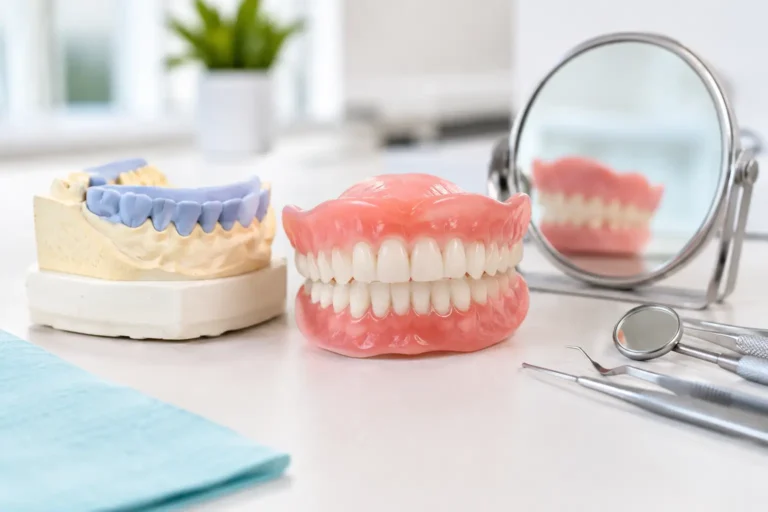
A well-made denture should not simply fill a space. It should support your facial appearance, help you speak clearly, allow you to eat with more confidence, and sit comfortably against your gums. This denture fitting process guide explains why achieving that result takes more than one appointment – and why careful planning makes a meaningful difference to comfort and long-term function.
For many patients, especially those who have struggled with loose or bulky dentures before, the fitting process can feel daunting. In reality, it is a measured sequence of clinical steps. Each stage gives your prosthodontist information about the shape of your mouth, the way your jaws meet, and the appearance you want your teeth to have.
Why denture fitting is not a one-visit procedure
Dentures are custom medical devices. They need to work with the contours of your gums, lips, cheeks, tongue and jaw movements. A denture that looks attractive but does not respect these details may rub, lift while speaking, click when eating or make chewing unnecessarily difficult.
The process also differs from person to person. A patient replacing a few teeth with a partial denture requires a different approach from someone receiving a complete upper or lower denture. If teeth have been removed recently, the gums will change as healing progresses. Where there has been significant bone loss, obtaining stability may be more challenging and may require a discussion about implant-retained options.
A specialist-led approach considers all of this before the denture is made. The aim is not to make a denture quickly, but to make one that is appropriate for your mouth and realistic in its function.
The denture fitting process step by step
1. Consultation and clinical assessment
Your first appointment begins with a detailed discussion. You may be concerned about loose dentures, difficulty eating, changes to your appearance, sore spots, or teeth that can no longer be maintained. Your prosthodontist will examine your teeth, gums, bite, jaw joints and the supporting tissues in your mouth.
This appointment is also the time to establish what is clinically possible. The amount and shape of the remaining gum and bone, saliva flow, muscle activity and bite relationship can all affect denture retention. These factors are explained clearly so that you understand both the likely benefits and the limitations of a removable denture.
For partial dentures, the condition of the remaining teeth is particularly important. The design should protect those teeth and distribute biting forces sensibly, rather than placing avoidable strain on them.
2. Initial impressions and planning models
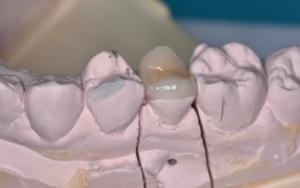
The next stage is usually to take impressions of the upper and lower arches. These impressions create models of your mouth, allowing the dentist to assess the available space, plan the denture design and prepare for more detailed records.
Initial impressions are not normally the final moulds used to fabricate the denture. Their purpose is to provide a reliable starting point. From these models, a custom impression tray may be made specifically for your mouth.
This precision matters. A stock tray can provide useful information, but a custom tray allows the final impression to capture the functional shape of the gums and surrounding soft tissues more accurately. This helps to create a denture base that is better adapted to the mouth.
3. Final impressions and border shaping
At the final impression appointment, the edges of the custom tray are shaped to record how the lips, cheeks and other tissues move. You may be asked to make simple movements such as opening widely, pursing your lips or moving your tongue.
These movements are not incidental. Denture borders that are too short may reduce retention, while borders that extend too far can cause rubbing or displacement. The objective is to find the correct balance between coverage, comfort and stability.
A complete lower denture is often more difficult to stabilise than an upper denture because the tongue and lower jaw move constantly. This does not mean a lower denture cannot be made well, but it does mean expectations should be discussed honestly. For some patients, implants may offer a more secure foundation for a removable or fixed replacement.
4. Recording your bite and tooth position
Once the working models are ready, your dentist records how your upper and lower jaws relate to one another. Wax rims are often used at this stage. They help determine the appropriate height of the teeth, the position of the lips, the smile line and the relationship between the jaws.
This is one of the most important parts of the denture fitting process. If the bite is too closed, the face can appear unsupported and speech may be affected. If it is opened too much, the dentures may feel strained or awkward. The correct position is based on function as well as appearance.
Your natural facial proportions, age, lip support and wishes are all considered. The goal is a result that looks like it belongs to you, not a generic set of teeth.
5. Choosing tooth shape and shade
Denture teeth are selected to complement your facial features, complexion and smile. Shade selection is not simply a choice between bright and less bright. Very white teeth can look artificial if they do not suit the surrounding features, while a more natural shade can create a convincing and balanced result.
Tooth shape, length and arrangement also influence speech and appearance. Small adjustments to the position of the front teeth can change lip support and the visibility of the teeth when you smile. These decisions are made thoughtfully, particularly for patients receiving full dentures.
6. The wax try-in appointment
Before the final denture is processed, you will usually try a wax version with the selected teeth arranged in position. This provides an opportunity to review the smile, tooth display, bite and overall appearance before the final material is used.
You should speak normally during this appointment and comment openly on anything that feels unusual. Certain sounds, particularly ‘s’, ‘f’ and ‘v’, can help assess whether the front teeth are positioned appropriately. Your dentist will also check how the teeth meet when you close and move your jaw.
This stage is valuable because changes are easier to make in wax than after the denture has been completed. It is a quality-control appointment, not a cosmetic formality.
7. Delivery and first fitting
When the denture is ready, it is placed carefully and checked for pressure areas, fit, appearance and bite contacts. Your dentist will make adjustments where necessary and explain how to insert and remove it safely.
New dentures almost always feel unfamiliar at first. Your cheeks, tongue and lips need time to adapt to the new contours. Eating may feel different for several weeks, and speech can require practice. Begin with softer foods cut into small pieces, and try to chew on both sides at the same time to reduce tipping.
It is common for a new denture to create minor sore spots as the mouth adapts. Do not attempt to adjust the denture yourself. Small changes made professionally can have a significant effect on comfort and stability.
Follow-up adjustments are part of the treatment
A denture fitting is not complete the moment the appliance is delivered. Follow-up appointments allow specific pressure points to be identified and relieved, while the bite can be refined once you have used the denture in everyday life.
It is helpful to wear the denture for a period before an adjustment visit unless it is causing severe pain. This allows any rubbing areas to become visible. If discomfort is significant, contact the clinic promptly rather than trying to tolerate it.
Over time, the gums and bone beneath a denture continue to change. A denture that fitted well initially may become loose months or years later. Relining may restore its fit in some cases, while replacement may be more appropriate when the teeth are worn, the base is damaged or facial support has changed.
Caring for a new denture
Clean your denture daily using a soft denture brush and a suitable cleaner. Ordinary toothpaste can be abrasive and may create scratches that retain plaque and stains. Clean your gums, tongue and any remaining natural teeth as well.
Unless you have been advised otherwise, remove your denture at night to give the soft tissues time to rest. Store it safely in water or an appropriate soaking solution so it does not dry out or distort. Never use hot water, which can alter the shape of the material.
Regular reviews remain worthwhile even if you no longer have natural teeth. They allow the fit of the denture and the health of the oral tissues to be assessed before discomfort becomes a larger problem.
When a removable denture may not be enough
Conventional dentures remain a practical solution for many people. However, if your denture repeatedly moves when you talk or eat, if you avoid certain foods, or if you feel unable to wear it comfortably, it may be time to discuss alternatives.
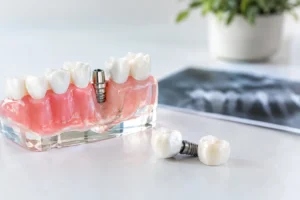
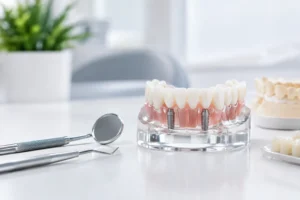
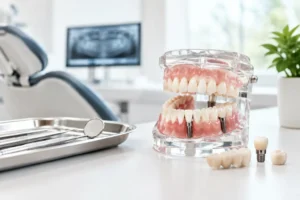
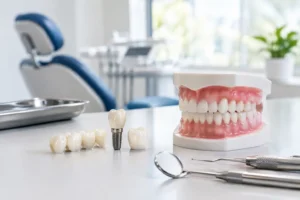
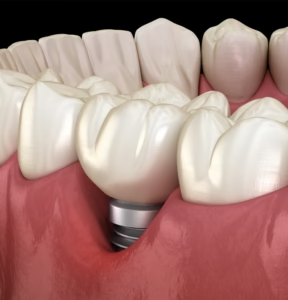
Implant-retained dentures and full-arch implant treatment can provide improved stability for suitable patients. The right option depends on your medical history, bone availability, expectations and the type of result you want. A proper assessment should focus on what will serve you well over time, not on a one-size-fits-all recommendation.
A carefully fitted denture can restore much more than missing teeth. Give yourself time to adapt, attend the recommended review appointments, and speak up about any discomfort. The best result comes from precise clinical work and an honest partnership between patient and specialist.