
When a tooth is damaged by a deep cavity or fracture, the immediate goal is simple: to restore its function and appearance. But when a dentist tells you that you need more than just a filling, the next question is often:
“Do I need an onlay or a crown?”
At first glance, they may seem similar. Both restore damaged teeth. Both can look natural.
But the real difference lies in something most patients don’t immediately realise: How much of your natural tooth can be preserved and how long that tooth will last.
In modern dentistry, patients are often presented with two main options: a dental onlay or a full crown. Understanding the difference between an onlay vs crown allows you to make a more informed and confident decision about your treatment.
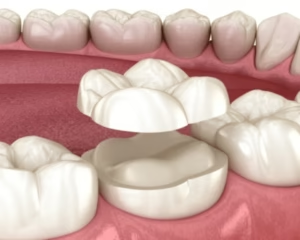
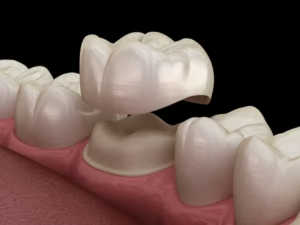
What Is a Dental Onlay?
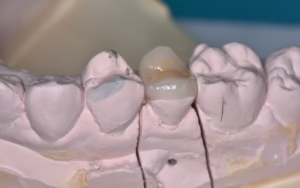
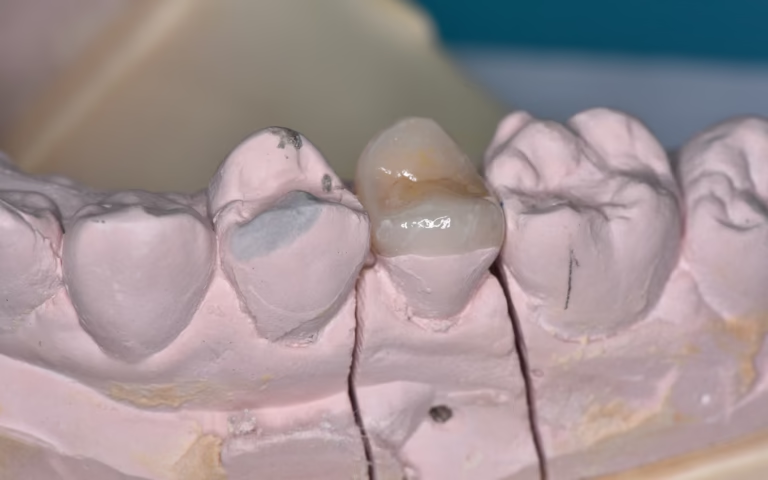
A dental onlay is a custom-made metal or ceramic restoration that fits precisely into your tooth, replacing only the damaged portions. It typically covers one or more cusps (the biting surfaces) without removing the entire outer structure.
Sometimes referred to as a “partial crown,” an onlay is a more conservative solution.
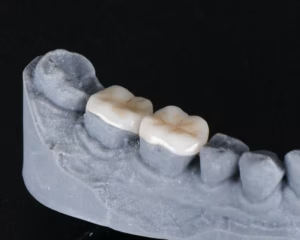
Why Choose an Onlay?
More Natural Tooth Is Preserved
Compared to crowns, onlays require significantly less removal, often around one-third to half of the tooth.Maintains Natural Strength
By retaining more enamel, the tooth keeps much of its original structural integrity.Better Gum Health
Margins are often kept above the gum line, making them easier to clean and maintain.Proven Longevity
Clinical studies show excellent durability, with survival rates comparable to crowns in many cases.
When Is an Onlay Suitable?
Moderate decay or fractures
Large failing fillings
Teeth with strong remaining walls and structure
What Is a Dental Crown?
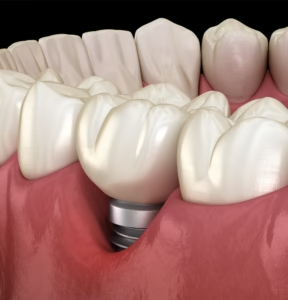
A crown is a “full-coverage” restoration that fits over the entire visible part of the tooth. It acts as a protective “helmet,” holding the tooth together under pressure.
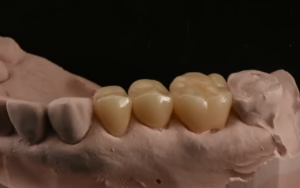
Why Choose a Crown?
Maximum Protection
Ideal for teeth that are heavily weakened or at risk of fractureReinforces Compromised Teeth
Especially important when a large portion of the tooth has already been lostReliable Long-Term Solution
Particularly in areas exposed to high biting forces
Clinical Considerations
To accommodate a crown, more of the natural tooth must be reshaped, often a significant portion to create space for the material. This allows the crown to provide full circumferential support.
What About After a Root Canal?
Dentistry has long recommended crowns for teeth that have undergone root canal treatment — and in many cases, this remains the most predictable option.
After a root canal, a tooth can become more brittle and more vulnerable to fracture under chewing forces. A crown protects the tooth by distributing these forces evenly across the entire surface.
However, this is not a universal rule. The decision depends not on whether the tooth had a root canal, but on how much healthy structure remains afterward.
In carefully selected cases where the tooth is still strong and well-supported, a ceramic or metal onlay may offer a more conservative alternative. Where the tooth is heavily compromised, a full crown remains the safer and more predictable choice.
Which Is Better: Onlay or Crown?
There is no single right answer that applies to every tooth. The decision depends on how much healthy structure remains, where the tooth sits in the mouth, and the bite forces it faces. As a general guide:
- An onlay is ideal when enough healthy tooth structure remains. It allows you to preserve natural tooth while fully restoring function.
- A crown is more appropriate when the tooth is weakened, cracked, or heavily restored, and protection becomes the priority.
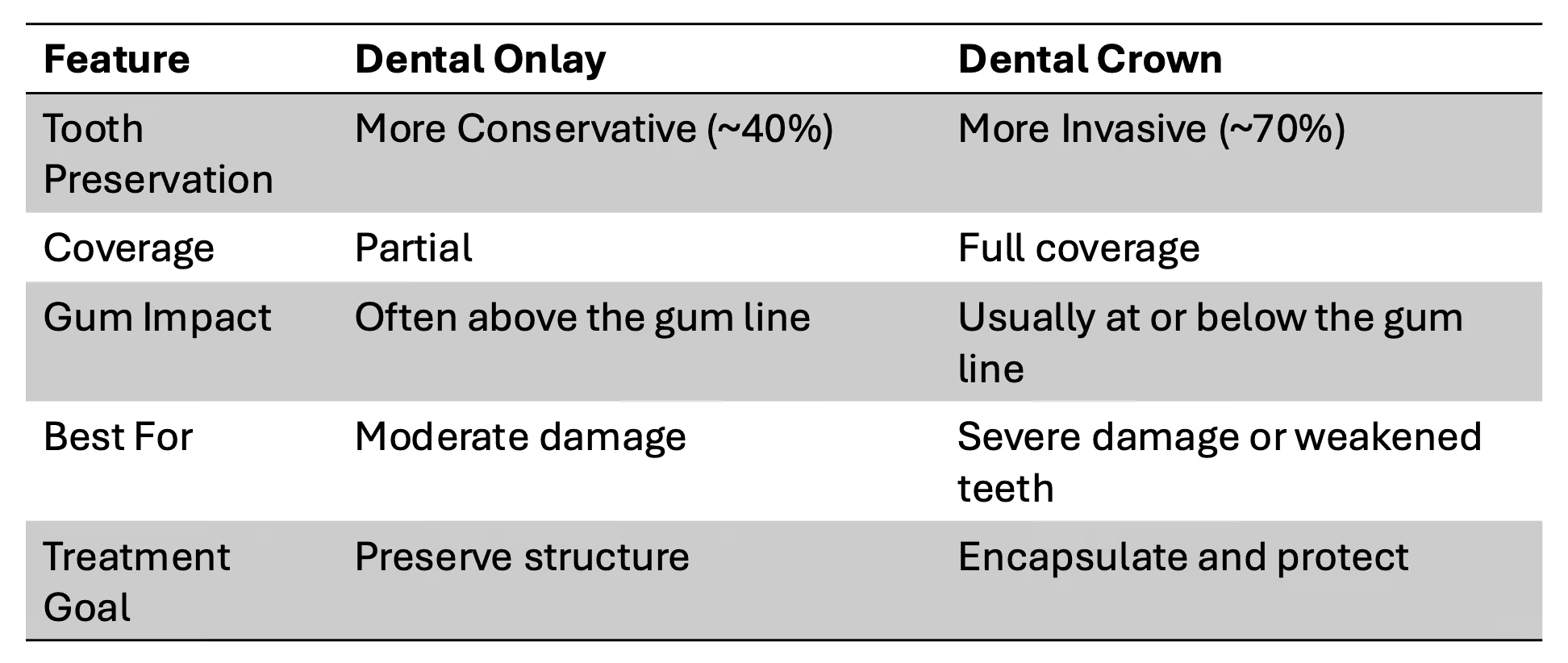
A well-planned onlay can delay the need for a crown for many years. But when structural integrity is compromised, choosing a crown early prevents more serious complications later.
For patients who need multiple teeth restored across the mouth, the choice between onlays and crowns forms part of a broader full mouth rehabilitation plan.
Frequently Asked Questions (FAQs) About Onlay vs Crown
Is an onlay better than a crown?
Neither is universally better—this depends on how much healthy structure remains and the bite forces involved. An onlay is more conservative and preserves more natural tooth structure, making it ideal when the tooth is still strong. A crown provides full coverage and is better suited for teeth that are weakened or at risk of fracture.
Do I always need a crown after a root canal?
Not always. While crowns are commonly recommended after root canal treatment to protect the tooth, this depends on how much healthy structure remains.
In selected cases, an onlay may be sufficient, but heavily compromised teeth typically require a crown for long-term durability.
Which lasts longer: an onlay or a crown?
Both onlays and crowns are highly durable when done properly. Systematic reviews show that for back teeth (molars), onlays have a survival rate comparable to full crowns—up to 96% over six years.
Their longevity depends more on factors like bite forces, oral hygiene, and remaining tooth structure than the type of restoration itself.
Is an onlay cheaper than a crown?
Costs can vary depending on the material and complexity of the case.
In some situations, onlays may be comparable in cost to crowns due to the precision and materials involved. The focus should be on choosing the right treatment for long-term success, rather than price alone.
Can an onlay replace a large filling?
Yes. An onlay is often recommended when a filling becomes too large and compromises the strength of the tooth.
It provides better structural support and durability compared to a traditional filling.
Is a crown stronger than an onlay?
A crown generally offers greater overall protection because it covers the entire tooth.
However, an onlay can still be very strong and effective when the remaining tooth structure is adequate.
Which option looks more natural?
Both onlays and crowns can be made from high-quality ceramic materials that closely mimic natural teeth.
When done well, both options can achieve excellent aesthetic results.
Making the Right Choice for Your Tooth in KL
You only have one natural tooth. Every decision made today affects how long it lasts.
The goal is straightforward: preserve it when possible, protect it when necessary, and avoid doing more than the clinical situation requires.
The right choice between an onlay and a crown is not something a checklist can determine. It requires a thorough clinical examination, an honest assessment of the tooth’s remaining structure, and a treatment plan built around long-term success rather than short-term convenience.
If you are based in Kuala Lumpur and have been told you need a crown,
it is worth asking whether an onlay might be a more conservative option for your specific tooth — a consultation at Maison Dentaire will give you a clear answer.
This article is for general educational purposes and does not constitute personalised medical advice. Please consult a qualified dental professional for an assessment specific to your needs.