

Preserving Your Natural Tooth Structure
Dental Onlays and Inlays in
Kuala Lumpur
When a tooth has too much damage for a filling but still has enough healthy structure to avoid a full crown, an inlay or onlay offers a precise, conservative solution. At Maison Dentaire Specialist Clinic, an MDC-registered prosthodontist, plans and places inlays and onlays with a focus on preserving as much natural tooth structure as possible while restoring full strength and function.
If your tooth is cracked, heavily restored, or affected by decay that a filling can no longer adequately address, inlays and onlays may be the right option for you.
What Are Dental Onlays and Inlays?
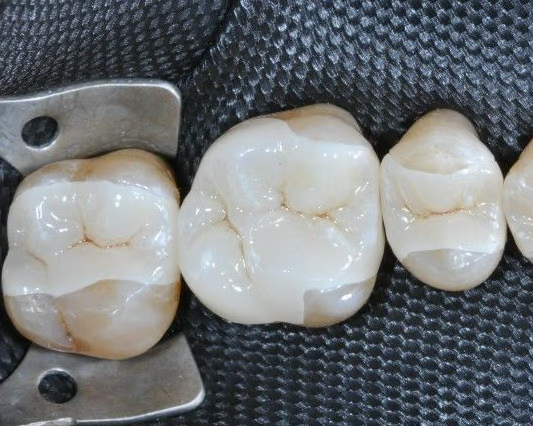
Often described as “indirect fillings,” inlays and onlays are custom-made restorations crafted in a dental laboratory to fit your tooth precisely. Unlike a standard filling that is moulded directly inside your mouth, we bond inlays and onlays as a single solid piece — providing superior strength, a precise fit, and a seamless finish.
In more complex cases involving multiple damaged or heavily restored teeth, inlays and onlays may also form part of a broader full mouth rehabilitation plan, where bite, function, and overall oral health are restored in a comprehensive and staged manner.
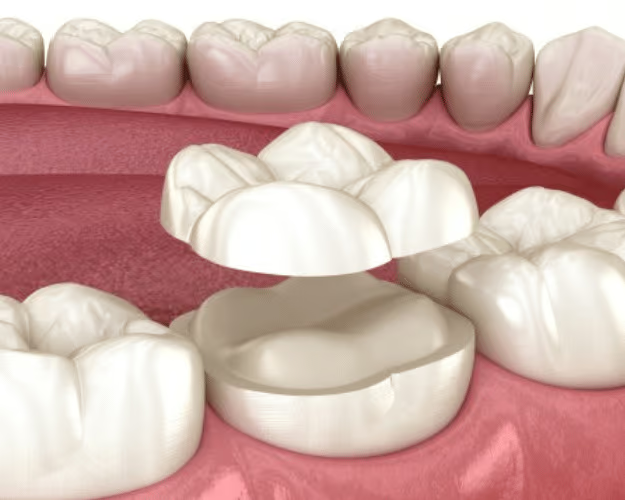
Dental Onlays
An onlay covers one or more of the outer cusps of a tooth in addition to the chewing surface. We use onlays when the damage extends beyond what an inlay can address, but a full crown would remove more healthy structure than necessary. An onlay protects the weakened cusps while preserving everything that remains healthy.
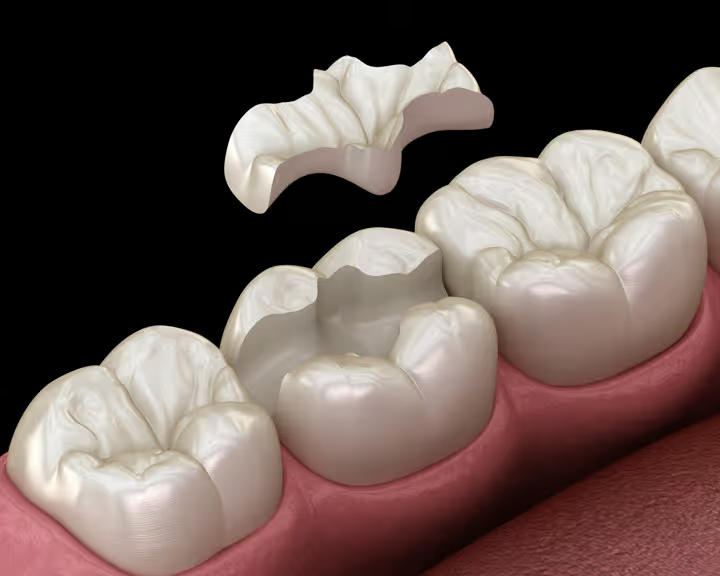
Dental Inlays
An inlay restores damage within the centre of a tooth, fitting neatly within the cusps on the chewing surface. It replaces a large or failing filling and reinforces the tooth from within. Inlays are ideal when the damage is contained within the biting surface and the surrounding cusps remain structurally sound.
Types of Dental Onlays and Inlays
We offer three material options for inlays and onlays. The most suitable choice depends on the location of the tooth, the bite forces involved, and your aesthetic preferences.
Ceramic (Porcelain) Onlays and Inlays
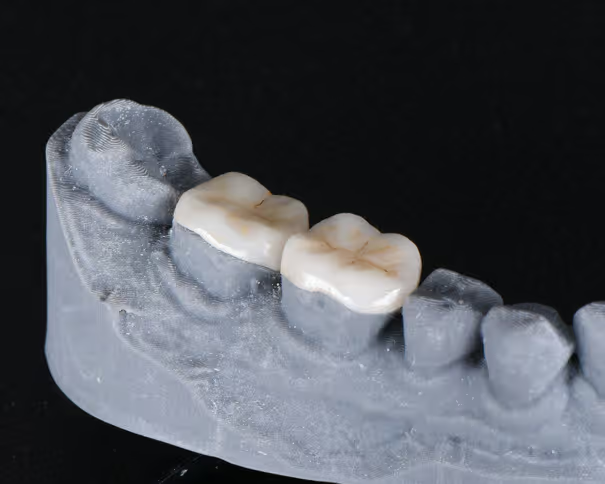
Ceramic inlays and onlays closely match the colour and translucency of natural teeth. They are stain-resistant, durable, and the most commonly chosen option for patients seeking both strength and aesthetics. They work particularly well for visible back teeth where both appearance and function matter.
Natural Appearance
Ceramic blends seamlessly with natural teeth — stain-resistant and ideal for visible areas.
Stain-Resistant and Durable
Holds its colour over time and withstands normal biting forces well.
Ideal for Visible Areas
The most commonly chosen option for patients seeking both strength and aesthetics.
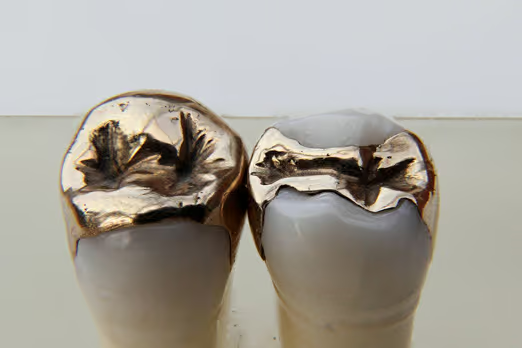
Metal Onlays and Inlays
Metal inlays and onlays, typically made from gold or metal alloys, have a long track record of clinical success. They are extremely durable and gentle on opposing teeth. Although less commonly chosen today due to their appearance, they remain a reliable option in selected clinical situations — particularly for heavily loaded back teeth.
Exceptional Durability
Metal inlays and onlays have been used successfully for decades — extremely long-lasting.
Gentle on Opposing Teeth
Metal wears at a rate similar to natural enamel, reducing unnecessary wear on surrounding teeth.
Excellent Fit and Seal
Precision fit minimises gaps and reduces the risk of decay developing beneath the restoration.
Composite Onlays and Inlays
Composite inlays and onlays use tooth-coloured resin material and require conservative tooth preparation. They are a suitable option for smaller restorations and patients looking for a more affordable alternative. Composite restorations may require more maintenance over time compared to ceramic or metal options.
More Affordable Option
Composite restorations offer a cost-effective solution without compromising on appearance.
Conservative Preparation
Less tooth structure needs to be removed compared to other materials.
Suitable for Smaller Restorations
A practical choice for less extensive damage where ceramic or metal may not be necessary.
Benefits of Onlays and Inlays
Compared to large fillings and full crowns, inlays and onlays offer a number of clinical advantages:
Preserve more natural tooth structure than crowns
Stronger and longer-lasting than large fillings
Excellent fit for improved chewing comfort
Natural-looking appearance, especially with ceramic materials
Reduced risk of future fractures
What to Expect During Treatment
1. Assessment and Planning
We begin with a thorough clinical examination to assess the extent of damage and determine whether an inlay or onlay is the most appropriate restoration. Where needed, X-rays or a CBCT scan help us evaluate the surrounding bone and root health before treatment begins.
2. Tooth Preparation
We remove decay or old restorations conservatively, preserving as much healthy tooth structure as possible. We then take a digital scan or impression of the prepared tooth to send to the dental laboratory for precise fabrication.
3. Temporary Restoration
A temporary restoration protects the prepared tooth while the final inlay or onlay is being fabricated in the laboratory. We fit this at the end of your first visit.
4. Bonding the Final Restoration
At your second visit, we remove the temporary restoration, check the fit and bite carefully, and bond the final inlay or onlay in place. We make any necessary adjustments to ensure it feels comfortable and functions correctly.

Are Onlays and Inlays Suitable for You?
You may be a suitable candidate if you:
Have a cracked or heavily restored tooth
Want a conservative alternative to crowns
Prefer a long-lasting solution over large fillings
Maintain good oral and gum health
A clinical examination is essential to determine the most appropriate material and design for your bite and lifestyle.
Patients from across Kuala Lumpur, including Mont Kiara, Damansara Heights, and Bangsar, visit Maison Dentaire for conservative restorations that preserve natural tooth structure while delivering long-term strength and function.
Onlays vs Crowns — When Is Each the Right Choice?
When enough healthy tooth structure remains, an onlay restores function
and protects the tooth without the more extensive preparation a full crown
requires. When a tooth becomes too weakened to support an onlay safely, a
dental crown provides the full coverage needed. Read our full comparison in
our guide: Onlay vs Crown — Which Is Better for Your Tooth?
Dental Onlays & Inlays FAQ
ask us
anything
Are onlays and inlays better than fillings?
For larger restorations, yes. Inlays and onlays provide better strength, durability, and fit compared to large direct fillings. They also place less stress on the remaining tooth structure over time.
Do onlays and inlays look natural?
Ceramic and composite options are tooth-coloured and blend naturally with your smile. We select the shade carefully to match your surrounding teeth.
Is the treatment painful?
We carry out treatment under local anaesthesia, and most patients are comfortable throughout. Some mild sensitivity around the treated tooth is normal afterward and usually settles within a few days.
Can an onlay replace a crown?
In many cases, yes. When enough healthy tooth structure remains, an onlay restores function and protects the tooth without the more extensive preparation that a crown requires.
How long do dental onlays and inlays last?
With good oral hygiene and regular dental reviews, ceramic and metal inlays and onlays can last 10 to 15 years or longer. Composite restorations typically last around 5 to 8 years. Longevity depends on the material chosen, bite forces, and daily habits.
How much do onlays and inlays cost in Kuala Lumpur?
Costs vary depending on the material used, tooth position, and case complexity. A personalised quotation will be provided after assessment.
Book a Consultation for Dental Onlays and Inlays
At Maison Dentaire Specialist Clinic, Dr. Lee Pei Nee, a MDC-registered prosthodontist, assesses your tooth carefully to determine whether an inlay, onlay, or alternative restoration is the most appropriate solution. We explain your options clearly and provide transparent fees before treatment begins.
If your tooth has been heavily restored or your dentist has suggested a crown, it is worth finding out whether a more conservative option is available. Book a consultation at our KL City Centre clinic to find out.