
A dental implant is designed to be a long-term replacement for a missing tooth, not a short-term repair. Yet when patients ask, how long do dental implants last, the most accurate answer is that the implant, the visible tooth and the surrounding tissues each have their own lifespan. Good treatment makes a major difference, but so do daily care, bite forces and regular professional review.
For many patients, an implant fixture can function for decades and may last for life. The crown, bridge or full-arch prosthesis attached to it is more likely to need maintenance, repair or replacement at some stage. Understanding that distinction helps you plan treatment with realistic expectations and protect the result for as long as possible.
How long do dental implants last?
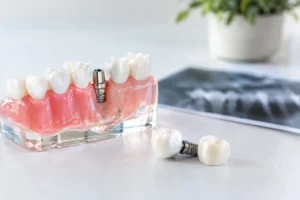
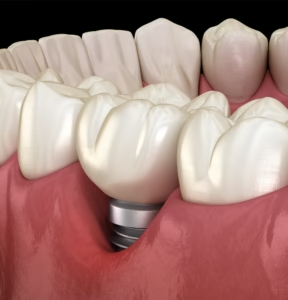
The implant fixture is the small titanium post placed into the jawbone. Once it has integrated successfully with the bone, it can remain stable for many years. Long-term clinical research shows high survival rates for well-planned and well-maintained implants, but survival is not quite the same as being entirely maintenance-free.
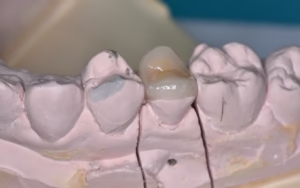
A single implant crown commonly lasts around 10 to 15 years before it may need attention due to normal wear, changes at the gum line, chipping, loosening or aesthetic updates. Many crowns last considerably longer. The implant beneath it may remain sound when the crown is repaired or replaced.
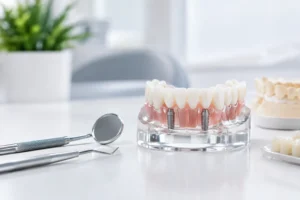
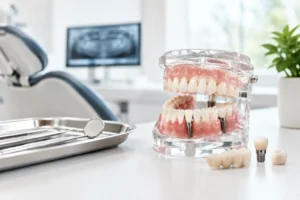
For implant bridges and full-arch restorations such as All-on-Four, All-on-Six or All-on-X, the framework and teeth are also built for long-term use. However, they are exposed to the significant forces created by chewing and, in some cases, clenching or grinding. Components such as ceramic teeth, acrylic teeth, screws or protective coverings can require periodic servicing. This is a normal part of looking after a fixed full-arch restoration, rather than a sign that treatment has failed.
The difference between implant survival and restoration lifespan
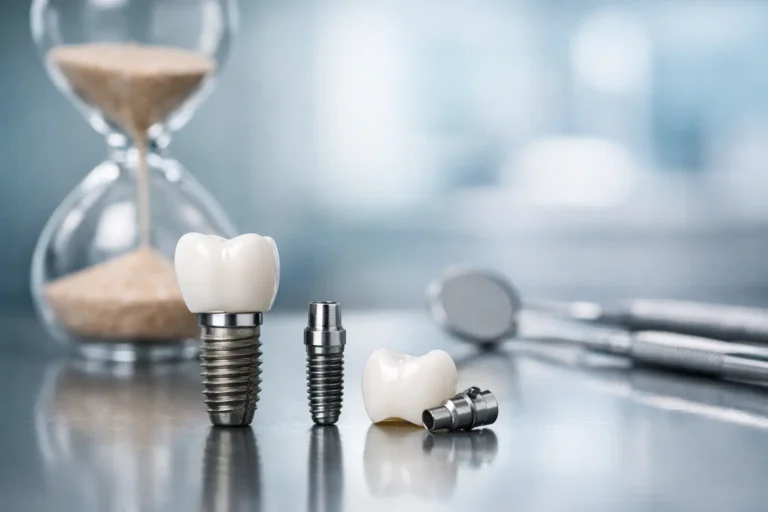
It is helpful to separate an implant treatment into three parts: the implant in the bone, the connection components, and the visible restoration. Each is affected by different factors.
The implant depends chiefly on healthy bone and gums. The crown or bridge depends on material quality, bite design and the forces placed upon it. Connection screws and small technical components may occasionally need adjustment. A carefully designed restoration allows these maintenance needs to be managed without compromising the implant itself.
This is why treatment planning should never focus only on placing an implant. The final tooth position, smile line, cleaning access, gum support and bite must be considered before surgery. In prosthodontic care, the replacement teeth are planned first, then the implants are positioned to support them properly.
What affects the longevity of dental implants?
Gum health and cleaning
Implants do not decay, but the gums and bone around them can still develop disease. Plaque that is allowed to accumulate may cause inflammation around an implant. In its early form, this can often be managed. If it progresses to peri-implantitis, bone supporting the implant may be lost and the implant can eventually become unstable.
Thorough home cleaning and regular hygiene appointments are therefore essential. The exact approach depends on your restoration. A single crown needs careful brushing around the gum line and between teeth. A full-arch bridge requires cleaning underneath the bridge, often with specialised brushes, flossing aids or an oral irrigator. Patients should be shown how to clean their particular design, not given generic advice.
Bite forces and tooth grinding
An implant does not have the same natural shock-absorbing ligament as a tooth. It can withstand normal chewing forces very well, but it needs a carefully managed bite. A heavy bite, untreated tooth grinding or an uneven contact pattern can place excess stress on the crown, screws, bridge or surrounding bone.
This matters especially for patients replacing many teeth. Full-arch treatment must restore appearance and speech, but it must also establish a stable bite that distributes force appropriately. A protective night guard may be advised for patients who clench or grind, even after successful implant treatment.
Smoking and medical health
Smoking can reduce healing capacity and increase the risk of gum and bone complications around implants. Stopping or significantly reducing smoking is one of the most meaningful steps a patient can take for long-term implant health.
Medical conditions do not automatically rule out implants. However, poorly controlled diabetes, certain medications, previous radiotherapy to the jaws and conditions affecting immune function or bone healing require careful assessment. A personalised plan considers your medical history, healing risk and the safest sequence of care.
Bone quality and surgical precision
Implants need adequate bone support in the correct position. Where bone has reduced after tooth loss, grafting or a different implant approach may be appropriate. Choosing a shorter route simply to avoid more detailed planning can compromise the final tooth position or long-term cleansability.
The implant system also matters. Premium, internationally recognised systems provide reliable engineering and long-term component availability. Just as importantly, the clinician must place the implant with the final restoration in mind. An implant can integrate successfully but still create difficulties if its angle or position does not support a functional, natural-looking and cleanable tooth.
Full-arch dental implants require lifelong review
Patients considering All-on-Four, All-on-Six or All-on-X treatment often want freedom from loose dentures and the confidence to eat, speak and smile comfortably. A fixed implant bridge can provide that stability, but it should be regarded as a long-term rehabilitation with an ongoing maintenance programme.
The bridge may be removed periodically for a detailed assessment and professional clean, depending on its design and your individual risk factors. This allows the clinician to inspect the gums, assess the bite, check screws and examine areas that cannot be seen easily while the bridge is in place. Regular reviews also identify small concerns before they become more complex or costly.
A full-arch restoration is not a set-and-forget solution. It is, however, a highly durable option when it is planned precisely, built from suitable materials and maintained properly.
How to help your implants last longer
The most effective protection is consistent rather than complicated. Brush carefully twice daily, clean between and beneath replacement teeth as instructed, and attend the review and hygiene visits recommended for you. If you smoke, seek support to stop. If you grind your teeth, wear the night guard provided rather than leaving it in a drawer.
It is also wise to avoid using implant teeth as tools for opening packaging or biting very hard objects. Porcelain and advanced restorative materials are strong, but no restoration is indestructible. Small habits can prevent chips, fractures and avoidable strain on the implant system.
Do not ignore bleeding, persistent bad taste, swelling, looseness, a change in bite or discomfort when chewing. Implants should feel stable and comfortable. Early assessment gives the best chance of treating inflammation or a technical issue conservatively.
Why the planning stage has such a lasting effect
The longevity of an implant starts before the implant is placed. Detailed assessment of the teeth, gums, bone, facial proportions and bite allows treatment to be tailored to the person rather than fitted into a standard template. It also helps determine whether a tooth should be preserved, whether an implant is genuinely necessary, and which restoration offers the best long-term outcome.
At Maison Dentaire, implant treatment is planned and delivered with the final function and appearance in mind. For patients with a single missing tooth or a failing full dentition, the aim is not simply to place implants, but to create a restoration that is stable, proportionate, cleanable and designed for years of everyday use.
The best question is not only how long an implant may last, but what will give it the best chance of lasting well. Careful planning, a healthy mouth and committed maintenance can turn implant treatment into a dependable part of your life for many years.