
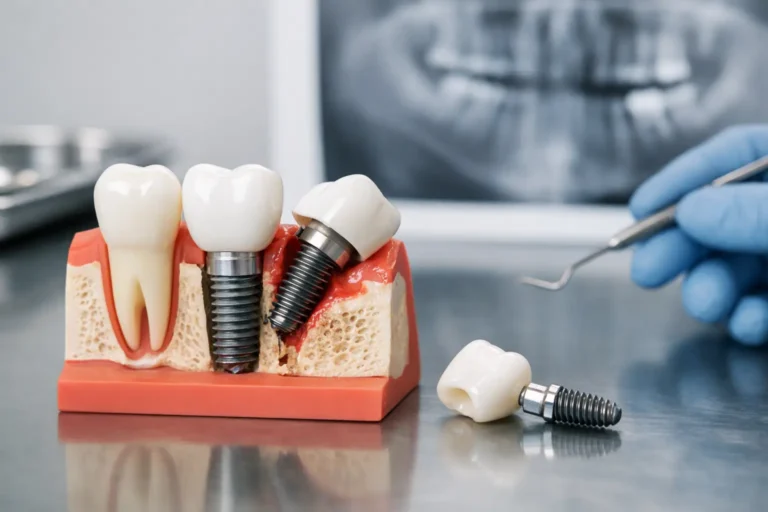
A failed implant is rarely down to bad luck alone. When patients ask why dental implants fail, the real answer usually sits somewhere between biology, bite forces, treatment planning, and aftercare. Implants can be an excellent long-term solution, but they are not interchangeable screws placed in the bone and forgotten. They need the right diagnosis, the right design, and the right maintenance.
This matters even more for patients replacing several teeth or a full arch. If you are considering implant bridges, All-on-Four, All-on-Six, or a full-mouth rehabilitation, the consequences of poor planning are bigger. A beautiful-looking result is not enough if the bite is unstable, the bone support is compromised, or the prosthesis is difficult to clean.
Why dental implants fail in the first place
Dental implant failure can happen early or late. Early failure usually means the implant never integrated properly with the bone after placement. Late failure happens after the implant has been functioning for months or years and then begins to loosen, lose bone support, or develop infection.
In both situations, the implant itself is not always the only problem. Sometimes the surrounding bone is inadequate. Sometimes the gum condition was overlooked. Sometimes the forces on the implant are excessive. In other cases, the prosthesis attached to the implant is poorly designed for the way the patient bites and chews.
That is why a proper implant assessment is never just about whether there is enough space to place a fixture. A specialist-led plan should consider bone volume, gum quality, medical history, parafunctional habits such as clenching, the position of the opposing teeth, and how the final restoration will function over time.
The most common reasons dental implants fail
Infection around the implant
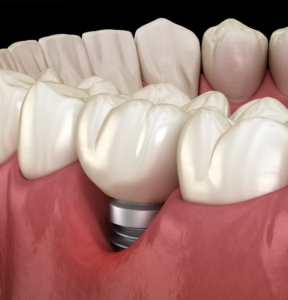
One of the most common causes is peri-implant disease. This is inflammation or infection affecting the tissues around the implant. It can begin as irritation in the gums and progress to bone loss if left untreated.
Plaque control plays a role, but the issue is not simply whether a patient brushes well. The shape of the crown or bridge, how much access there is for cleaning, and the quality of the soft tissue seal around the implant all matter. A restoration that is difficult to clean can create long-term problems even in a motivated patient.
Poor bone integration
For an implant to succeed, the bone must heal firmly onto its surface. If this process does not happen predictably, the implant may remain mobile or fail under function. Smoking, uncontrolled diabetes, poor bone quality, infection at the site, and excessive movement during healing can all interfere with integration.
This is one reason timing matters. In some cases, immediate implant placement is appropriate and highly effective. In others, rushing treatment leads to a weaker foundation. Good implant dentistry is not about placing implants as quickly as possible. It is about choosing the right sequence for the patient in front of you.
Overload from the bite
An implant does not have the same shock-absorbing ligament as a natural tooth. That means heavy bite forces, night grinding, and an unbalanced occlusion can place repeated stress on the implant, the screws, or the surrounding bone.
This problem is often underestimated. Patients may be told the implant has integrated well, but if the bite is not managed properly, complications can appear later as screw loosening, porcelain fracture, prosthesis instability, or bone loss around the implant. For full-arch cases especially, bite design is not a minor detail. It is central to long-term success.
Inadequate planning or implant positioning
A dental implant can be osseointegrated and still be poorly placed. If the angle, depth, or position is wrong, the final tooth may be compromised in appearance, function, or hygiene access. This can create a chain of problems – food trapping, excess force on one area, speech issues, gum recession, or difficulty cleaning beneath a bridge.
This is where experience and prosthodontic planning make a meaningful difference. Implant placement should serve the final restoration, not the other way around. If the implant is placed without a clear restorative plan, the result may be technically possible but biologically or functionally compromised.
Smoking and medical risk factors
Smoking remains a significant risk factor for implant complications because it affects blood supply and healing. Poorly controlled diabetes, certain medications, previous radiotherapy, and untreated gum disease can also increase risk.
This does not automatically rule out implant treatment. It means the case needs honest assessment and sensible risk management. Some patients need periodontal treatment first. Others need changes to their maintenance routine, or a more cautious loading protocol. The right answer is not always no, but it is often not now.
Why dental implants fail years later
A common misunderstanding is that once an implant has healed, the difficult part is over. In reality, late failure is often linked to how the implant is used and maintained over the years.
Bone loss around an implant may begin slowly and without pain. Patients can feel fine while the support tissues are gradually deteriorating. By the time mobility appears, the problem may already be advanced. This is why regular reviews are so important, especially for patients with multiple implants or full-arch restorations.
Late failure is also more likely when patients have unresolved bite problems, poorly fitting prostheses, or restorations that were designed with convenience in mind rather than longevity. A short-term cosmetic result can look acceptable in photographs but perform poorly in daily life.
Warning signs patients should not ignore
Implants are not meant to be painful, loose, or persistently difficult to chew on. Bleeding around the implant, bad taste, swelling, gum recession, or repeated loosening of components all deserve prompt attention.
Some signs are subtle. Patients with full-arch bridges may notice a change in speech, pressure on one side, difficulty cleaning beneath the prosthesis, or a sense that the bite no longer feels even. These are not issues to watch passively for six months. They should be assessed before minor complications become major ones.
Preventing implant failure starts before treatment
The best way to reduce implant failure is careful planning before anything is placed. That means proper imaging, assessment of the bone and soft tissues, evaluation of the bite, and a realistic conversation about the patient’s goals, habits, and risks.
For some patients, bone grafting or staged treatment provides the best long-term foundation. For others, a removable solution may still be more sensible than forcing a fixed option in compromised conditions. Good treatment planning is not about selling the most impressive procedure. It is about recommending what has the best chance of working predictably over time.
For patients replacing all teeth, the design of the final prosthesis matters enormously. Full-arch implant treatment should not only restore appearance but also allow for stable chewing, comfortable speech, and practical hygiene. If those factors are not built into the plan, failure may not happen immediately, but the risk increases.
At a specialist practice such as Maison Dentaire, this is precisely where the difference lies – treatment is planned around long-term function, occlusion, aesthetics, and maintenance, rather than a one-size-fits-all implant formula.
The role of maintenance after implant treatment
Even a well-planned implant requires ongoing care. That includes professional reviews, home cleaning tailored to the type of restoration, and monitoring for early tissue changes. Patients with implant bridges or full-arch prostheses often need specific hygiene instruction because cleaning around implants is different from cleaning natural teeth.
Night guards may also be recommended for patients who clench or grind. This is not an optional extra in high-force cases. It can be an important part of protecting both the implants and the restoration.
Patients sometimes worry that maintenance means the treatment is unreliable. The opposite is true. Implants can last very well, but long-term success depends on supervision and early intervention when small issues appear.
A more accurate way to think about implant success
If you are researching why dental implants fail, it helps to think beyond the implant itself. Success depends on a chain of decisions – diagnosis, planning, surgical execution, prosthetic design, bite management, and maintenance. A weak point anywhere in that chain can affect the result.
That is why patients considering implants should ask not only what system is being used, but who is planning the bite, who is designing the final teeth, and how the case will be reviewed after treatment. Premium implant brands are valuable, but they do not replace judgement, precision, and experience.
The right implant treatment should feel considered from the beginning. It should be tailored to your mouth, your function, and your long-term needs, not adapted hurriedly after problems appear. When treatment is planned with that level of care, the conversation shifts from simply replacing missing teeth to building something stable enough to live with confidently for years.