

Night Guard
Occlusal Splint Treatment in Kuala Lumpur
Teeth grinding and jaw clenching can quietly damage your teeth, jaw joints, and muscles over time. At Maison Dentaire Specialist Clinic in Kuala Lumpur, we provide custom-made occlusal splints designed and fitted by Dr. Lee Pei Nee, registered with the Malaysian Dental Council as a specialist prosthodontist. An occlusal splint, also known as a night guard or bite splint, is a removable dental appliance designed to fit comfortably over your teeth and reduce the harmful effects of grinding and clenching.
What Is an Occlusal Splint?
An occlusal splint is a custom-fabricated appliance made to fit precisely over your upper or lower teeth. It helps:
Reduce excessive tooth wear
Distribute biting forces evenly
Relax overworked jaw muscles
Unlike over-the-counter mouthguards, a professionally made occlusal splint offers better comfort, durability, and effectiveness.
Who Needs an Occlusal Splint?
You may benefit from an occlusal splint if you experience:
Teeth grinding or clenching, especially at night
Jaw pain, stiffness, or facial muscle fatigue
Frequent headaches or temple pain
Clicking or discomfort in the jaw joint (TMJ)
Worn, chipped, or cracked teeth
Broken or repeatedly damaged dental restorations
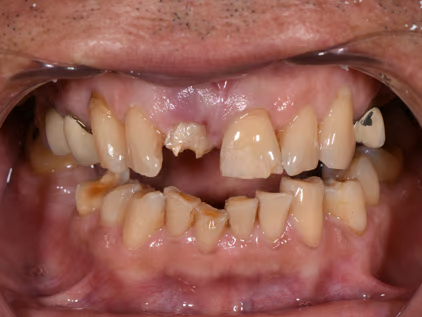
Even if you are unaware of grinding, signs of tooth wear often indicate ongoing bruxism. Significant tooth wear caused by long-term grinding may affect both function and aesthetics and may require further restorative planning, including full mouth rehabilitation.
Patients from across Kuala Lumpur, including Mont Kiara, Damansara Heights, and Bangsar, visit Maison Dentaire for occlusal splints when teeth grinding or jaw pain has begun affecting their sleep, daily comfort, or existing dental restorations.
Bruxism and TMD — When Is an Occlusal Splint Recommended?
Bruxism is the clinical term for teeth grinding or jaw clenching, often occurring during sleep without the patient being aware of it. Left unmanaged, bruxism accelerates tooth wear, fractures restorations, and strains the temporomandibular joints (TMJ) connecting the jaw to the skull.
Temporomandibular disorders (TMD) describe a range of conditions affecting the jaw joints and surrounding muscles, including clicking, limited mouth opening, jaw locking, and facial pain. An occlusal splint is one of the first-line treatments for managing both bruxism and TMD symptoms conservatively, before any irreversible dental work is considered.
For patients with more complex jaw pain or temporomandibular disorders, an occlusal splint works best as part of a broader management plan. Where appropriate, Dr. Lee Pei Nee works alongside or refers patients to a physiotherapist for targeted treatment of the cervicomandibular muscles and postural correction — addressing the relationship between neck posture, cervical spine alignment, and jaw function that contributes to chronic grinding and TMJ pain in many patients.
Our Approach: Hard Stabilisation Occlusal Splints
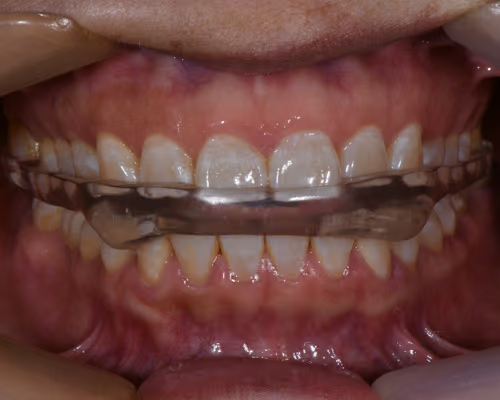
Occlusal stabilising splints play an important role in managing jaw muscle pain and temporomandibular disorders (TMD). At Maison Dentaire Specialist Clinic, we primarily use hard stabilisation splints, commonly known as Michigan-type splints, which provide a smooth, flat biting surface that allows even contact between the teeth and controlled jaw movement during function.
The splint helps to:
Reduce overactivity of the jaw muscles
Allow jaw muscles to relax during sleep
Improve bite stability and comfort
Protect crowns, veneers, bridges, and implants from excessive wear
Although soft splints may provide short-term comfort in some cases, research shows they can increase muscle activity and encourage clenching in certain patients. For this reason, we generally recommend hard stabilising splints for more predictable and long-term management of jaw muscle pain and teeth grinding.
What To Expect During Treatment
1. Comprehensive Assessment
We examine your teeth, bite, and jaw joints carefully to assess the presence and severity of grinding or clenching. Where needed, X-rays or a CBCT scan help evaluate the jaw joints and surrounding structures. The pattern of tooth wear, jaw muscle tenderness, and any TMJ symptoms are all considered before a splint is recommended.
2. Digital Scan or Impression
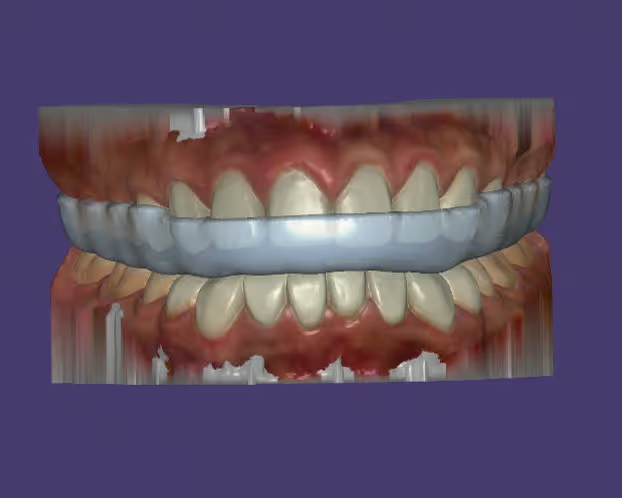
Accurate records of your teeth and bite are taken to ensure precise splint fabrication. A digital scan is used where possible for greater accuracy and comfort.
3. Custom Fabrication
Your occlusal splint is made specifically for your mouth in a dental laboratory. Hard stabilisation splints are fabricated from high-density acrylic to provide a precise, comfortable fit.
4. Fitting and Adjustment
At your fitting appointment, we check the bite contact, comfort, and ease of insertion and removal. Any necessary adjustments are made before you take the splint home.
5. Review and Maintenance
Periodic reviews ensure the splint continues to fit correctly and remains effective over time. We assess any changes in tooth wear and jaw symptoms at each visit.
Occlusal Splint FAQ
ask us
anything
Is an occlusal splint the same as a sports mouthguard?
No. A sports mouthguard protects against impact injuries, while an occlusal splint is designed to manage bite forces, grinding, and jaw function.
Can’t I just use a store-bought or over-the-counter mouthguard?
While pharmacy “boil-and-bite” guards are cheaper, they often do more harm than good. Because they aren’t custom-fitted to your bite, they are often bulky and “squishy,” which can actually encourage your jaw to chew and grind more throughout the night. A professional occlusal splint is precision-crafted from high-density acrylic to align your jaw and protect your teeth without shifting your bite.
How long do I need to wear an occlusal splint?
Most patients wear it at night while sleeping. Your dentist will advise if daytime use is necessary.
Will wearing a splint stop teeth grinding completely?
An occlusal splint protects your teeth and reduces muscle strain, but it does not eliminate the habit itself. It plays a key role in managing the effects of grinding.
How long does an occlusal splint last?
With proper care, a splint can last several years, depending on grinding severity and material type.
Is an occlusal splint uncomfortable?
A well-fitted, custom-made splint should feel comfortable after a short adjustment period.
Book a Consultation for Occlusal Splint
At Maison Dentaire Specialist Clinic, Dr. Lee Pei Nee, an MDC-registered prosthodontist, assesses your bite, jaw function, and tooth wear carefully before recommending any treatment. If an occlusal splint is the right solution, we explain the process clearly and provide transparent fees before anything begins.
If you are considering an occlusal splint in Kuala Lumpur, booking a consultation is the best place to start.