
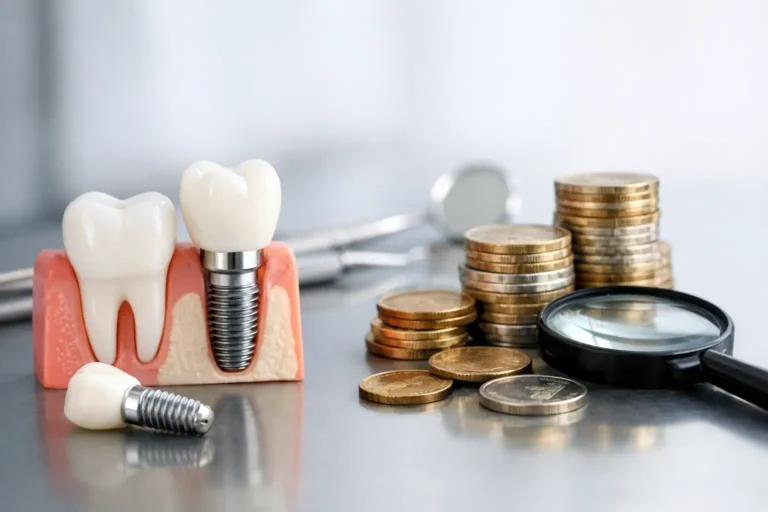
The price difference usually becomes real at the consultation. A patient who has lived for years with a loose denture, a failing bridge, or several teeth that can no longer be saved often expects implants to cost more than a filling or crown. What surprises many people is how much more. If you have been wondering why dental implants are so expensive, the short answer is that implant treatment is not a single item. It is a carefully planned medical procedure, a precision-made restoration, and a long-term functional solution combined.
That matters because a dental implant is not simply a replacement tooth that is bought and fitted. It has to work within bone, gum, bite forces, facial support, speech, hygiene needs, and aesthetics. When done properly, the treatment is designed not just to fill a gap, but to restore comfort, confidence, and stability over many years.
Why dental implants are so expensive compared with other options
A conventional denture or bridge can often be made more quickly and at a lower upfront cost. Implant treatment is different because it involves surgery, advanced diagnostics, detailed planning, laboratory work, and multiple stages of care. The fee reflects that complexity.
There is also a difference between replacing a tooth and replacing it well. A specialist-led implant case considers where the implant should sit in relation to the final tooth shape, how the bite will distribute pressure, whether the gum line will look natural, and how easy the result will be to keep clean. Those decisions take time, training, and experience.
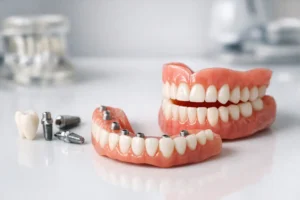
For patients considering full-arch treatment such as All-on-Four, All-on-Six, or All-on-X, the cost rises further because the planning is on an entirely different level. The clinician is not just replacing one missing tooth. They are rebuilding an entire biting system, often for someone who has had years of tooth loss, denture instability, gum disease, or collapsed function.
The treatment starts long before surgery
One of the biggest reasons implants cost what they do is the planning phase. Proper implant treatment begins with a detailed assessment of the teeth, gums, bite, jaw joints, bone volume, medical history, and aesthetic goals. Very often this includes 3D imaging, clinical photography, digital or conventional impressions, and a careful review of whether any failing teeth can be retained or should be removed.
This stage is easy to underestimate because it is less visible than surgery. Yet it is where many of the most important decisions are made. Poor planning can lead to implants being placed in the wrong position, crowns that are difficult to clean, speech problems, food trapping, overloading, or disappointing aesthetics. Correct planning reduces those risks.
In a specialist prosthodontic setting, the implant is planned from the final restoration backwards. That means the position of the future teeth, gum support, bite relationship, and long-term maintenance are considered before the implant is placed. This is slower than a volume-driven approach, but it is usually safer and more predictable.
Materials and components are not all the same
Patients often compare fees between clinics and assume an implant is an implant. In reality, implant systems vary significantly in research history, design, precision, component quality, and long-term support. Premium internationally recognised systems such as Straumann and Megagen are not chosen because they sound impressive. They are chosen because consistency matters.
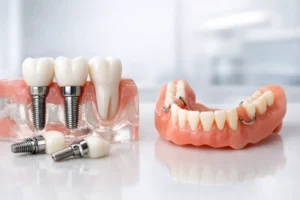
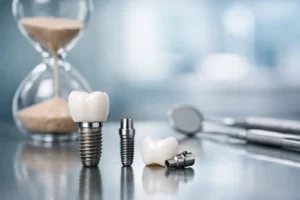
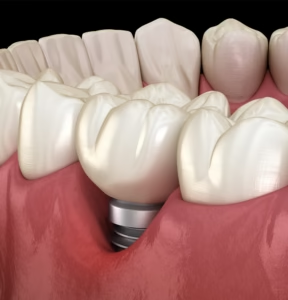
The implant itself is only one component. There is also the abutment, the custom or stock connection between the implant and the final tooth, as well as the crown or bridge made by the laboratory. Each part has to fit accurately. Small discrepancies can affect the way force is distributed and how the surrounding tissues respond over time.
High-quality materials also tend to come with stronger manufacturing standards and better documented performance. That does not mean every premium implant will succeed forever, because no medical treatment carries guarantees. It does mean the treatment is built on a more reliable foundation.
Surgical skill and judgement are part of the fee
Implant treatment is technique-sensitive. The surgery itself may look straightforward from the patient’s point of view, but the judgement behind it is not. Bone quality, anatomical limitations, gum thickness, smile line, infection control, loading protocols, and healing patterns all need to be assessed.
That becomes even more important in complex cases. Patients with longstanding missing teeth may have reduced bone volume. Patients who are moving from dentures to fixed implant teeth may need extractions, bone smoothing, temporary teeth, or staged treatment. Patients with heavy bite forces or grinding habits may need a more cautious design.
You are paying not only for time in the chair, but for the clinician’s ability to identify risk before it becomes failure. That is particularly relevant when treatment is personally planned and delivered by a specialist prosthodontist rather than passed between multiple providers.
The laboratory work is highly customised
A good implant restoration should not feel like an off-the-shelf solution. Whether it is a single implant crown or a full-arch prosthesis, the final teeth need to be designed around the patient’s face, speech, bite, and hygiene access.
This requires skilled laboratory work. The technician has to create restorations that are accurate, durable, and natural in appearance. For full-arch cases, there may be multiple prototypes and records to verify tooth position, lip support, vertical dimension, and bite relationship before the definitive prosthesis is made.
That level of customisation costs more because it involves more expertise and more stages. It also tends to produce a result that functions better and looks more convincing.
Additional procedures can increase the cost
Another reason why dental implants are so expensive is that many patients do not start from ideal conditions. If there is bone loss, active gum disease, broken teeth, infection, or an unstable bite, these issues often need to be addressed first.
Some patients require extractions, bone grafting, sinus lift procedures, temporary dentures, provisional bridges, or treatment to stabilise the gums before implant placement can proceed. Others may need a staged approach to allow healing and reduce risk.
This is where internet price comparisons can become misleading. A low headline fee may not include diagnostics, sedation, temporary teeth, grafting, follow-up visits, or the final restoration. A more transparent fee can look higher at first glance, while actually reflecting the full scope of treatment.
You are paying for longevity, not just placement
The cheapest implant treatment is not always the least expensive over time. If an implant is placed quickly but the bite is poorly managed, the crown is difficult to clean, or the aesthetics are compromised, the patient may face further corrective treatment later.
Longevity depends on much more than whether the implant integrates with bone. It depends on how the restoration handles force, how maintainable it is, whether the surrounding tissues remain healthy, and how well the design suits the patient’s habits and anatomy. For full-mouth and full-arch cases, bite design and occlusion are especially important. A stable result should allow comfortable chewing, clear speech, and confidence in social settings.
That is one reason specialist-led treatment can command a premium. The focus is not simply on placing implants, but on restoring an entire system in a way that is biologically sound and functionally durable.
Are expensive implants always better?
Not automatically. Higher fees do not guarantee better care, and lower fees do not always mean poor treatment. The real question is what is included, who is planning the case, what materials are being used, and how much attention is being paid to long-term function.
A fair fee usually reflects thorough assessment, clear written planning, quality components, careful surgery, precise restorative work, and structured review. If a quote seems dramatically lower than others, it is worth asking what may have been omitted. Sometimes the difference is efficiency. Sometimes it is a very different standard of planning.
For patients considering implant treatment, especially full-arch rehabilitation, it is sensible to look beyond the number on the quotation. Ask who will carry out each stage, whether the plan is tailored to your bite and anatomy, what temporary and final teeth are included, and what maintenance will be needed afterwards. This is especially worth asking if you’re comparing quotes between clinics in KLCC, Mont Kiara, or Damansara Heights, where fee structures and included stages can vary considerably.
Implants are expensive because they ask for precision at every stage. They sit in living tissue, carry significant biting forces, and are expected to look natural while functioning day after day. When treatment is done with care, restraint, and proper planning, the cost is not only about replacing teeth. It is about giving you a stable result you can rely on when you eat, speak, smile, and get on with life.