
If you are searching for the best dental implants, you are probably not looking for a bargain or a quick fix. You want teeth that feel secure, look natural, and let you eat, speak and smile without second-guessing every bite. That is a sensible place to start, because implant treatment is not simply about placing screws in the jaw. It is about choosing the right solution for your mouth, your bite, your bone, and your long-term health.
What makes the best dental implants?
Patients often assume the answer lies in the brand alone. Brand matters, but it is only one part of the picture. The best dental implants are the ones chosen and placed within a carefully planned treatment, with the final teeth designed to suit your face, your bite force, and how you use your mouth every day.
A premium implant system from a recognised manufacturer can offer excellent engineering, surface technology, and long-term data. That matters. However, even the finest implant system can fail to deliver if the diagnosis is rushed, the position is poorly planned, or the final bridge or crown is not designed properly. In contrast, a well-planned case with appropriate implant selection, good bone support, and precise prosthodontic design gives the patient the best chance of comfort and longevity.
For that reason, the real question is not only which implant is best. It is who is planning the case, how thoroughly it is being assessed, and whether the final result has been designed for long-term function rather than short-term appearance.
Best dental implants are about planning, not marketing
Implants are often advertised as if they are interchangeable. They are not. A single missing tooth, several failing teeth, and a full arch replacement each require different thinking.
If you need one implant, the focus is usually on preserving neighbouring teeth, creating a natural gum line, and making sure the final crown blends in with your smile. If you need multiple implants, spacing and bite balance become more important. If you are considering full-arch treatment such as All-on-Four, All-on-Six or All-on-X, the stakes are higher again. In those cases, implant number, angulation, bone availability, opposing teeth, speech, hygiene access, and facial support all need proper attention.
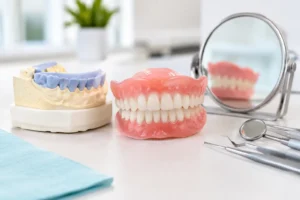
This is where specialist-led planning makes a clear difference. A prosthodontic approach looks beyond whether an implant can be placed. It asks whether the teeth built on top of those implants will function well, remain cleansable, and look proportionate over time. That level of planning is especially important for patients who are replacing all teeth in one arch, or both arches, after years of denture wear or failing dental work.
Single tooth implants versus full-arch implants
Many online articles discuss implants as though every patient needs the same treatment. In reality, the best option depends on the extent of tooth loss.
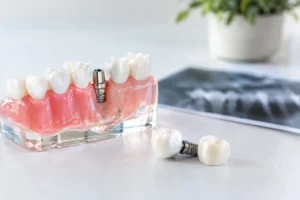
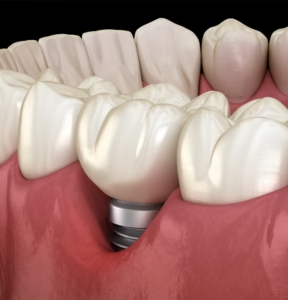
For a single missing tooth, an implant can be an excellent conservative choice because it replaces the root of the missing tooth without cutting down healthy adjacent teeth for a bridge. The key here is precision. The implant must be positioned so the final crown emerges naturally through the gum and sits in harmony with the surrounding teeth.
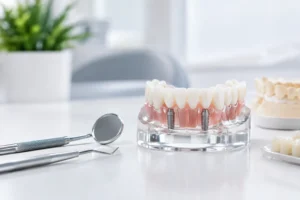
For several missing teeth, implants may support individual crowns or a bridge. This can improve stability and chewing strength, but the design has to account for load distribution. Too few implants supporting too much force can create problems later.
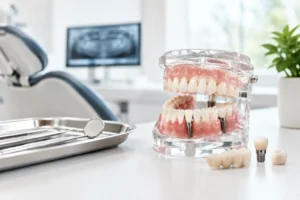
For patients missing all teeth, or facing the loss of all remaining teeth, full-arch rehabilitation may be the more appropriate conversation. All-on-Four and All-on-Six are well-known concepts, but they are not one-size-fits-all packages. Some patients do well with four implants in an arch. Others need six or more because of bite force, bone quality, jaw shape, or the demands of the final prosthesis. The best full-arch implant treatment is the one matched to the patient, not the one advertised most aggressively.
Why implant brand still matters
Although planning comes first, implant brand should not be dismissed. Well-established systems such as Straumann and Megagen are widely respected because they are backed by research, quality control, and prosthetic components designed for long-term clinical use.
This matters for a few reasons. First, the precision of the implant-abutment connection can affect stability and maintenance. Secondly, established systems usually have a broader restorative ecosystem, which helps when tailoring the final crown or bridge. Thirdly, long-term support matters. If a component ever needs replacement years later, recognised systems are generally easier to service than unknown or cheaper alternatives.
That said, no implant brand can compensate for poor judgement. Patients should be cautious of clinics that focus heavily on the name of the implant but say little about diagnostics, bite assessment, or prosthetic planning.
The role of bone, gums and bite
A strong implant result depends on more than enough bone to hold the fixture. Bone volume and density matter, but so do gum quality, smile line, lip support and occlusion.
Occlusion means how your teeth meet when you bite and chew. It is one of the most overlooked parts of implant treatment, especially in heavily marketed full-mouth cases. Natural teeth have a periodontal ligament that gives subtle shock absorption. Implants do not. That means the final bite must be designed carefully to control force. If this is ignored, patients can experience screw loosening, porcelain fracture, implant overload or discomfort.
The gum tissues also shape the final appearance. In some cases, a patient may technically be suitable for an implant, but the aesthetic outcome may be compromised unless soft tissue management, bone grafting, or an alternative restorative plan is considered. Honest advice matters here. The best care is not promising an implant at all costs. It is recommending what is appropriate.
How to judge an implant provider
If you are comparing clinics, look beyond before-and-after photographs. Attractive images are useful, but they do not tell you how the case was diagnosed or whether the result will remain stable.
Ask who plans and delivers the treatment. Ask whether you will receive a written treatment plan with clear fees and alternatives. Ask what implant system is used and why. Ask how your bite will be assessed. If you are considering full-arch treatment, ask how the clinic decides between All-on-Four, All-on-Six, or a more customised All-on-X design.
You should also ask about maintenance. The best dental implants are not fit-and-forget dentistry. They require review, hygiene care, and a prosthesis designed so that cleaning is realistically possible. Patients who have struggled with loose dentures often focus understandably on stability, but cleanability is just as important for long-term success.
A careful provider will not rush this discussion. They will explain trade-offs clearly. For example, a fixed full-arch bridge can feel far more secure than a removable denture, but it may also involve surgery, a longer treatment process, and a greater financial commitment. In some cases, a specialist-made denture remains the more sensible option. Good care does not push every patient towards the most expensive treatment.
Cost and value are not the same thing
Implant fees vary widely, and patients often wonder why. The difference is not always profit. It may reflect the level of planning, the implant system used, the experience of the clinician, whether provisional teeth are included, the quality of the final prosthesis, and how much time is allocated to your care.
A low quote can look appealing until you discover it excludes scans, grafting, temporary teeth, or the final bridge material. On the other hand, a higher fee may include comprehensive diagnosis, specialist-led planning, premium implant components, and a final restoration designed for durability and aesthetics.
Value comes from suitability and longevity. A treatment that works comfortably for many years, preserves oral health, and avoids repeated repairs is usually better value than a cheaper solution that needs constant compromise.
When full-arch patients need a different conversation
Patients replacing all teeth often arrive after years of coping – eating on one side, avoiding photographs, using denture adhesive, or managing teeth that are loose and beyond saving. They do not simply need implants. They need a reset that restores confidence and function.
In these cases, the best outcome usually comes from stepping back and planning the whole picture: facial support, jaw relationship, smile line, phonetics, and cleaning access. This is why full-arch treatment should never be reduced to a standard package. The number of implants, the design of the bridge, the material choice, and the timing of extraction and loading all depend on the individual.
For patients in Kuala Lumpur, across Klang Valley, seeking a fixed alternative to dentures, a specialist consultation can be particularly useful when previous advice has felt rushed or overly sales-driven. Calm, detailed planning often brings far more clarity than another promotional offer.
The best dental implants are not the ones with the loudest advertising. They are the ones chosen with care, placed with precision, and restored with a clear understanding of how your mouth needs to function every day. If a treatment plan feels thoughtful, transparent and tailored to you, you are usually looking in the right direction.