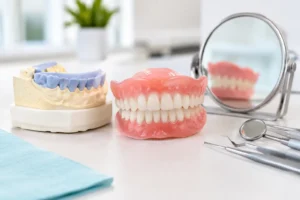

A loose denture at dinner, a tooth that shifts when you chew, the quiet habit of avoiding certain foods – these are often the moments that lead people to ask why choose dental implants in the first place. The answer is not simply that implants look better. For many patients, they offer a more stable, more functional and more predictable way to restore missing teeth, especially when comfort and long-term confidence matter as much as appearance.
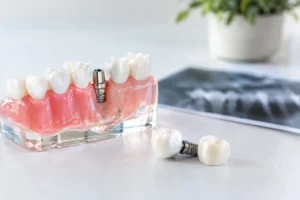
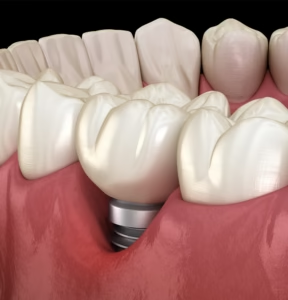
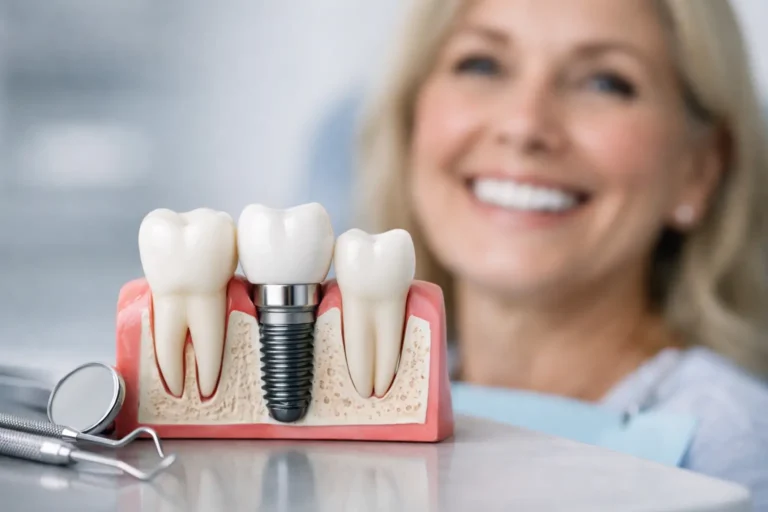
Dental implants are small titanium fixtures placed in the jawbone to support a crown, bridge or full arch prosthesis. Unlike removable dentures, they are designed to stay in place. Unlike conventional bridges, they do not always rely on neighbouring teeth for support. That difference changes how a restoration feels, how it functions and, in many cases, how long it can serve you well.
Why choose dental implants over other options?
The clearest reason is stability. A well-planned implant restoration is anchored to bone, so it does not move in the way a removable denture can. That stability matters when you are chewing firmer foods, speaking in social settings or simply wanting to stop thinking about your teeth throughout the day.
There is also the question of force. Natural chewing involves pressure through the jaw, and implants are able to support that process in a way that dentures often cannot. Patients who have struggled with loose lower dentures in particular often notice the difference quickly. Eating can feel less like managing a prosthesis and more like using teeth again.
Another important factor is bone preservation. When a tooth is lost, the bone in that area no longer receives regular stimulation and can begin to shrink over time. Implants help transmit load into the bone, which may reduce further bone loss. Dentures do not do this, and in some patients they can contribute to ongoing ridge resorption, making the fit worse as the years pass.
Aesthetics matter too, but they should not be treated as a separate issue from function. Teeth that look natural but sit in the wrong position, or restorations that appear attractive but do not support the bite properly, rarely age well. Implant treatment works best when appearance, speech, gum support and bite mechanics are planned together.
The real advantages of dental implants
For a single missing tooth, an implant can often replace the tooth without cutting down the adjacent teeth for a bridge. That is a conservative advantage when the neighbouring teeth are otherwise healthy. It allows each tooth to stand on its own rather than asking two teeth to support a gap between them.
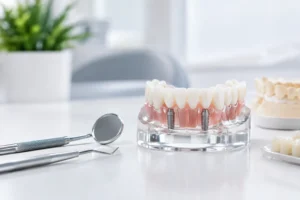
For several missing teeth, implants can support a bridge without requiring a removable plate. This can make the mouth feel less bulky and more natural. Some patients who have worn partial dentures for years are surprised by how much more comfortable a fixed option feels.
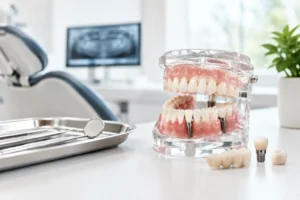
For patients missing all or most teeth, implant-supported full arch treatment can be life-changing when carefully selected. If you are researching All-on-Four, All-on-Six or All-on-X solutions, you are likely not only asking why choose dental implants, but whether a fixed full arch option is worth the investment over a conventional denture. In the right case, it can be. A fixed implant bridge can offer better retention, improved bite confidence and a stronger sense that your teeth are truly part of you rather than something you remove at night.
That said, not every patient needs the same treatment. Some are suitable for a full fixed arch. Others may be better served by an implant-retained overdenture, especially if anatomy, medical history, maintenance ability or budget make a simpler approach more appropriate. Good treatment planning is not about steering everyone towards the most extensive solution. It is about recommending what is necessary, realistic and likely to last.
What makes implants feel different from dentures?
The answer is not just that they do not come out. Removable dentures sit on the gums and depend on suction, muscle control and the shape of the ridge. As the ridge changes, the denture often becomes less secure. This can lead to rubbing, sore spots and increasing frustration with adhesives or repeated adjustments.
Implants change the support system. Instead of resting entirely on soft tissue, the restoration gains anchorage from the jaw. That can improve chewing efficiency and reduce the sense of movement. Speech may also feel more natural because the prosthesis is not shifting as the tongue and lips move.
For long-term denture wearers, there is often an emotional difference as well. They may smile more freely, order differently at restaurants and stop planning around what their teeth can tolerate. Those changes sound small, but in practice they affect everyday quality of life.
Why specialist planning matters
Implants are not interchangeable products. The long-term outcome depends on diagnosis, bone assessment, gum condition, bite analysis, implant positioning and the design of the final prosthesis. A restoration can only function well if the foundation and planning are correct.
This is especially true in full-mouth and full-arch cases. Patients may present with worn teeth, collapsed bites, failing crowns, gum disease history or longstanding tooth loss. In such situations, placing implants is only one part of the treatment. The clinician also needs to consider vertical dimension, smile line, lip support, phonetics and how forces will be distributed over time.
That is where prosthodontic input becomes valuable. Restorative treatment should begin with the end in mind – not only whether implants can be placed, but what sort of teeth they are meant to support and how those teeth must function every day. At Maison Dentaire, this planning is led personally by Dr. Lee Pei Nee, with close attention to aesthetics, occlusion and long-term maintainability.
Are dental implants always the best choice?
No, and any trustworthy discussion should say so plainly.
If a natural tooth can be predictably saved, preserving it may be the better option. An implant is an excellent replacement for a missing or hopeless tooth, but it is not automatically superior to healthy natural tooth structure. Likewise, some patients may not be suitable for immediate treatment because of uncontrolled gum disease, smoking habits, certain medical conditions or limited bone volume.
Cost is another real consideration. Implants generally involve a higher upfront investment than dentures or conventional bridges. However, the comparison should be fair. A lower initial fee does not always mean lower long-term cost if repeated remakes, relines, repairs or compromised function become part of the picture.
Treatment time also varies. Some cases are straightforward, while others require extractions, grafting or staged healing. If you need a rapid, low-cost replacement and understand the compromises, a denture may still be a reasonable interim or definitive solution. The key is making that decision with full clarity rather than marketing pressure.
What to expect if you are considering implants
The first step should be a detailed assessment, not a quick sales pitch. That means reviewing your dental history, examining the gums and bite, taking appropriate imaging and discussing what you want the treatment to achieve. Some patients want to stop wearing a loose denture. Others want to replace failing teeth before matters become more complex. Those are different starting points and they need different plans.
You should also expect a written explanation of your options. A good treatment plan usually sets out what is recommended, what alternatives exist, what the likely sequence will be and what the fees cover. This is particularly important in advanced restorative care, where clarity helps patients make calm, informed decisions.
It is sensible to ask how the final teeth will be designed, who will plan the bite, what maintenance will be needed and what happens if additional findings arise during treatment. These are not minor details. They are part of whether the result will remain comfortable and serviceable over the years.
Choosing implants for the long term
Patients rarely regret taking time to understand the reasoning behind treatment. They do regret rushing into a solution that looked attractive in an advertisement but did not properly account for function, anatomy or maintenance.
Dental implants can be an excellent option because they address more than the gap itself. They can restore support, improve chewing, reduce movement, preserve confidence and provide a stronger foundation for long-term oral rehabilitation. But their value depends on careful case selection and precise execution.
If you are weighing dentures against fixed teeth, or trying to decide what to do about multiple failing teeth, the most useful question is not simply whether implants are popular. It is whether they are the right solution for your mouth, your goals and the years ahead. That is where good dentistry begins.