
Dental implants are everywhere right now. Every clinic is promoting them. Social media is full of before-and-afters. And if you’ve recently lost a tooth, chances are implants were the first (and maybe only) option brought up at your last appointment.
As a specialist, I often see patients who believe an implant is their only choice. The truth? Your unique biology, health history, and lifestyle should dictate your treatment, not a trend. Here’s what most clinics won’t tell you: implants aren’t the right choice for everyone.
That’s not a knock on implants. When the conditions are right, they truly are the best thing modern dentistry has to offer: strong, natural-feeling, and built to last. But “best in class” doesn’t automatically mean “best for you.” And recommending implants without first understanding your full picture isn’t good dentistry. It’s just good marketing.
So before you commit to surgery, here are five things worth knowing.
If you’ve already decided implants are right for you, visit our Dental Implants page for full details on treatment options at Maison Dentaire.
Your Bone May Not Be Ready
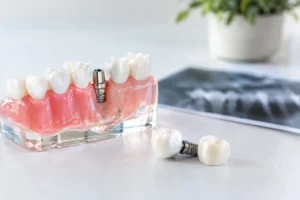
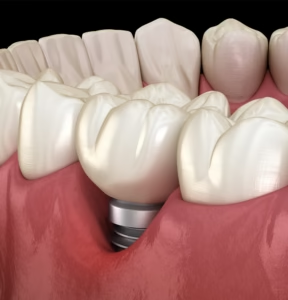
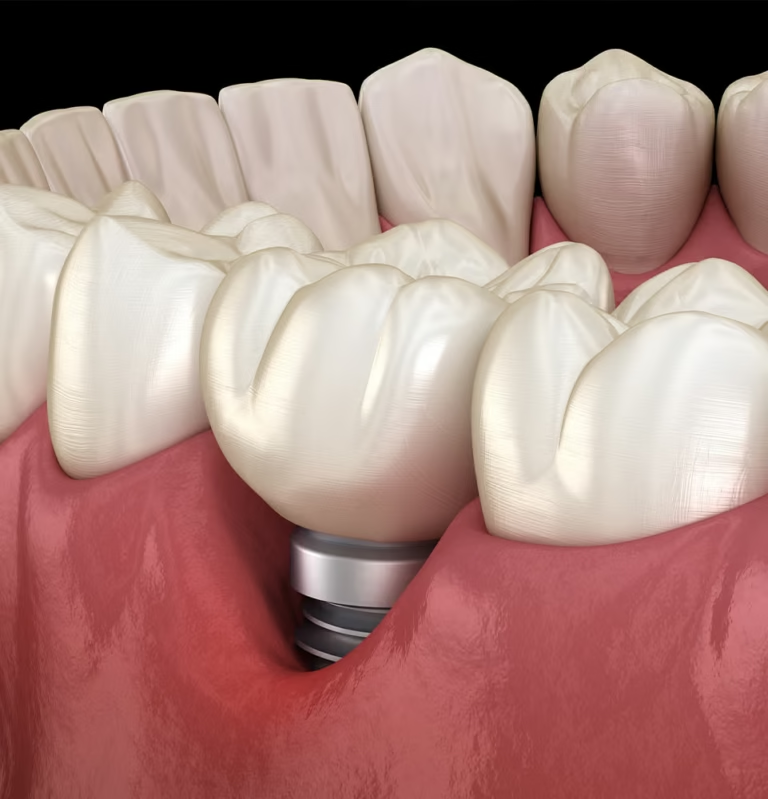
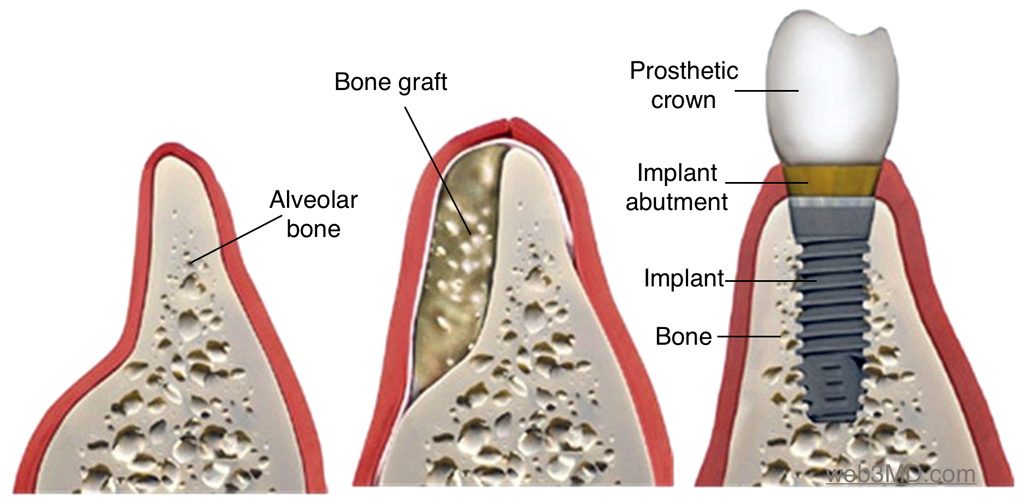
An implant is essentially a titanium screw that gets anchored into your jawbone. For that to work, there needs to be enough bone there to hold it. Think of it like a screw going into drywall. If the wall is too thin or soft, the screw won’t hold.
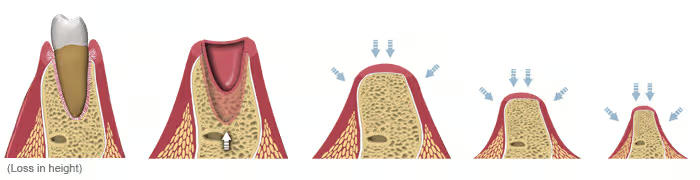
Here’s the problem: once a tooth is lost, the bone underneath starts to shrink, and this continues for months. If you’ve had a gap for a while, there may not be enough bone left to place an implant safely. In those cases, a bone graft is needed first, adding another surgical procedure, more healing time (often 6 to 9 months), and more cost.
And not everyone is a candidate for bone grafting. Conditions like osteoporosis, long-term bisphosphonate use, or previous radiation to the jaw can make the whole process significantly more complicated.
This is why a proper 3D scan is essential before any implant plan is made. Not an optional extra.
Some Health Conditions Change the Equation
Placing an implant is a surgical procedure, and like any surgery, your overall health matters.
A few conditions that can affect outcomes:
Uncontrolled diabetes — High blood sugar slows healing and increases the risk of infection around the implant. Implants placed before diabetes is well-managed are far more likely to fail.
Active gum disease — If the gums and bone are already infected, placing an implant into that environment is risky. The underlying problem needs to be treated first.
Blood thinners — Patients on anticoagulant medication face increased bleeding risks during and after surgery, something that needs to be carefully assessed.
Certain autoimmune conditions — These can interfere with osseointegration, the process where the implant fuses with the bone.
None of this means implants are off the table forever. But it does mean the timing and approach need to be tailored to you, not rushed.

Smoking Significantly Raises Your Risk
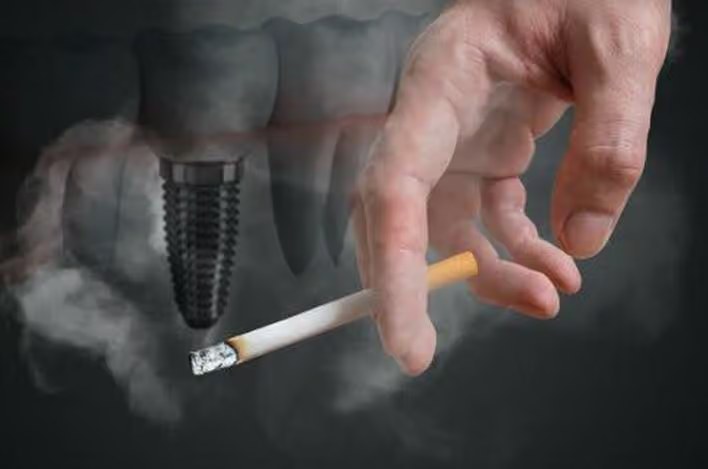
If you smoke, your implant is 2 to 3 times more likely to fail compared to a non-smoker. Nicotine restricts blood flow to the gums and bone, which slows healing and creates conditions where infection can take hold.
This isn’t a reason to never get an implant. But it is a reason to have an honest conversation with your dentist about timing and whether an alternative might make more sense for now.
Implants Take Time, More Than Most People Expect
The full process, from consultation to final crown, typically takes 3 to 6 months, or longer if bone grafting is needed.
That’s because after the implant is placed, it needs several months to fuse properly with the bone before a crown can be attached. Rushing this stage compromises the result.
If you have a wedding, a big event, or simply can’t manage a lengthy treatment timeline, there are excellent fixed and removable options that can restore your smile much sooner and look completely natural doing it.
The Cost Adds Up Fast
A single implant in Malaysia typically costs between RM 5,000 and RM 10,000, and that’s before factoring in bone grafts, additional scans, or multiple missing teeth. Most medical cards don’t cover implants.
The honest truth is that there are clinically sound, long-lasting alternatives at a significantly lower price point. Choosing one of those options isn’t settling. For many patients, it’s simply the smarter decision given their full situation.
What Are the Alternatives?
We’ve covered this in detail in our guide: Lost One or More Teeth? Here’s What You Need to Know — but in short, the three main options are:
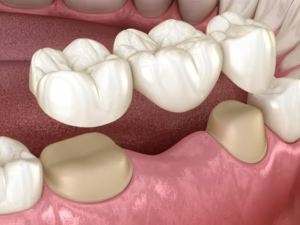
- Dental bridges — fixed, no surgery, completed in just a few visits. A great option when adjacent teeth are healthy and strong. Read more: Your Complete Guide to Dental Bridges in Malaysia
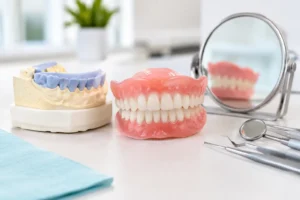
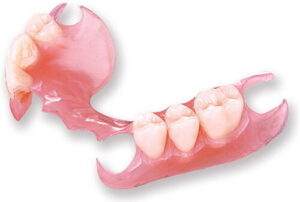
- Dentures and partial dentures — modern dentures are far more comfortable and natural-looking than their old reputation suggests. A practical, affordable choice for multiple missing teeth. Read more: Dentures in Kuala Lumpur
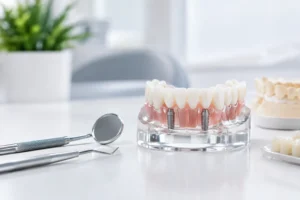
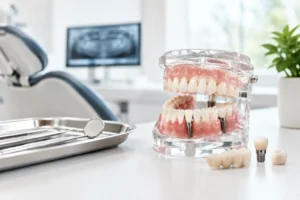
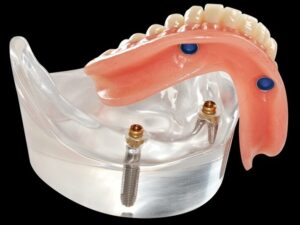
- Implant-supported (snap-on) overdentures — a middle-ground option using just 2–4 implants to anchor a denture securely, giving you implant-level stability without individual implant costs: Read more: Implant-supported-overdentures
The best option is always the one that fits your bone health, medical history, lifestyle, and budget — not the one that’s being promoted most loudly.
Frequently Asked Questions (FAQs) About Dental Implants
Can I get a dental implant if I have diabetes?
It depends on how well your diabetes is controlled. Uncontrolled blood sugar significantly increases the risk of infection and implant failure. With well-managed diabetes, implants are often still possible, but your dentist should assess this carefully before proceeding.
How do I know if I have enough bone for an implant?
You won’t know from a regular X-ray alone. A 3D cone beam CT scan (CBCT) is the gold standard for assessing bone volume and density. At Maison Dentaire, we use this imaging to give you an accurate picture before recommending any treatment.
What happens if I don’t replace a missing tooth at all?
Leaving a gap untreated causes the surrounding teeth to gradually shift, the opposing tooth to over-erupt, and the jawbone beneath the gap to resorb (shrink). Over time, this can affect your bite, facial appearance, and the difficulty of future treatment. Replacing a missing tooth, with any option, is almost always better than leaving it.
Is a dental bridge as good as an implant?
They serve the same function but work differently. An implant replaces the root and the crown; a bridge replaces only the crown, supported by adjacent teeth. Implants generally preserve bone better long-term. But for many patients, particularly those with healthy adjacent teeth already needing crowns, or those who aren’t surgical candidates, a bridge is an excellent, long-lasting solution.
How long do alternatives like bridges or dentures actually last?
A well-made dental bridge typically lasts 10–15 years or longer with good oral hygiene. Modern implant-supported overdenture can last many years with proper care. No restoration lasts forever, but neither does neglecting a missing tooth.
I was told I need a bone graft before an implant. Is that really necessary?
If your bone volume is insufficient, yes. Placing an implant without adequate bone risks failure. A bone graft rebuilds the foundation so the implant has something solid to fuse with. Whether you’re a candidate for grafting depends on your overall health and bone condition. A specialist assessment will give you a clear answer.
What’s the first step if I’m unsure which option is right for me?
Book a consultation with a prosthodontist or a dentist experienced in tooth replacement. Bring any recent X-rays if you have them. A proper assessment, including a clinical exam and 3D scan if needed, is the only way to know which options are genuinely on the table for your specific situation.
Your Next Step — Dental Implant Assessment in KL
We’re a specialist clinic led by Dr. Lee Pei Nee, a prosthodontist whose entire focus is restoring teeth and rebuilding smiles. That means we’re trained across every replacement option, not just one.
When you come to us, we don’t start with a treatment. We start with you: your health history, your bone structure, your goals, and your lifestyle. We use 3D imaging where needed to give you an accurate picture, and we’ll always explain your full range of options before recommending anything.
Patients from across Kuala Lumpur, including Mont Kiara, Damansara Heights, and Bangsar, visit Maison Dentaire specifically because they want a second opinion — or a first honest opinion — before committing to implant surgery.
Sometimes the right answer is an implant. Sometimes it isn’t. Either way, you’ll leave knowing exactly what your options are and why.
Thinking about replacing a missing tooth? Book a consultation at info@maisondentaire.com.my or message us on WhatsApp +6018-2588366. We’re happy to take a look and give you our honest assessment — no pressure, no hard sell.
This article is for general educational purposes and does not constitute personalised medical advice. Please consult a qualified dental professional for an assessment specific to your needs.