
So, you have got a missing tooth. Maybe chewing has become a strategic exercise. Maybe you have started smiling with your mouth closed. Or maybe you are rocking a denture that moves around more than you would like.
If you are exploring fixed options to replace missing teeth, you are in the right place. This guide walks you through everything you need to know about dental bridges in Malaysia — what they are, how they work, which type fits your situation, and what the whole process actually looks like.
No fluff. Just the stuff that actually helps you decide.
What Are Dental Bridges?
A dental bridge is a fixed replacement for one or more missing teeth. Unlike dentures, a bridge is cemented in place so you don’t have to take it out every night, and it doesn’t shift around during meals or… fly off when you’re blowing birthday candles.

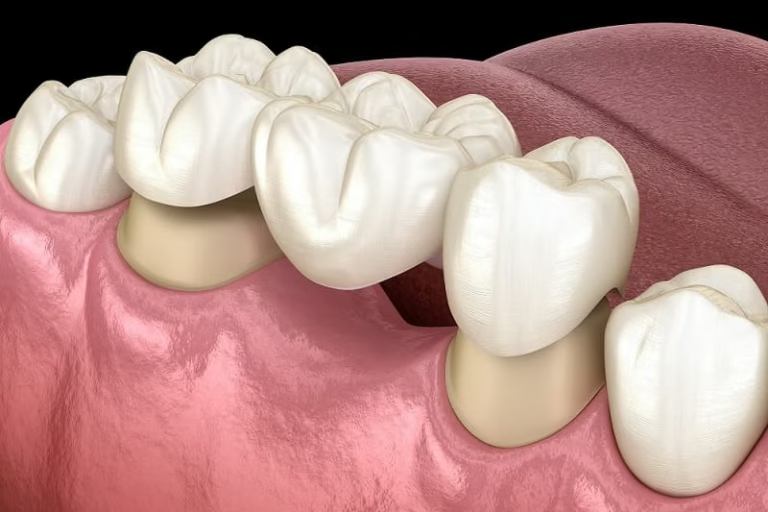
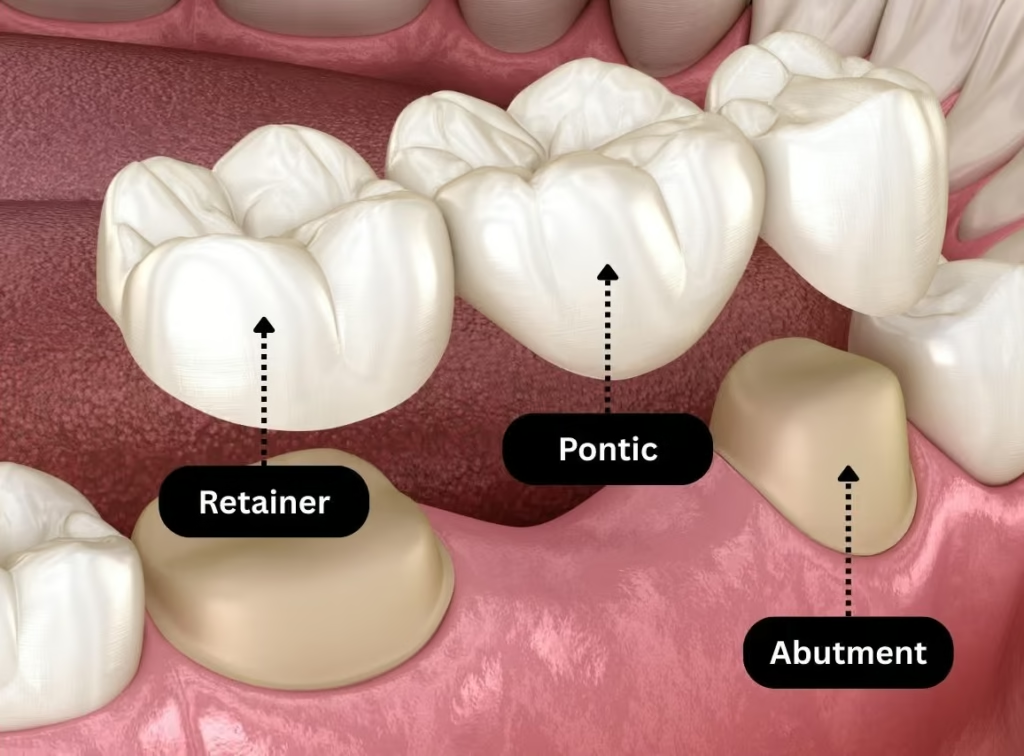
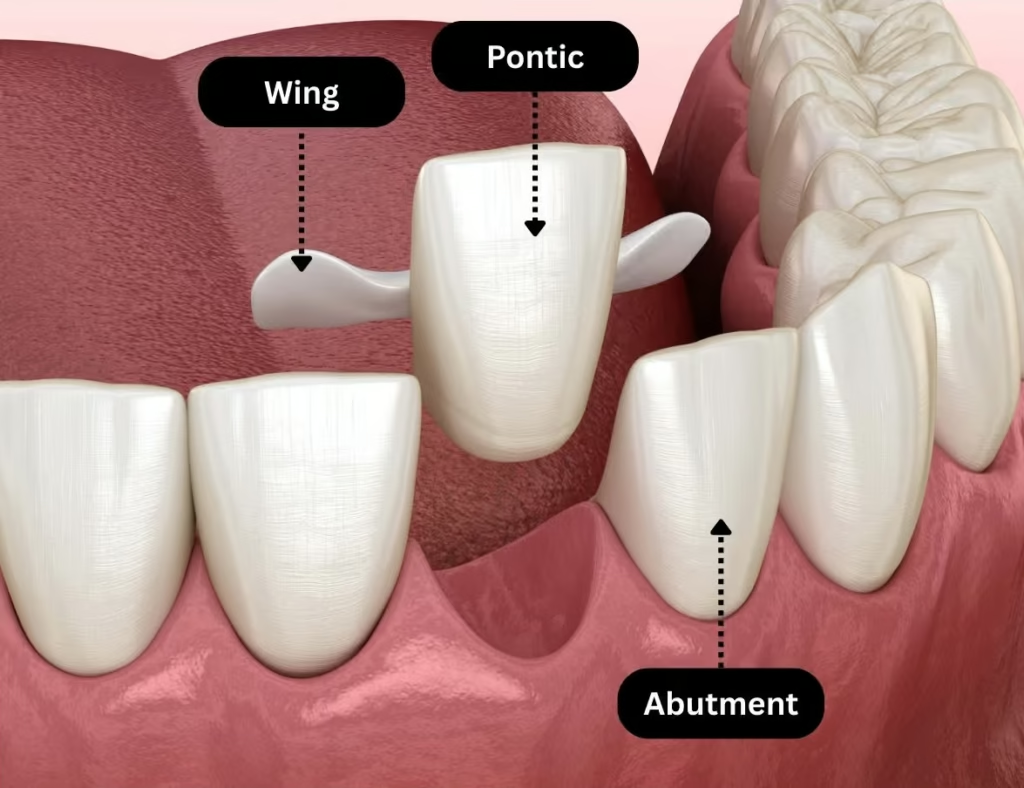
A typical bridge has three components:
Retainer or wing – part of the bridge that attaches to the abutment
Pontic – the suspended artificial tooth that replaces the missing tooth
Abutment – natural tooth or implant which retains or supports the bridge
Beyond looking good, a bridge also:
Restores chewing function (eat what you want again)
Improves speech clarity
Maintains facial shape
Prevents neighbouring teeth from drifting into the gap — because teeth, left unsupervised, will absolutely move in
What to Expect During the Dental Bridge Procedure
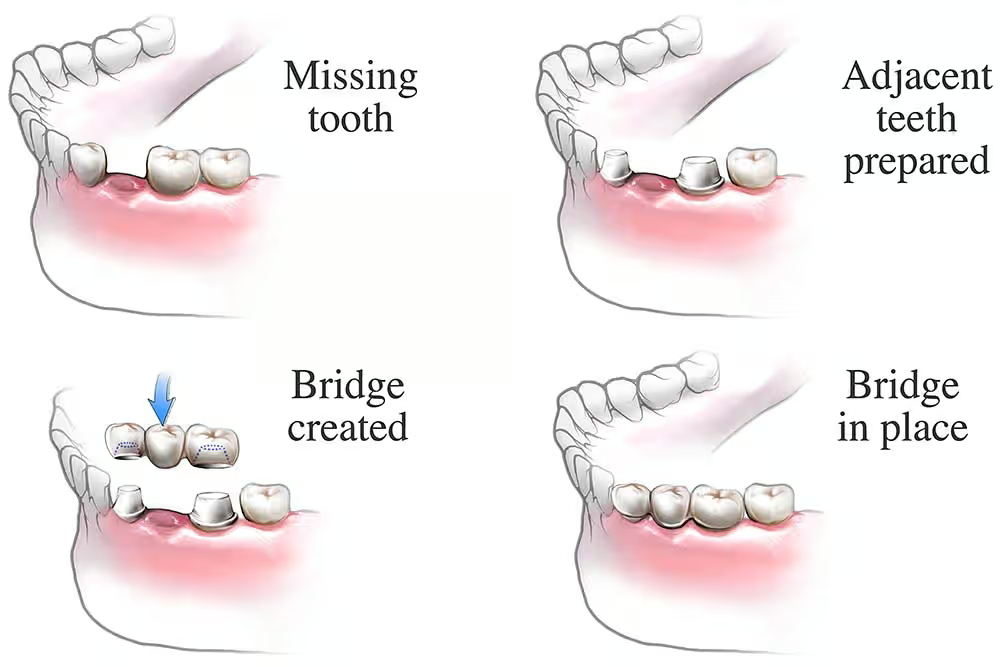
First Visit: Assessment & Preparation
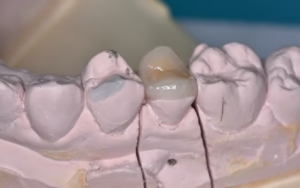
Your dentist examines the area and takes X-rays to confirm the teeth next to the gap are strong enough to support a bridge. If those teeth will serve as anchor teeth, we reshape them to create enough space for the bridge to sit correctly. We then take a digital scan or impression and send it to a dental laboratory to fabricate your customised bridge.
In the meantime, we fit a temporary bridge so you are not walking around with a gap. You are welcome.
Second Visit: Fitting the Final Bridge
Your permanent bridge is tried in and checked carefully for bite, shape, comfort, and appearance. Once everything fits well, we cement it securely in place. Follow-up visits may be needed, particularly for implant-supported bridges.
Types of Dental Bridges in Malaysia
Not all bridges are built the same. The right type depends on where the gap is, how many teeth are missing, the health of your surrounding teeth, your bite, and your budget. Here is a breakdown of your options.
Traditional Dental Bridge
The classic. The most common type of bridge. It anchors to the natural teeth on both sides of the gap, which are reshaped and crowned to support the bridge structure.
Features:
- Supported by the teeth on both sides of the gap
- Supporting teeth require reshaping to accommodate the bridge
- Strong, durable, and long-lasting
- Suitable for replacing one or a few missing teeth
Best for: Patients with healthy teeth on both sides of the gap, especially in areas that handle significant chewing forces.
The good:
- Strong, reliable, and long-lasting
- Looks and functions naturally
- Completed without surgery
The not-so-good:
- The anchor teeth need permanent reshaping — that is not reversible
- Does not prevent bone loss beneath the gap
- Cleaning under the bridge needs a little technique (floss threaders are your new best friend)
Cantilever Bridge
This one anchors to only one neighbouring tooth instead of two. Think of it as a one-sided bridge. Effective when the right conditions are met — but not for every situation.
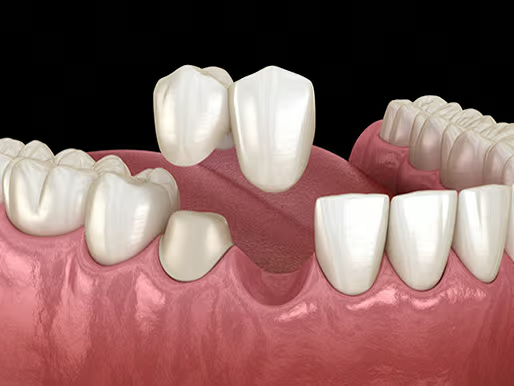
Features:
Only one tooth needs reshaping
Not ideal for areas with heavy biting forces (e.g., molars)
Best for: Areas with only one suitable anchor tooth and lighter bite forces
The good:
- More conservative — only one tooth needs reshaping
- Useful when there is no tooth on one side of the gap
The not-so-good:
- Puts extra stress on the single anchor tooth
- Higher risk of that tooth becoming damaged or loosened over time
- Not the right choice for heavy chewers or back teeth
Resin-Bonded Bridge (also known as a Maryland Bridge)
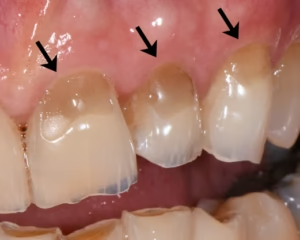
The most conservative option of the bunch. Instead of crowning the anchor teeth, a metal or ceramic wing bonds to the back surfaces — no or minimal reshaping required.
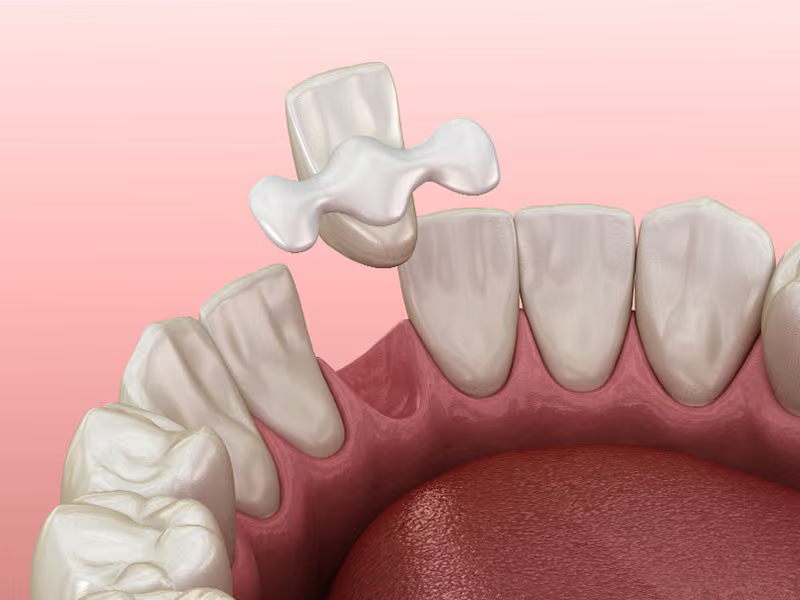
Features:
Minimal or no tooth preparation
Conservative and reversible
Best for front teeth where chewing forces are lighter
Best for: Missing front teeth in patients with healthy neighbouring teeth and lighter bite forces.
The good:
- Minimal preparation — neighbouring teeth stay mostly intact
- More conservative and cost-effective
- Aesthetically natural for front teeth
The not-so-good:
- Can debond under heavy biting forces
- Not suitable for deep bites, grinding habits, or patients with large restorations on the anchor teeth
- Less suitable for back teeth
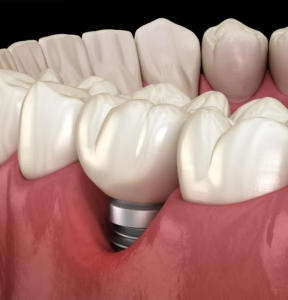
Implant-Supported Bridge
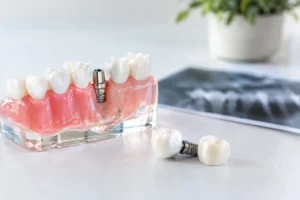
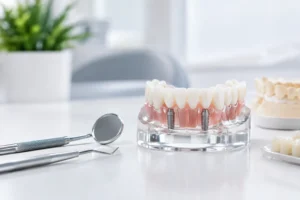
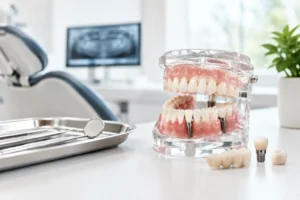
This is where things get a little more involved — but also more independent. Instead of using natural teeth as anchors, this bridge sits on dental implants placed into the jawbone. No neighbouring teeth involved at all.
For patients needing extensive reconstruction across multiple teeth, this may form part of a broader full mouth rehabilitation plan.
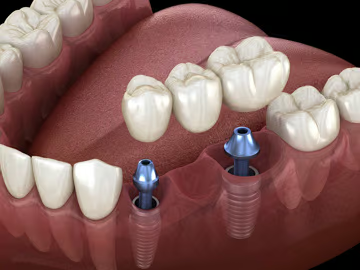
Features:
Very stable and strong
Helps maintain jawbone
Suitable for replacing multiple missing teeth
Requires surgery and longer treatment time
Best for: Replacing multiple missing teeth, or patients who do not want to involve healthy neighbouring teeth in their restoration.
The good:
- Very stable and secure
- Preserves jawbone by providing stimulation through the implants
- Does not affect any neighbouring teeth
- Long-lasting with proper maintenance
The not-so-good:
- Higher upfront cost
- Requires surgery and adequate bone volume
- Longer treatment timeline — plan for months, not weeks
Advantages of Dental Bridges
Quick and Predictable
Most bridges complete within 2 to 3 weeks. No months-long healing period. You get your function and smile back relatively fast — which is a big deal when you have been navigating mealtimes with a gap.
No Surgery Needed (Except for Implant Bridges)
Traditional, cantilever, and Maryland bridges are non-surgical. Great news if you prefer to avoid surgery, have health conditions that complicate it, or simply want a more straightforward path to a complete smile.
Looks and Feels
Modern porcelain and zirconia are genuinely impressive materials. Custom-shaded and shaped to match your existing teeth, a well-made bridge is basically undetectable. People will not know — unless you tell them.
Stable and Comfortable
Bridges are cemented in. They do not shift, click, or surprise you mid-conversation. Most patients quickly forget they even have one.
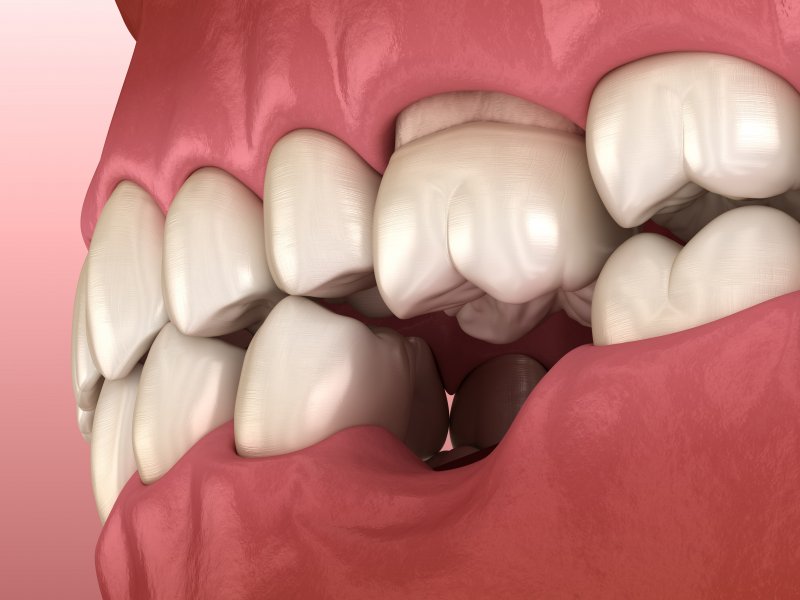
Prevents Shifting of Neighbouring Teeth
Teeth are opportunists. Leave a gap, and the neighbours start moving in. A bridge fills that space and keeps everyone where they belong.
Easy Enough to Maintain
No soaking, no special removal. Just brush, floss (with a threader or superfloss under the pontic), and attend regular check-ups. Once it becomes part of your routine, it takes about 30 extra seconds.
Generally More Affordable Than Implants
Bridges restore a missing tooth without the cost of surgery and implant components. For many patients, they offer the right balance of quality, function, and value.
Disadvantages of Dental Bridges
In the spirit of full transparency — bridges are not perfect. Here is what to keep in mind.
Supporting Teeth May Need Reshaping
For traditional and cantilever bridges, the neighbouring teeth need to be permanently reshaped. If those teeth are healthy and untouched, some clinicians will suggest exploring implants first to avoid altering perfectly good teeth. Worth discussing at your consultation.
Does Not Prevent Bone Shrinkage in the Missing Area
A bridge sits above the gumline. It does not stimulate the jawbone in the gap area. Over time, that bone gradually shrinks — which is a natural consequence of tooth loss. It will not cause immediate problems, but it is worth knowing.
Patients from across Kuala Lumpur, including Mont Kiara, Damansara Heights, and Bangsar, often raise this point during consultations at Maison Dentaire — it is one of the key factors in deciding between a bridge and an implant for their specific case.
Not Forever, But Often a Long Time
With good care, bridges last 5 to 15 years and sometimes longer. They may eventually need replacing due to wear, changes in the anchor teeth, or shifting of the gum line. Think of it as a long-term solution, not a permanent one.
Requires Extra Cleaning Technique
Getting floss under the bridge is not difficult — but it does require the right tools. Floss threaders, superfloss, interdental brushes, or a water flosser all work well. We show every patient exactly how to do it before they leave.
Not Suitable for All Cases
Weak, mobile, or heavily restored anchor teeth may not support a bridge reliably. Very large gaps or very heavy bite forces may also limit the options. In these cases, dental implants or removable dentures may be the better route.
Frequently Asked Questions (FAQs) About Dental Bridges
How long do dental bridges last?
With good oral hygiene and regular dental reviews, most bridges last 5 to 15 years — sometimes longer. The type of bridge, your bite habits, and how well you maintain the area all play a role.
Does getting a bridge hurt?
The procedure runs under local anaesthesia, so you should not feel much during treatment. Some sensitivity around the prepared teeth is normal for a few days afterward and settles on its own.
Will the bridge look natural?
Yes. Modern materials match natural teeth remarkably well in colour and translucency. A properly designed bridge blends into your smile — the goal is always for no one to notice.
How do I clean a dental bridge?
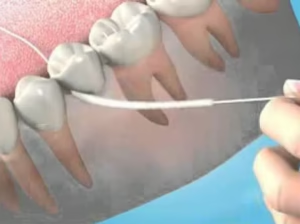
Use a floss threader or superfloss to pass floss beneath the pontic. An interdental brush or water flosser also does the job. Regular check-ups let us monitor the area and catch anything before it becomes a problem.
Can a bridge replace several teeth?
Yes — depending on the span and the health of the anchor teeth. For larger gaps, an implant-supported bridge often gives a more predictable long-term result.
What are the alternatives to a dental bridge?
Dental implants are the most independent option — they do not involve neighbouring teeth and preserve bone. Removable dentures are non-surgical and more affordable. The right choice really does depend on your individual situation. For a broader look at your options, read: Lost One or More Teeth? Here’s What You Need to Know →
Should You Get a Dental Bridge?
For many patients, yes, a dental bridge is a reliable, natural-looking, and relatively fast way to replace a missing tooth without the inconvenience of a removable option.
Whether it is the right choice for you depends on the health of your neighbouring teeth, the size of the gap, your bite, and what you want long-term. There is no universal answer — which is exactly why a proper assessment matters.
At Maison Dentaire Specialist Clinic, Dr. Lee Pei Nee, an MDC-registered prosthodontist, takes time to assess your full picture before recommending anything. You get a clear explanation of your options, realistic timelines, and transparent fees before any treatment begins.
This article is for general educational purposes and does not constitute personalised medical advice. Please consult a qualified dental professional for an assessment specific to your needs.