When teeth are failing across the whole upper or lower jaw, most patients are not looking for another short-term fix. They want to eat properly, speak clearly, and stop thinking about their teeth every day. That is why full arch dental implants are often considered by people who are tired of loose dentures, repeated repairs, or the uncertainty of keeping compromised teeth going a little longer.
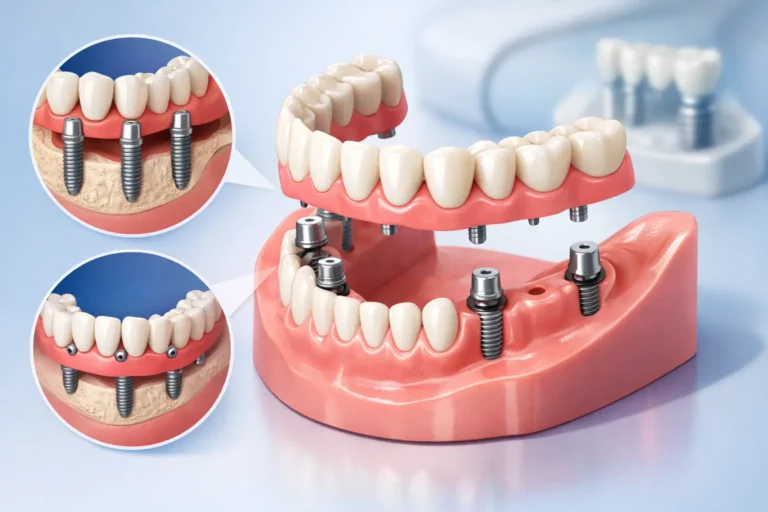
This treatment replaces an entire arch of teeth using a carefully planned number of implants to support a fixed prosthesis. In practical terms, it means a full set of replacement teeth that is secured in place rather than removed at night. For many patients, that stability is the biggest change of all.
What full arch dental implants actually mean
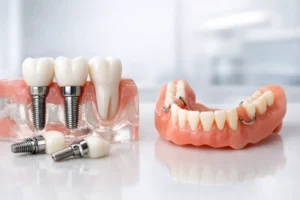
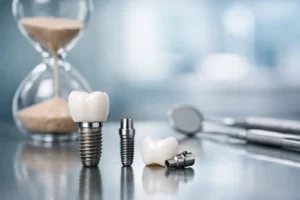
Full arch dental implants are not one single product or technique. The term usually refers to replacing all teeth in the upper jaw, lower jaw, or both, with a fixed implant-supported bridge. You may also hear terms such as All-on-4, All-on-6, or All-on-X. These describe how many implants are used to support the arch.
The right number is not chosen by trend or marketing. It depends on your bone volume, bite forces, jaw shape, smile line, medical history, and the quality of the final result needed. For one patient, four implants may be appropriate. For another, six or more may offer a better long-term foundation. A specialist-led assessment matters because the goal is not simply to place implants. It is to design a restoration that functions well, looks natural, and remains maintainable over time.
Who is a good candidate for full arch dental implants?
This option is usually considered for patients who have already lost most or all of their teeth, or whose remaining teeth are so compromised that saving them would lead to a poor long-term outcome. It can also suit people who are wearing full dentures but find them uncomfortable, unstable, or limiting when eating and speaking.
That said, suitability is never decided from a photograph or a quick conversation. Some patients have enough bone for immediate treatment, while others may need preparatory procedures. Gum condition, smoking, diabetes control, clenching habits, and general health all affect planning. Even expectations play a role. If a patient wants fixed teeth but is not prepared to maintain them properly, the treatment may need to be reconsidered.
A careful clinician will also ask an uncomfortable but necessary question: should all remaining teeth really be removed? In some cases, full arch treatment is the best route. In others, a more conservative plan may preserve healthy teeth and achieve a better balance between intervention and longevity.
How treatment is planned
The planning stage is where good outcomes are built. This is not a treatment that should be reduced to implant numbers and package pricing.
A proper assessment usually includes a full clinical examination, photographs, digital scans or impressions, radiographs, and a 3D CBCT scan to evaluate bone structure and important anatomical landmarks. Just as important is the bite analysis. The way your jaws meet, the amount of restorative space available, and the position of the future teeth all influence where implants should be placed.
This is a key point many patients do not realise. The implants should support the prosthesis, but the prosthesis itself must first be designed correctly. Tooth position, gum support, smile appearance, lip support, speech, cleaning access, and bite forces all need to work together. If treatment is planned backwards, with implants placed before the final tooth design is properly considered, compromises are more likely.
The treatment journey in real terms
Once planning is complete, treatment usually involves placing the implants and fitting a temporary fixed bridge if the implants achieve sufficient stability. This is often referred to as immediate loading. It allows many patients to avoid a removable denture during healing, although not everyone is suitable for it.
If bone quality is weaker, or if additional procedures are needed, a staged approach may be safer. That can mean allowing the implants to heal first before the fixed teeth are attached. Patients sometimes feel disappointed when they hear this, but the slower plan is often the better plan if it reduces risk.
After surgery, healing takes time. The gums need to settle, the implants need to integrate with the bone, and the temporary teeth may need adjustments as your mouth adapts. The final prosthesis is usually made only after this healing phase, when records can be taken more accurately and the bite can be refined.
Full arch dental implants versus dentures
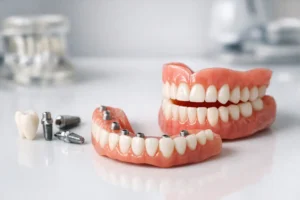
For the right patient, the difference can be significant. Dentures rest on the gums and can move during function. Even well-made dentures have physical limits, especially in the lower jaw where retention is often poor. Full arch dental implants anchor the teeth to the jaw, which improves stability and usually gives a stronger sense of security when chewing and speaking.
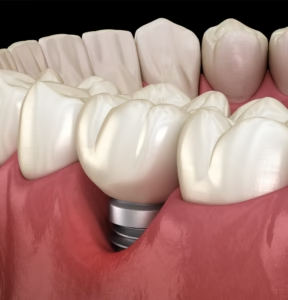
There are also biological benefits. Implants help transmit load into the bone, which may reduce the rate of bone loss compared with complete tooth loss alone. Fixed teeth can also restore facial support more effectively when planned well.
But implants are not automatically better in every situation. They require surgery, they cost more, and they still need maintenance. Some patients with complex medical issues or limited dexterity may actually cope better with a well-made removable prosthesis. The best treatment is the one that fits the patient, not the one that sounds most advanced.
What about appearance and comfort?
Most patients ask two questions very early on: Will they look natural? And will they feel like real teeth?
Natural appearance depends on planning, not on whether the bridge is expensive. The shape of the teeth, the amount of gum display when smiling, the support of the lips, and the transition between prosthesis and soft tissue all affect the final look. A well-made full arch prosthesis should suit the face rather than look artificially bright or bulky.
Comfort is slightly more complicated. Fixed implant teeth feel more secure than dentures, but they do not feel exactly the same as natural teeth. There is a period of adaptation. Speech may need fine adjustment, and patients need to learn how to clean around the bridge. Most adapt very well, but it helps to begin with realistic expectations.
Cost, value, and why prices vary so much
Patients are often surprised by how widely fees vary for full arch treatment. That is because you are not buying a simple item. You are paying for diagnosis, surgical planning, implant components, prosthetic design, materials, laboratory work, review care, and the experience of the clinician making the decisions.
The cheapest plan is rarely the least expensive in the long run if it leads to fracture, poor hygiene access, speech problems, or implant failure. Equally, the most expensive plan is not automatically the best. What matters is whether the recommendation is justified by your anatomy, functional needs, and long-term prognosis.
At a specialist practice such as Maison Dentaire, the value lies in detailed treatment planning, unhurried consultations, transparent written recommendations, and treatment personally delivered by a prosthodontist with a clear focus on full-mouth rehabilitation. For patients making a major restorative decision, that level of oversight matters.
Questions worth asking before you commit
Before proceeding, ask how many implants are being recommended and why. Ask whether you are suitable for immediate fixed teeth or whether a staged plan would be safer. Ask what the final prosthesis will be made from, how it will be cleaned, what maintenance is expected, and what happens if something breaks.
Also ask who is actually planning and delivering your care. In full arch cases, the details matter. This is not only about placing implants into bone. It is about rebuilding a bite, smile, and chewing system that can withstand daily use.
Why the right planning matters more than the sales pitch
Full arch implant treatment can be life-changing for the right patient. It can restore confidence at meals, reduce the frustration of loose dentures, and provide a more stable, natural-feeling way to replace missing teeth. But it is still major dentistry, and it deserves a level of planning that goes beyond a standard package.
If you are considering this treatment, do not focus only on how quickly it can be done or how many implants are included. Focus on whether the plan makes sense for your mouth, your health, and your long-term comfort. The best result is not simply a fixed set of teeth. It is a restoration that feels considered, functions properly, and continues to serve you well years after treatment is complete.