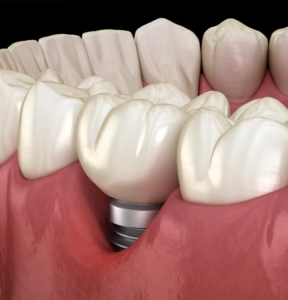
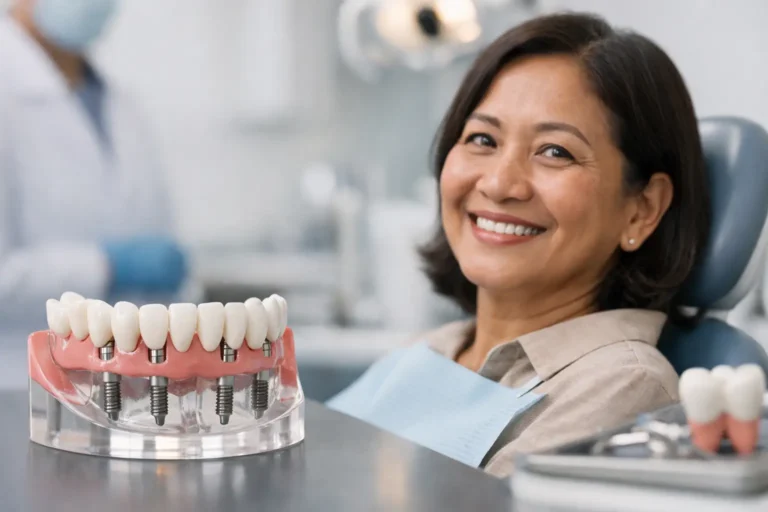
Losing most or all of your teeth changes ordinary things more than people expect. Meals become selective, speech can feel less certain, and dentures that move at the wrong moment can quietly wear down confidence. For many patients, all on x dental implants offer a fixed full-arch solution that feels far closer to natural teeth than a removable denture.
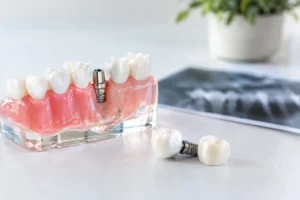
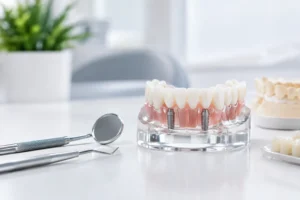
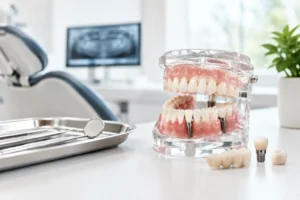
This treatment is designed for patients who need an entire upper arch, lower arch, or both replaced using a carefully planned number of implants to support a fixed bridge. The “X” simply means the exact number of implants is not the same for everyone. Some patients may be suitable for four implants, others may need six or more, depending on bone quality, bite force, jaw shape, and the long-term demands of the final restoration.
What all on x dental implants actually mean
The phrase is often used as a catch-all term, but there is an important clinical point behind it. All-on-Four and All-on-Six are specific versions of the broader All-on-X concept. Rather than pushing every patient into a standard package, the treatment is tailored to the amount of support needed.
That distinction matters. A smaller number of implants may reduce surgery, treatment time, and cost, but it is not automatically the best answer. In some mouths, especially where bite forces are stronger or bone conditions are less favourable, placing more implants may improve load distribution and provide a more stable long-term foundation. Good treatment planning is not about using the fewest implants possible. It is about using the right number in the right position.
Who is a good candidate for all on x dental implants?
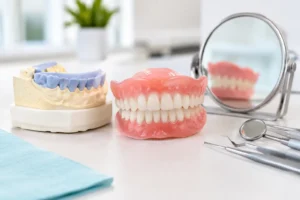
This option usually suits patients who have already lost all teeth in one arch, patients whose remaining teeth are failing and cannot be predictably saved, or long-term denture wearers who want a fixed alternative. It can be life-changing for people who are tired of loose dentures, sore gums, and avoiding certain foods.
That said, suitability is never decided by photographs alone. Gum health, bone volume, medical history, smoking habits, bite pattern, and parafunctional habits such as clenching all affect the plan. A patient with advanced tooth wear and heavy bite forces may need a different implant distribution and restorative design from someone with lighter function and good bone availability.
Some patients are also surprised to learn that extraction of remaining teeth may be the most sensible route if those teeth are severely compromised. This can feel like a big step emotionally, so the decision should be made carefully and with a clear explanation of the alternatives, not as a rushed sales recommendation.
The planning stage matters more than most people realise
Full-arch implant treatment is not only about placing implants into bone. It is about designing a bite, a smile, and a restoration that can tolerate years of function. This is where specialist planning becomes particularly valuable.
A proper assessment should look at facial support, lip line, smile display, speech, jaw relationships, bone anatomy, and occlusion. If these details are overlooked, a bridge may look acceptable in photographs yet feel bulky, strain the jaw, chip repeatedly, or become difficult to clean.
For that reason, all on x dental implants should never be approached as a one-size-fits-all procedure. The prosthetic design and the implant surgery must work together. When planning is led by the final tooth position and bite requirements, the treatment has a stronger chance of looking natural and lasting well.
How treatment is usually carried out
Most cases begin with records and diagnostics, including scans, photographs, and a detailed clinical examination. If teeth are failing but still present, the clinician has to decide whether they should be removed before implant placement or at the same time.
The implants are then placed in positions that maximise support while respecting the available bone and important anatomical structures. In some cases, angled implants are used to avoid more extensive grafting and still provide good support for a fixed bridge. This is one reason the All-on-X approach can be so useful – it gives flexibility in planning rather than forcing every case into the same layout.
Many patients are also interested in immediate teeth. This can be possible, but only if the implants achieve sufficient stability at the time of placement and the bite can be controlled appropriately during healing. Immediate fixed teeth are appealing, but they are not a guarantee in every case. Sometimes a staged approach is the safer choice.
After healing, the provisional phase or the final bridge is refined to improve aesthetics, function, and comfort. This step should not be rushed. The shape of the teeth, support of the lips, speech sounds, and bite contacts all influence whether the final result feels convincing in daily life.
Benefits of all on x dental implants
The main benefit is stability. A fixed full-arch prosthesis does not move in the way a conventional denture can, which makes eating and speaking feel more secure. Many patients also notice a strong improvement in confidence because they are no longer thinking about adhesive, looseness, or the fear of a denture shifting.
Another major advantage is function. While no implant bridge behaves exactly like natural teeth, it is generally far more efficient than a removable denture. Patients are often able to expand their diet and chew with much more certainty.
Aesthetics also matter. When carefully designed, a full-arch implant bridge can restore tooth display, support the lips and cheeks, and create a more natural smile than a worn or ill-fitting denture. The best result is not simply white, straight teeth. It is a smile that suits the face and works with the bite.
The trade-offs and limitations
This is a highly effective treatment, but it is still a major restorative commitment. Surgery, healing time, maintenance, and cost all need honest discussion. Patients sometimes focus on the immediate transformation and underestimate the importance of long-term review and hygiene.
Cleaning beneath a full-arch bridge is different from cleaning natural teeth. It can be done well, but it requires the right technique and consistency. Patients with reduced dexterity may need extra support and realistic guidance.
There are also mechanical and biological risks. Components can loosen or wear over time, prosthetic materials can chip or fracture, and implants can fail if healing is poor or if the maintenance phase is neglected. Smoking, uncontrolled diabetes, and heavy grinding can all increase risk. None of this means treatment should be avoided. It means it should be planned properly and maintained seriously.
Why the number of implants should not be chosen by price alone
It is understandable for patients to compare four implants against six implants and assume fewer must be better value. Sometimes four well-positioned implants are entirely appropriate. In other cases, adding implants provides a more favourable distribution of load and may reduce strain on the restoration over time.
The right decision depends on anatomy and function, not on marketing language. A premium full-arch case should be planned around what gives the patient the best chance of long-term success, not what makes the initial quote look more attractive. This is especially true for patients with stronger bites, larger arches, or more demanding aesthetic requirements.
What to ask before going ahead
If you are considering all on x dental implants, ask who is planning the final bite and bridge, not only who is placing the implants. Ask what happens if immediate fixed teeth are not advisable. Ask what material is being used for the final prosthesis, how maintenance will be handled, and what fees are included if adjustments are needed.
These questions help reveal whether the treatment is being approached as a carefully managed rehabilitation or a fast commercial package. There is a real difference.
At a specialist-led practice such as Maison Dentaire, the emphasis is on detailed diagnosis, written treatment planning, and selecting only what is necessary for function, appearance, and longevity. That approach is often more reassuring for patients who want clarity before making a major decision.
Is all on x right for everyone?
No. Some patients are better served by preserving healthy teeth where possible, while others may be suitable for implant-retained overdentures rather than a fixed bridge. There are also cases where bone grafting or staged treatment produces a stronger outcome than forcing an immediate full-arch solution.
The best treatment is not always the most heavily advertised one. It is the option that suits your oral condition, your expectations, your medical profile, and your willingness to maintain the result over many years.
If you are weighing up dentures, failing teeth, or a full-arch implant solution, the most sensible next step is not to look for the quickest promise. It is to seek a careful assessment that explains what will work, what will not, and why.