
If you are tired of loose dentures, avoiding certain foods, or hiding your smile because several teeth are missing, the question is rarely whether treatment is possible. It is which permanent teeth replacement options will give you reliable function, a natural appearance, and the best long-term result for your mouth.
That distinction matters. Tooth replacement is not a single treatment. It is a group of solutions, each with different strengths, limitations, maintenance needs, and costs. The right answer depends on how many teeth are missing, the health of the remaining teeth and gums, the condition of the jawbone, your bite, and whether you want a fixed or removable result.
What counts as a permanent tooth replacement?
When patients ask for a permanent solution, they usually mean something that stays securely in place and does not need to be removed each day. In practical terms, that usually points towards implant-based treatment or, in some cases, a fixed bridge.
A permanent option should do more than fill a gap. It should let you chew properly, speak comfortably, support your facial structure, and look convincing in everyday life. It should also be planned with the future in mind. A treatment that appears simpler at first can become more complex later if it overloads neighbouring teeth or fails to address bite problems.
Permanent teeth replacement options for one or several missing teeth
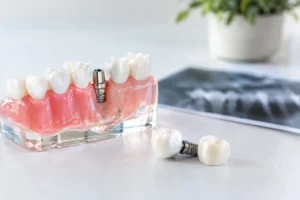
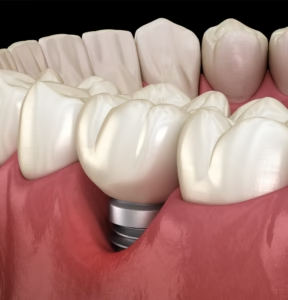
For a single missing tooth, a dental implant is often the most conservative fixed solution. The implant replaces the root, and a crown is attached above it. Because the adjacent teeth do not need to be cut down, it preserves more natural tooth structure than a conventional bridge. It also helps stimulate the bone in that area, which can reduce the shrinkage that often follows tooth loss.
That said, an implant is not automatic. You need enough bone support, healthy gums, and proper bite planning. If the space is limited, the bone is very thin, or certain medical factors are present, treatment may need to be adapted.
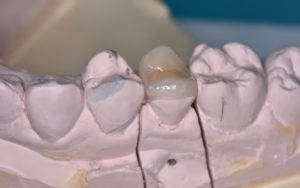
A fixed dental bridge can also replace one missing tooth, or sometimes more than one, by using the neighbouring teeth as support. This can be a good option when those teeth already need crowns or when implant placement is not suitable. The trade-off is that healthy supporting teeth may need significant preparation, and the bridge does not replace the missing root in the jawbone.
For several missing teeth in different areas, multiple implants, bridges, or a combination of approaches may be considered. This is where careful specialist planning becomes especially important. Replacing teeth is not just about filling spaces. It is about rebuilding a stable bite so the teeth, restorations, and jaw joints work together properly.
Full-arch permanent teeth replacement options
When most or all teeth are missing, or the remaining teeth are failing, patients often want to know whether they can have a fixed set of teeth instead of a removable denture. In many cases, they can.
Implant-supported full-arch bridges
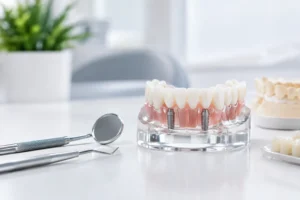
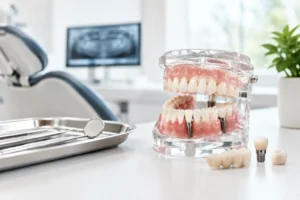
Full-arch implant rehabilitation involves placing a number of implants into the jaw and using them to support a complete fixed bridge. You may hear this described as All-on-Four, All-on-Six, or All-on-X. The principle is similar across these approaches – a full arch of teeth is secured onto strategically placed implants.
This is often one of the strongest permanent teeth replacement options for patients who are missing all teeth in the upper or lower jaw, or whose remaining teeth are beyond predictable repair. The fixed bridge does not move around like a conventional denture, which can make a major difference to confidence, chewing ability, and speech.
However, not every patient should receive exactly the same configuration. The number and position of implants, the design of the bridge, the material used, and whether treatment is staged or immediate should all be decided individually. Bone quality, smile line, bite forces, parafunctional habits such as grinding, and overall oral health all influence the plan.
Implant overdentures
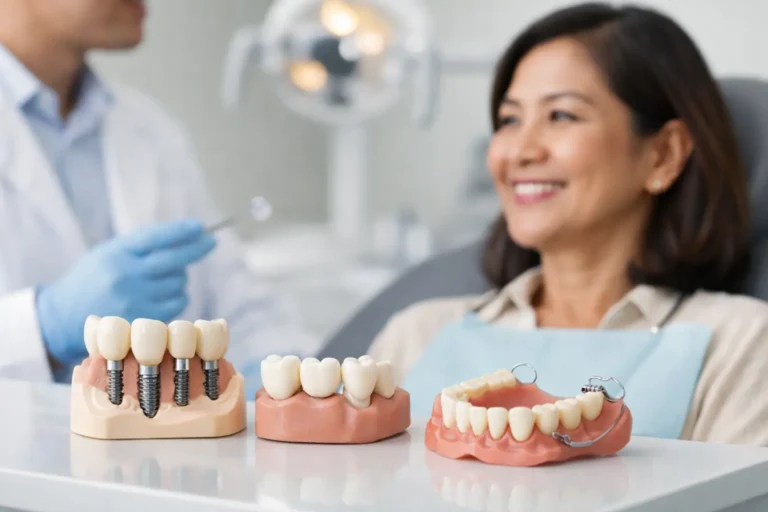
For some patients, a removable overdenture supported by implants is the more sensible solution. It is more stable than a traditional denture because it clips onto implants, but it can still be removed for cleaning.
This may be appropriate when budget is a concern, when extra lip support is needed, or when a fixed bridge would not provide the best aesthetic or functional outcome. It is not the same as a fully fixed solution, but it can be a major improvement over a loose conventional denture.
How implants compare with bridges and dentures
Dental implants are often preferred because they can support fixed teeth without relying on adjacent natural teeth. They also help preserve bone more effectively than conventional bridges or dentures. For patients who want the closest thing to natural teeth in feel and stability, implants are usually the leading option.
Bridges can still be excellent treatment in the right case. They are established, effective, and may suit patients who cannot have implants or who need a quicker non-surgical alternative. But they depend on the health and strength of the supporting teeth.
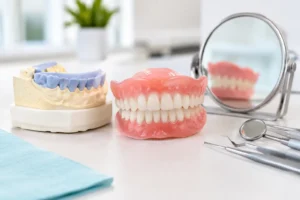
Traditional removable dentures remain a valid solution for some people, particularly where surgery is not appropriate or where a non-fixed option is acceptable. The difficulty is that many patients seeking a permanent result have already reached the point where removable dentures no longer feel secure enough. If that sounds familiar, implant-supported treatment is often worth serious discussion.
What determines the best option for you?
The best treatment is rarely chosen by price alone, and it should never be chosen by marketing language. A proper recommendation comes from diagnosis.
The first factor is the condition of the teeth you still have. If several teeth are loose, infected, heavily worn, or structurally weak, trying to save everything at all costs may not be the most predictable path. Sometimes a more comprehensive full-arch plan provides a stronger long-term outcome.
The second factor is bone and gum health. Implant treatment depends on the quality and quantity of available bone, though grafting is sometimes possible if support is limited. Gum disease also needs to be controlled before definitive treatment.
The third factor is bite function. This is often overlooked, but it is central to success. If the bite is unstable or the forces are poorly distributed, even technically well-made crowns, bridges, or implants can run into trouble. The goal is not simply to replace teeth, but to create a result that works comfortably over time.
Aesthetic goals matter too. The shape, proportion, and display of the teeth should suit your face, lips, and smile. This becomes especially important in full-mouth and full-arch treatment, where the restoration affects not only your teeth but the overall support of your smile.
Why specialist planning matters in complex tooth replacement
Replacing one tooth can be straightforward. Replacing many teeth, rebuilding a collapsed bite, or converting from failing teeth or unstable dentures to a fixed full arch is not.
These cases require more than the ability to place a crown onto an implant. They require planning across function, aesthetics, occlusion, materials, and long-term maintenance. Small decisions at the planning stage can have a significant effect on comfort, hygiene, longevity, and appearance later.
That is why many patients look specifically for a prosthodontic approach. A specialist prosthodontist focuses on how teeth are restored and how the whole bite works together, especially in more complex restorative cases. For patients considering full-arch implant rehabilitation or advanced restorative treatment, that depth of planning can be the difference between a result that simply looks acceptable and one that genuinely feels stable, natural, and sustainable.
Questions to ask before choosing among permanent teeth replacement options
Before committing to treatment, ask what is being recommended and why. You should understand whether alternatives exist, what the limitations are, how long treatment is expected to take, and what maintenance will be needed afterwards.
It is also reasonable to ask who will plan and deliver the treatment, whether the proposed result is fixed or removable, what happens if additional bone or gum treatment is required, and how the bite will be assessed. Good treatment planning is not rushed. It should be detailed, transparent, and tailored to your situation rather than built around a standard package.
The right solution should feel right in daily life
The best tooth replacement is not necessarily the newest or most expensive option. It is the one that suits your oral condition, your expectations, and your long-term needs. For some people, that will be a single implant crown. For others, it may be a bridge, an implant overdenture, or a full fixed arch supported by multiple implants.
If you are weighing permanent teeth replacement options, focus on the quality of planning as much as the treatment itself. A well-considered solution should help you eat comfortably, speak clearly, smile without hesitation, and feel that your teeth belong to you again.