

A missing tooth is rarely just a gap. It can affect how you chew, how clearly you speak, the stability of neighbouring teeth and, over time, the way your bite functions. A specialist dental implant consultation is where these details are assessed properly before any recommendation is made. It is not simply an appointment to discuss an implant. It is the foundation for a treatment plan designed around your mouth, your health and the result you need to live comfortably.
For patients with several missing teeth, loose dentures or failing teeth, this planning stage is particularly important. A fixed full-arch solution such as All-on-Four, All-on-Six or All-on-X may be appropriate, but it should never be selected by a formula alone. The number and position of implants, the condition of the jawbone, the bite and the appearance of the final teeth all need careful consideration.
Why a specialist dental implant consultation matters
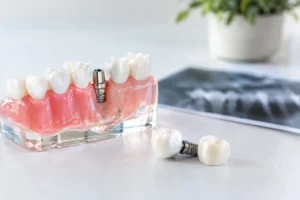
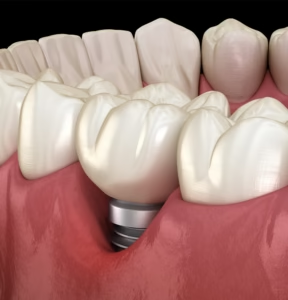
Dental implants are highly successful when they are planned and maintained well, but they are not interchangeable components that can be placed in the same way for every patient. An implant supports a crown, bridge or full arch of teeth, yet the visible restoration and the way forces are directed through it are just as significant as the implant itself.
A prosthodontist is a registered dental specialist trained in restoring and replacing teeth. This means the consultation considers the final teeth from the outset: how they will look, how they will meet when you bite, how they will be cleaned and how they can be maintained over the years. Implant placement is only one part of a wider restorative plan.
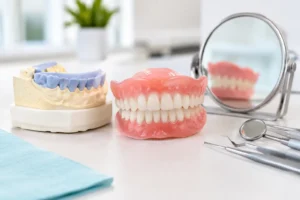
This is especially relevant if you have worn dentures for many years, have a collapsed bite due to worn or missing teeth, or have been told that several teeth need to be removed. The goal is not merely to provide teeth that look acceptable in photographs. It is to create a result that feels secure, functions predictably and suits your facial features.
What happens at the appointment
A thorough consultation should be unhurried. You will have time to explain what is troubling you, whether that is discomfort when eating, embarrassment about a removable denture, loose teeth, repeated breakages or dissatisfaction with the appearance of existing dental work.
Your dental and medical history will be reviewed. Conditions such as diabetes, gum disease, osteoporosis, autoimmune illness and certain medications can influence healing and treatment timing. Smoking is also discussed honestly, as it can increase the risk of complications around implants. These factors do not always rule out treatment, but they may change the plan or indicate that risk reduction is needed first.
The clinical examination looks beyond the missing tooth or teeth. Your specialist will assess the gums, remaining teeth, jaw relationship, chewing muscles and bite pattern. Old crowns, bridges and fillings may need attention if they are unstable or if they affect the final implant restoration. Where teeth remain, preserving healthy tooth structure is often preferable to removing it simply to make a treatment plan appear simpler.
Imaging and bone assessment
Dental X-rays and, where appropriate, three-dimensional CBCT imaging provide essential information about the jawbone. They help assess bone height and width, the position of nerves and sinuses, existing infection and the most suitable areas for implant placement.
Patients are sometimes concerned that they have been told they do not have enough bone for implants. Bone loss can make treatment more complex, but it does not automatically mean implants are impossible. In some cases, bone grafting or a sinus procedure may be appropriate. In others, implant positions and restoration design can be planned to make best use of available bone. The right approach depends on the anatomy, the desired outcome and the level of treatment risk that is acceptable to you.
Bite, appearance and facial support
A good implant plan must account for occlusion – the way upper and lower teeth meet. Excessive or uneven forces can place strain on implant restorations, natural teeth and jaw joints. If you grind or clench your teeth, this will influence the design of the restoration and may mean a protective night guard is recommended after treatment.
Aesthetics are assessed with the same care. The shape, shade and position of replacement teeth should relate naturally to your smile, lips and facial proportions. For a front tooth, details such as gum contour and the matching of adjacent teeth are central to the discussion. For full-arch treatment, the consultation also considers lip support, smile line, speech and the amount of tooth and gum that is visible when you smile.
Choosing between a single implant, bridge or full-arch treatment
There is no single best answer for every missing tooth. A single implant can replace one tooth without preparing the teeth beside it. An implant-supported bridge may replace several teeth efficiently. Conventional bridges and removable dentures can also remain sensible options in the right circumstances, particularly where surgery is not desirable or where anatomy, health or budget makes implant treatment less suitable.
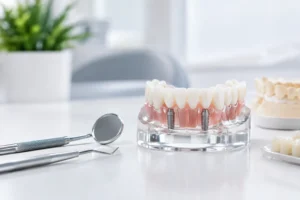
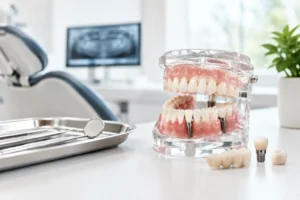
For patients facing the loss of all teeth in one jaw, fixed full-arch rehabilitation may offer a stable alternative to a conventional removable denture. All-on-Four and All-on-Six describe approaches that use a carefully planned number of implants to support a full arch of fixed teeth. All-on-X is a broader term because the final number of implants is determined by bone quality, anatomy, bite forces and restorative requirements.
More implants are not automatically better, and fewer implants are not automatically inadequate. The appropriate design is the one that offers a sound balance of support, cleansability, long-term maintenance and biological safety. This is why a consultation should explain the reasoning behind the recommendation rather than present a pre-set package.
Questions your treatment plan should answer
After a proper assessment, you should understand what treatment is being proposed and why. A detailed written plan is valuable because implant treatment commonly involves several stages, from tooth removal or gum treatment through to implant placement, healing and the final restoration.
The plan should make clear whether temporary teeth will be needed, whether bone or gum grafting is advised, how long healing is likely to take and what type of final restoration is planned. It should also explain the likely limitations. For example, immediate fixed teeth can be possible in selected cases, but they are not suitable for every patient. Where infection, poor bone stability or high bite forces are present, a more cautious staged approach may offer a more predictable outcome.
It is also reasonable to ask about the implant system, the expected maintenance and the fees for each stage. Premium, internationally recognised implant systems such as Straumann and Megagen offer established components and support, but the implant brand alone does not determine success. Accurate diagnosis, careful surgical planning, a well-designed restoration and regular maintenance matter greatly.
The long-term commitment after implants
Implants cannot decay, but the gum and bone around them still require care. Plaque accumulation can lead to inflammation around an implant, known as peri-implant disease, which may cause bone loss if left untreated. Daily cleaning, professional reviews and early attention to bleeding, swelling or looseness are essential.
The final restoration also needs to be designed for cleaning. With full-arch fixed teeth, this may include using interdental brushes, specialised floss or a water flosser, depending on the design. A treatment that is difficult to clean may create problems later, even if it looks excellent on the day it is fitted.
For patients in Kuala Lumpur and across the Klang Valley, a specialist-led consultation offers the opportunity to make this decision with clarity rather than pressure. At Maison Dentaire, treatment is personally planned and delivered with attention to function, appearance and long-term oral health.
The most useful consultation is one that leaves you informed, not rushed. Whether implants are the right choice, or whether another restorative option will serve you better, the right plan should feel considered, clinically sound and tailored to the life you want to return to.