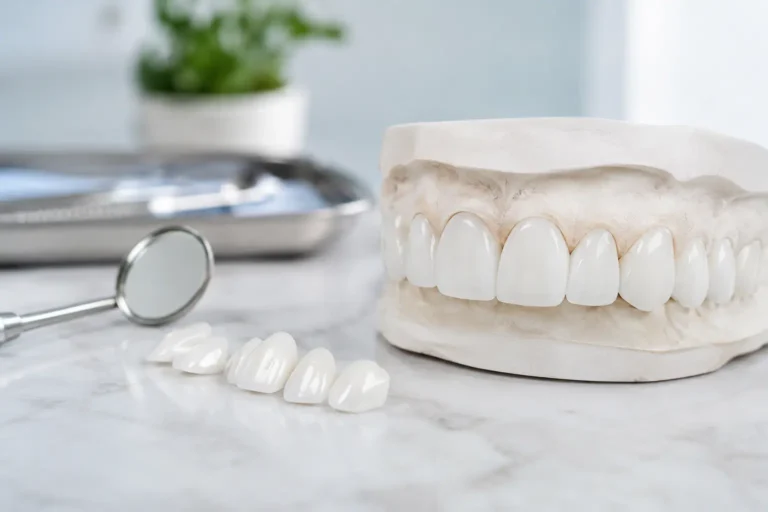
A veneer can make a tooth look beautifully proportioned and naturally bright, but the decision should never be treated as a quick cosmetic change. Patients often ask, are veneers reversible treatments? The honest answer is that it depends entirely on the type of veneer, the condition of the teeth beforehand and how much tooth structure is needed to create a stable, natural result.
For many conventional porcelain veneers, some enamel is carefully reshaped. Once enamel has been removed, it does not grow back. That means the tooth will usually need ongoing protection with a veneer or another suitable restoration. However, not every veneer requires the same degree of preparation, and a thoughtful plan may preserve far more natural tooth structure than patients expect.
Are veneers reversible treatments in every case?
No. Traditional porcelain veneers are generally considered an irreversible treatment because a thin layer of enamel is often removed to make space for the ceramic. This preparation is not necessarily aggressive, and it can be very conservative in experienced hands. Yet it remains a permanent alteration to the tooth.
The purpose of preparation is not simply to make the veneer fit. It allows the final tooth to retain an appropriate contour, so it does not look bulky at the gumline or sit proud of neighbouring teeth. It can also create a more reliable surface for bonding and help the ceramic integrate naturally with the smile.
There are situations where little or no preparation may be required. These are sometimes described as no-prep or minimal-prep veneers. They may be suitable where teeth are naturally small, slightly worn, have gaps, or need added length and volume. Even then, the treatment is not automatically reversible in a practical sense. Removing a bonded veneer may affect the enamel beneath, and the tooth may still require a replacement restoration to maintain appearance and protection.
A veneer should therefore be viewed as a long-term restorative commitment, not as something to try temporarily and simply remove later.
Why enamel preservation matters
Enamel is the hard outer layer of the tooth. It is exceptionally durable and provides the best possible surface for adhesive bonding. Where suitable, preserving enamel can support a stronger, more predictable veneer bond and reduce the need for more extensive treatment later.
That does not mean the best plan is always the one with no preparation. A no-prep veneer placed on the wrong tooth can appear over-contoured, alter speech, trap plaque around the gumline or create an unnatural result. Conversely, a carefully prepared veneer may be the more conservative option if it avoids an overly thick restoration and respects the surrounding teeth and gums.
The question is not simply, “Can this be done without drilling?” A better question is, “What is the least intervention needed to produce a stable result that looks right and functions properly?”
Veneers are not only about appearance
A smile is affected by much more than tooth colour. The length, position and shape of teeth influence lip support, speech, facial proportions and the way the upper and lower teeth meet. For patients with worn, chipped or uneven front teeth, veneers may also be part of a broader plan to restore lost tooth structure.
This is especially relevant when tooth wear has resulted from grinding, clenching, erosion or an unstable bite. Simply placing veneers without understanding why the teeth wore down can lead to chipping, debonding or repeated repairs. The visible concern may be cosmetic, but the underlying issue is often functional.
A specialist prosthodontic assessment considers the bite before deciding whether veneers are appropriate. This includes how teeth contact during chewing, how they move against each other in side movements, the available enamel, gum health, existing restorations and the condition of the supporting teeth. It also considers whether a protective night guard may be advisable after treatment for someone who grinds or clenches.
When minimal-prep veneers may be appropriate
Minimal-prep veneers can be an excellent option when the starting position of the teeth allows material to be added rather than relying on significant reshaping. They are often considered for teeth that are slightly narrow, short, spaced or mildly worn at the edges.
They may also suit a patient who wants to refine a few teeth rather than dramatically change an entire smile. In these cases, small additions of porcelain can improve symmetry while retaining much of the natural enamel.
However, minimal preparation is not a promise that no enamel will be touched. The degree of preparation may vary from one tooth to another. A tooth that sits forward, has an old filling, is dark in colour or has an irregular shape may need a different approach from the tooth beside it.
The best outcome is rarely achieved by applying the same formula to every tooth. Each veneer should be planned according to the individual tooth, the smile as a whole and the bite.
When conventional veneers are the more sensible choice
Conventional veneers may be recommended where more meaningful changes are required to shape, alignment, colour or surface texture. A small amount of enamel reduction can give the ceramist room to create a lifelike porcelain restoration with natural translucency rather than an opaque or bulky surface.
They may also be preferable where old composite bonding has repeatedly stained, chipped or required repair. In selected cases, a well-planned porcelain veneer can offer a more stable and colour-consistent solution.
This does not make conventional veneers a lesser choice because they are irreversible. It means the decision needs to be made with proper consent and a clear understanding of the long-term commitment. Once a tooth has been prepared for a veneer, future care usually involves maintaining or replacing that restoration when required.
The role of planning before committing
The most valuable part of veneer treatment happens before any tooth is prepared. A detailed consultation should establish what you want to change, what can safely be changed and whether veneers are genuinely the right treatment.
Photographs, records of the bite and careful examination allow the proposed tooth shapes to be assessed in relation to the lips, face and neighbouring teeth. A planned preview or trial smile can be particularly useful for more extensive cases. It allows changes to be considered before treatment proceeds, rather than making decisions once tooth preparation has begun.
At Maison Dentaire, treatment is planned and personally delivered by a specialist prosthodontist, with attention to both the aesthetic result and the mechanics behind it. For patients who have already experienced repeated repairs, this level of planning can help prevent another cycle of short-term cosmetic fixes.
For patients travelling to Kuala Lumpur, careful planning is also essential because veneer treatment may require more than one visit. The number and timing of appointments depend on the complexity of the case, the condition of the teeth and the type of restorations being made. Rushing the diagnostic stage to fit a tight travel schedule is rarely in the patient’s best interests.
Questions worth asking before veneers
Before agreeing to treatment, ask how much natural enamel is likely to be altered and whether the plan differs from tooth to tooth. Ask whether your bite, wear pattern and existing restorations have been assessed. You should also understand what future maintenance may involve, including the possibility of repair or replacement over time.
It is sensible to ask what happens if a veneer chips, debonds or if the gumline changes in future. High-quality porcelain is durable, but it is not indestructible. Like natural teeth, veneers can be affected by biting forces, trauma and habits such as clenching.
A clinician should be able to explain these points plainly, without making veneers sound either risk-free or unnecessarily alarming. Good dentistry is based on informed choices, not pressure to pursue a particular cosmetic treatment.
A long-term decision deserves a measured approach
Veneers can create a refined, natural-looking smile and can be highly conservative when correctly indicated. But they are not universally reversible, particularly when enamel preparation is involved. The safest approach is to preserve as much healthy tooth structure as possible while still allowing enough space for a restoration that looks natural, feels comfortable and works with the bite.
If you are considering veneers, take the time to understand the condition of your teeth before deciding how they should be changed. The right treatment is the one that respects what is healthy, addresses what is compromised and remains sensible long after the first photographs are taken.