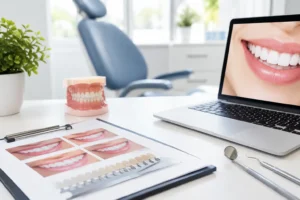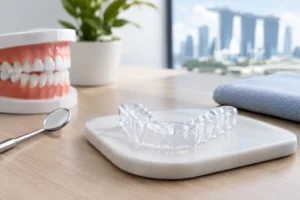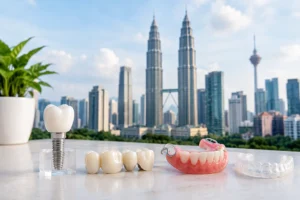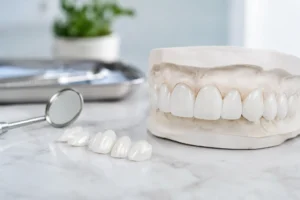
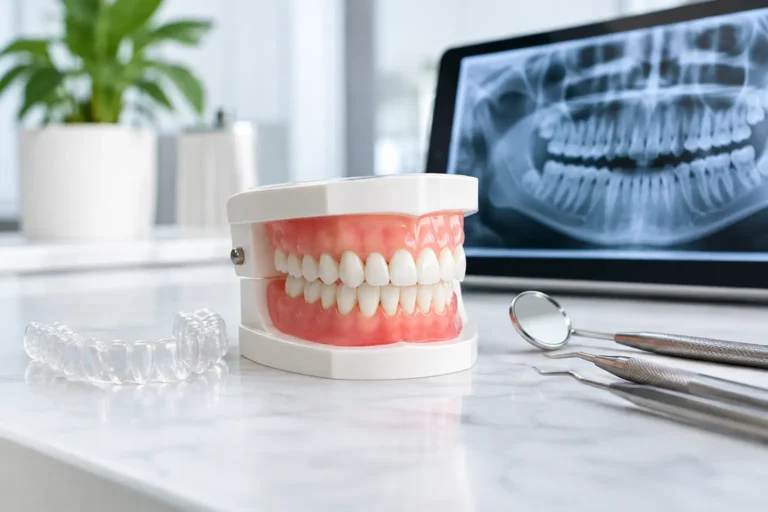
When teeth have become worn, fractured, missing or repeatedly repaired, the problem is rarely limited to one tooth. The way the upper and lower teeth meet may have changed gradually, affecting chewing, speech, appearance and the comfort of the jaw joints. Complex bite rehabilitation is the careful process of rebuilding that relationship, with every restoration planned as part of one functional system.
For many patients, this is not about pursuing an artificially perfect smile. It is about being able to eat without thinking twice, speak clearly, stop worrying about another repair failing, and feel that their teeth look like their own again.
What makes a bite rehabilitation complex?
A bite is more than the contact between two teeth. It involves the position of the teeth, the way the jaws close and move, the support provided by the back teeth, the condition of the gums and bone, and the forces generated during chewing or clenching.
Rehabilitation becomes complex when several of these factors need attention at once. Common examples include advanced tooth wear from erosion, attrition or bruxism; multiple failing crowns and bridges; missing teeth that have altered the bite; old dentures that no longer provide stable support; or a full arch in need of replacement. Some patients have lived with these concerns for years, having individual teeth patched as problems arise. Eventually, a series of isolated repairs may no longer offer a predictable long-term answer.
The challenge is not simply choosing crowns, implants or veneers. It is deciding where the teeth should sit, how much tooth structure can be preserved, which teeth are reliable enough to retain, and how forces should be distributed once treatment is complete. A restoration can look attractive on its own yet fail early if it has not been designed around the whole bite.
The aim is a stable, natural-feeling bite
A well-planned rehabilitation seeks to restore three things together: function, comfort and appearance. These should not be treated as separate goals.
Function means the teeth meet in a controlled way and permit comfortable chewing. Comfort means the bite does not place unnecessary strain on vulnerable teeth, restorations or jaw muscles. Appearance means the proportions, tooth shape and colour suit the face, lips and character of the patient rather than looking uniform or overdone.
There is no single ideal bite for every person. The right plan depends on what remains of the natural dentition, the pattern of wear, facial proportions, jaw function, oral health and personal expectations. In some cases, a conservative rebuilding of worn edges is appropriate. In others, failing teeth may need replacement with implant-supported restorations. The most suitable option is determined by diagnosis, not by a standard package.
Why tooth wear needs more than cosmetic repair
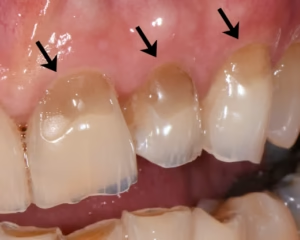
Worn teeth can make a smile appear shorter, flatter or older, but the clinical implications go beyond appearance. As enamel is lost, teeth may become sensitive, more prone to fracture and increasingly difficult to restore. The bite can lose height, while the front teeth may no longer guide jaw movements as they should.
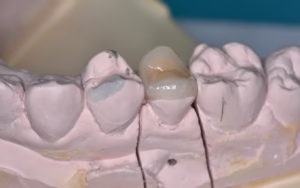
Tooth wear does not always mean that every tooth needs a crown. Where possible, a minimal-intervention approach may use carefully designed bonded restorations, inlays, onlays or veneers to preserve healthy tooth structure. However, heavily compromised teeth may require crowns, and missing or non-restorable teeth may call for implant-supported solutions.
The material choice matters, but design matters just as much. A strong material in the wrong position can still chip, loosen or overload the opposing teeth. A specialist-led plan considers the thickness of each restoration, the available space, the direction of bite forces and the long-term ability to maintain the result.
How complex bite rehabilitation is planned
Complex treatment should begin with time spent understanding the problem, not with a quick recommendation. A detailed assessment may include photographs, digital scans or impressions, radiographs, analysis of the bite, evaluation of tooth wear and a discussion of symptoms such as sensitivity, broken teeth, difficulty chewing or jaw fatigue.
Establishing the cause before rebuilding
It is essential to understand why the dentition has deteriorated. Night-time clenching or grinding, acidic dietary habits, reflux, missing teeth, unstable old restorations and a poorly supported denture can all contribute. If the cause is ignored, even beautifully made restorations may be exposed to the same damaging forces.
This does not mean every cause can be eliminated completely. Bruxism, for example, may be managed rather than cured. In those situations, the rehabilitation needs to be designed with protection and maintenance in mind, often including a carefully made protective appliance once treatment is complete.
Testing the proposed bite
Before definitive restorations are made, the proposed bite may be tested through a diagnostic wax-up, digital design, temporary restorations or a trial smile. This stage allows changes to tooth length, shape and bite position to be assessed in real life.
Patients can see how the planned teeth may look, but more importantly, they can experience how the bite feels when speaking and eating. Temporary restorations are not merely cosmetic previews. They provide valuable information about comfort, function and whether any refinements are needed before the final work is produced.
Sequencing treatment carefully
Treatment may involve stabilising urgent problems first, such as fractured teeth or failing restorations, before moving to more definitive stages. Where implants are required, healing and integration need to be respected. Where full-arch replacement is indicated, the provisional phase is particularly important for refining aesthetics and bite function.
A staged process can feel slower than treating one area at a time, yet it often prevents expensive compromises. The exact timetable depends on the starting condition, healing requirements and whether treatment involves natural teeth, dentures, implants or a combination of these.
Which treatments may be involved?
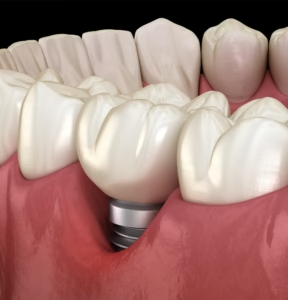
A complex rehabilitation can combine several restorative approaches. Teeth with sufficient healthy structure may be retained and restored with crowns, veneers, inlays or onlays. Missing teeth may be replaced with bridges or dental implants. For patients with extensive tooth loss, implant-supported full-arch solutions such as All-on-Four, All-on-Six or an individually planned All-on-X approach may provide fixed support where appropriate.
Specialist dentures can also be an excellent solution in the right circumstances, particularly when designed to support the face, improve speech and provide a stable, natural-looking bite. Fixed teeth are not automatically the best choice for every patient. Bone availability, medical history, hygiene requirements, manual dexterity, expectations and long-term maintenance all deserve an honest discussion.
The strongest plan is usually the one that preserves what can be predictably maintained, replaces only what needs replacing and gives each restoration a clear role within the bite.
Why specialist involvement matters
Full-mouth and bite-related treatment requires a level of planning beyond restoring a single damaged tooth. Prosthodontics is the dental speciality concerned with restoring and replacing teeth while managing function, aesthetics and the relationship between the jaws.
At Maison Dentaire, treatment is personally planned and delivered by Dr Lee Pei Nee, a registered specialist prosthodontist. This continuity matters. The clinician assessing the bite, discussing the options and designing the restorations remains responsible for the details throughout treatment, rather than passing critical decisions through a volume-driven workflow.
Patients should expect a written plan that explains what is recommended, why it is recommended, the sequence of care, realistic alternatives and the likely maintenance required. Transparent planning does not remove every uncertainty, but it gives patients a sound basis for making a significant decision.
Planning treatment when travelling to Kuala Lumpur
Patients travelling from Singapore, Australia, Hong Kong or elsewhere may reasonably ask whether complex treatment can be organised around their visits. In many cases, it can, but the process must be planned around clinical stages rather than travel convenience alone.
Some appointments can be grouped efficiently, while others require time for laboratory work, healing or review. Records may sometimes be gathered in advance, helping the initial consultation focus on examination and decision-making. However, no responsible clinician should promise a final treatment schedule before assessing the individual case.
For travelling patients, clear communication is particularly valuable. Knowing which stages require attendance, what provisionals are intended to achieve and how follow-up will be managed allows travel arrangements to support treatment rather than dictate it.
The result still needs protecting
Rehabilitation is a long-term investment in oral health, not a one-off event. Crowns, implant restorations, bridges and dentures need routine professional review, careful cleaning and, where indicated, protection from clenching or grinding. Natural teeth and restorations can change over time, particularly when bite forces are high.
The objective is not to create a mouth that never requires attention. It is to create a stable, maintainable foundation that reduces the cycle of repeated repairs. With the right diagnosis, careful sequencing and realistic aftercare, complex bite rehabilitation can replace uncertainty with a bite that feels secure, looks natural and is built to serve you well for years to come.