
A missing tooth can affect far more than a photograph. It can change how you chew, speak and choose food, while the teeth around the gap may gradually shift or take on more load. Yet when patients ask how to finance dental implants, the real question is usually not simply how to pay. It is how to make a significant decision without settling for a treatment plan that compromises function, appearance or long-term reliability.
Dental implant treatment should be planned clinically first and financed intelligently second. That order matters. A lower initial outlay can become expensive if the treatment does not account for bone support, bite forces, gum health, the condition of neighbouring teeth or the quality of the final crown, bridge or full-arch prosthesis.
Start with a written, specialist-led treatment plan
Before comparing payment options, ask for a clear written plan that explains what is required, why it is required and how treatment will be staged. Implant dentistry is not a single product with one universal fee. One patient may need to replace a single tooth; another may need several implants to support a bridge; a third may be considering All-on-Four, All-on-Six or a more comprehensive full-arch solution.
A proper plan should distinguish between diagnostic work, any preparatory treatment, implant placement, healing and the final restoration. It should also explain the materials and implant system being proposed, along with the anticipated number of visits. This gives you a reliable basis for budgeting, rather than an attractive headline figure that leaves essential elements unclear.
For complex rehabilitation, the planning should consider your bite in detail. Patients with worn teeth, erosion, attrition or bruxism need more than a replacement tooth. The final teeth must look natural, fit the facial proportions and work predictably under daily chewing forces. Careful planning at the beginning can reduce the likelihood of repeated repairs later.
How to finance dental implants with a staged approach
Many implant cases are completed in phases for clinical reasons, and that can also make the financial commitment more manageable. The timeline will depend on your individual situation. Some restorations may be completed more quickly, while cases involving healing, bone grafting or extensive reconstruction need a longer sequence.
Typically, your expenditure is spread across consultations and diagnostics, surgical treatment, review appointments and the final prosthetic work. Knowing when each stage is expected allows you to align payment with savings, available credit or formal healthcare financing, rather than trying to fund the entire process at once.
Do not, however, confuse staged payment with an invitation to pause treatment indefinitely. Once an implant is placed, the timing of subsequent stages should follow the clinical plan. Delaying a final crown, bridge or full-arch prosthesis without professional guidance may affect healing, bite stability or the overall treatment result.
Use savings where certainty matters most
For patients who have planned ahead, savings are often the simplest route. There are no interest charges, repayment schedules or credit applications to manage. Setting aside a monthly amount in a separate treatment fund can be particularly effective when your treatment is planned several months in advance.
Savings also provide flexibility if diagnostics reveal that the treatment is more involved than first expected. It is sensible to retain a contingency rather than committing every available pound or ringgit to the first stage. Dentistry is carefully planned, but clinical findings must guide the final recommendation.
Consider healthcare financing carefully
Some patients choose a bank personal loan, medical financing facility or credit arrangement to spread the expense over time. This may be appropriate where the monthly repayments are comfortable and the total borrowing cost is understood in advance.
Compare more than the advertised monthly instalment. Look at the interest or profit rate, repayment period, early settlement terms, late-payment charges and the total amount repayable. A longer term may reduce the monthly commitment but increase the overall cost considerably. Avoid taking on repayments that leave no room for ordinary living costs, travel or an unexpected dental requirement.
If a clinic offers an instalment option, ask exactly which treatment stages it covers and whether any conditions apply. Transparent financing should make the treatment easier to plan, not obscure the true commitment.
Check insurance benefits, but do not make assumptions
Dental insurance and corporate medical benefits vary widely. Some policies contribute only to specified dental procedures, while others exclude implants or limit benefits to accidental tooth loss. Even where implant treatment is not fully covered, benefits may sometimes apply to related consultations, imaging or restorative components.
Request the relevant policy wording and clarify pre-authorisation requirements before treatment begins. If you are claiming through an employer, confirm whether you need a formal treatment plan, receipts with specific information or evidence of payment. A specialist clinic should be able to provide clear documentation, but the insurer remains responsible for its own coverage decision.
Budget for the full treatment, not the implant alone
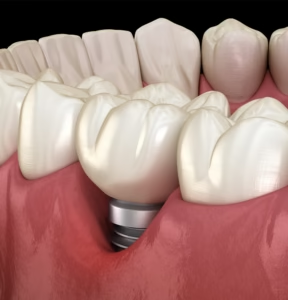
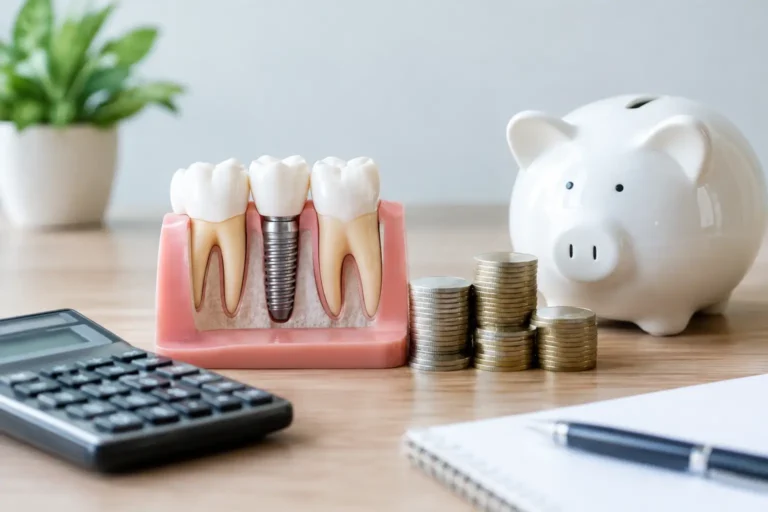
An implant is the fixture placed in the jawbone. It is not the finished tooth. The completed result may include a connector component and a crown, bridge or full-arch prosthesis, designed to restore appearance and chewing function. Depending on the case, diagnostics, temporary teeth, surgical preparation, sedation, laboratory work and aftercare may also form part of the overall plan.
Ask your clinician to identify what is included, what may be required only if indicated, and what is excluded. This is not about searching for unnecessary additions. It is about preventing surprises and ensuring that the proposed result is genuinely complete.
Premium implant systems and high-quality laboratory work may carry a higher initial cost than basic alternatives. The trade-off is not merely a brand name. Established systems support precise restorative planning and long-term maintenance, while carefully made final teeth can be shaped for natural appearance, speech and a stable bite. Suitability still depends on the individual case, so the right choice is the one your clinician can justify clearly.
Factor travel into your financing plan
For patients travelling to Kuala Lumpur from Singapore, Australia, Hong Kong or elsewhere in the region, treatment costs are only one part of the budget. Flights, accommodation, local transport, meals and time away from work should be considered from the outset. A plan that appears affordable before travel may feel very different after multiple unplanned visits.
The answer is not to compress every procedure into one short stay. Safe treatment needs enough time for consultation, scans, surgery, reviews and, where appropriate, healing. Instead, choose a clinic that can set out the expected visit schedule before you book travel and coordinate appointments efficiently around it.
Keep a separate travel allowance for changes in flight dates or an additional review, particularly for complex full-mouth rehabilitation. Patients should never feel pressured to rush a clinical decision simply because a return flight is approaching.
Decide what value means in your case
It is reasonable to compare fees between providers and countries. It is also reasonable to ask why one plan differs from another. The most useful comparison is not the starting price. It is whether each proposal includes the same diagnostic depth, implant system, surgical expertise, final restoration, review schedule and responsibility for the result.
For a single missing tooth, a straightforward implant crown may be the most conservative long-term option. For someone with multiple failing teeth or unstable dentures, a full-arch approach may offer greater stability and confidence when eating and speaking. Neither is automatically the right answer. The clinical condition, bone volume, bite, health history and personal priorities all matter.
At Maison Dentaire, implant treatment is personally planned and delivered by a specialist prosthodontist, with attention to the final teeth as well as the surgical stage. That approach is particularly valuable when aesthetics, bite function and long-term maintenance need to be considered together.
Questions to ask before committing
A calm financial decision starts with direct questions. Ask for the treatment sequence, expected number of visits, payment timing and what the plan includes. Ask what could change the plan after scans or clinical examination, and how those changes would be discussed with you. If you are travelling, ask which appointments must be attended in person and how follow-up will be managed once you return home.
You should also ask about maintenance. Implant restorations require regular review and professional hygiene care, just like natural teeth require ongoing attention. If you grind your teeth, a protective appliance may be recommended to protect the restoration and the surrounding structures. Building maintenance into your future budget is part of protecting the investment.
The most reassuring way to finance implant treatment is to give yourself enough information and enough time. A transparent plan lets you decide whether to save, spread payments or adjust the treatment schedule, while keeping the standard of care where it belongs: high from the very beginning.