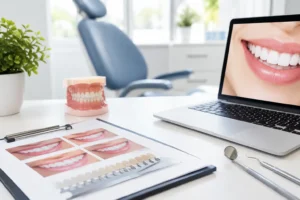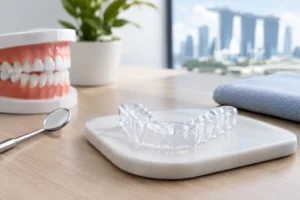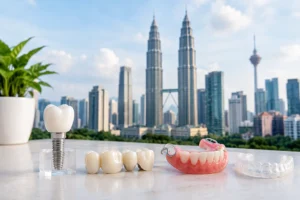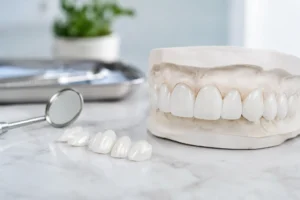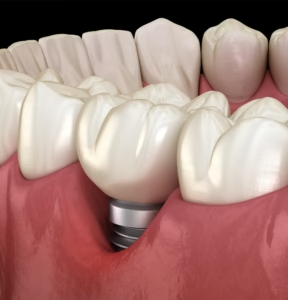

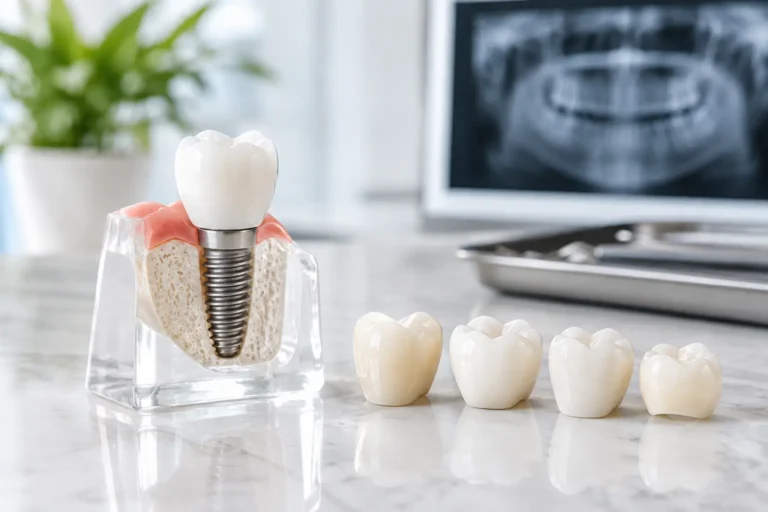
A dental implant may be hidden beneath the gum, but the crown is the part you see, speak with and bite on every day. Knowing how to choose implant crowns means looking beyond a shade chart or a promise of a natural-looking tooth. The right crown must suit your smile, support a stable bite and allow the implant and surrounding tissues to remain healthy over many years.
A well-made implant crown should not feel like a replacement tooth that you need to accommodate. It should feel secure, look proportionate and allow you to eat and speak with confidence. Achieving that result depends on careful planning before the crown is made, not simply choosing a material at the final appointment.
Start with the implant, gum and bite
An implant crown is only as predictable as the foundation beneath it. Before selecting its design or material, your clinician should assess whether the implant is correctly positioned, stable and integrated with the bone. The health and contour of the gum also matter greatly, particularly in the front of the mouth where the gum line frames the tooth.
The bite is equally important. Natural teeth have a fine cushioning system around their roots; implants do not. This means an implant crown needs to be designed so that biting forces are controlled carefully. A crown that is too high, too broad or positioned poorly in relation to the opposing teeth can be subjected to unnecessary force. Over time, this may contribute to loosening of screws, porcelain chipping, discomfort or strain on the implant components.
For patients with tooth wear, clenching or grinding, crown selection cannot be separated from the wider bite. A strong material alone is not a complete answer. The shape of the chewing surface, the contact points and whether a protective night guard is appropriate all require consideration.
How to choose implant crowns by material
There is no single material that is best for every implant crown. The ideal choice depends on where the tooth sits, how much force it receives, the visibility of the smile and the shade of neighbouring teeth.
Zirconia for strength and modern aesthetics
Zirconia is a high-strength ceramic widely used for implant crowns. It can be an excellent choice for back teeth, where chewing forces are greater, and for patients with a heavy bite. Modern multilayer zirconia can also provide a more natural variation in colour than earlier, very opaque forms of the material.
Its main advantage is durability. However, a highly strong crown still needs a carefully adjusted bite. In visible areas, the level of translucency and the way the crown meets the gum must be assessed closely so it does not appear too dense or artificial beside natural teeth.
Layered ceramic where fine detail matters
For a front implant crown, a layered ceramic design may offer more lifelike depth, translucency and surface texture. This can be valuable where the crown will sit beside natural incisors and be visible in close conversation or photographs.
The trade-off is that highly aesthetic layered ceramics may be more susceptible to chipping than a monolithic crown in patients with powerful bite forces. The specialist must balance the desire for delicate natural detail with the functional demands of your mouth. Sometimes the best result is a carefully planned combination of strength and aesthetic layering, rather than choosing one extreme.
Porcelain fused to metal in selected situations
Porcelain fused to metal crowns have a long clinical history and may still be appropriate in certain restorative situations. They can offer dependable strength, but the metal substructure may limit translucency and can be less ideal where a very natural appearance at the gum line is required. Their suitability is therefore highly case-dependent.
The material should never be selected from a generic menu. Your clinician should explain why a particular option is being recommended for that specific tooth and how it fits into your wider treatment plan.
The crown must match your teeth, not a standard shade
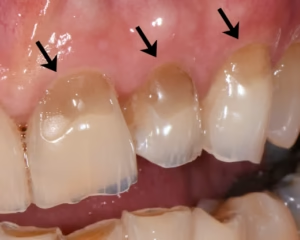
A natural-looking implant crown is about more than making it white. Teeth have small variations in colour, brightness, translucency and texture. They reflect light differently near the biting edge, at the centre and close to the gum. Even neighbouring teeth that look similar at a glance are rarely identical.
For a single front tooth, matching is particularly demanding. The surrounding teeth, gum level and position of the implant all influence what can be achieved. If the implant was placed too far towards the lip, too far towards the palate or at an unfavourable depth, the crown may need careful design to create the most natural possible emergence from the gum.
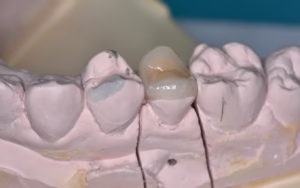
Good aesthetic planning also considers proportion. A crown that is technically well made can still look wrong if it is too long, too wide or too flat compared with the adjacent teeth. Photographs, digital scans, temporary restorations and detailed communication with the dental technician help refine these decisions before the final crown is fitted.
Ask how the crown will be attached
Implant crowns are commonly either screw-retained or cement-retained. Both approaches can be appropriate, but the decision should be deliberate.
A screw-retained crown has a small access channel through which the crown is attached to the implant. This channel is sealed with tooth-coloured material. One practical benefit is retrievability: if the crown needs to be removed for maintenance, screw access can make this more straightforward.
A cement-retained crown may sometimes offer advantages in crown form or aesthetics, depending on implant position and the restorative space available. However, excess cement left beneath the gum can irritate surrounding tissues, so meticulous technique is essential. Where possible, a design that supports predictable cleaning and future maintenance is usually preferred.
The attachment method is not merely a laboratory detail. It affects long-term serviceability, and it is reasonable to ask your clinician how the crown is being retained and why.
Choose a clinician who plans beyond one tooth
A replacement tooth should be considered in relation to the whole mouth. This is particularly true if you have several implants, existing crowns or bridges, worn teeth, missing back teeth or a history of repeated repairs.
For example, placing a very strong crown onto one implant without addressing a collapsing bite or heavily worn opposing teeth can shift forces elsewhere. The immediate result may look satisfactory, but the wider restorative plan may remain unstable. In more complex cases, diagnostic records and a staged approach help establish the correct bite position before definitive implant crowns are made.
For full-arch implant treatment, crown selection becomes even more involved. The prosthesis must restore not only teeth, but also lip support, smile line, speech, cleaning access and facial proportions. The choice between individual-looking crowns and a more unified full-arch design should be based on implant positions, available space, hygiene needs and the desired aesthetic outcome. It should not be treated as a purely cosmetic decision.
Consider maintenance before the final fit
Implant crowns do not decay, but the gum and bone around implants still require care. A crown should be shaped to allow you to clean around it effectively with the methods recommended for your situation. If the crown profile is too bulky or the contact areas are poorly designed, plaque removal becomes more difficult.
Regular reviews allow the clinician to examine the gum, bite, crown surface and implant components. Small changes, such as a developing high spot or a loosened screw, are often easier to manage when identified early. Patients who grind their teeth may also need ongoing review of a protective appliance.
For people travelling to Kuala Lumpur for treatment, maintenance planning deserves particular attention. Before committing to definitive crowns, clarify the expected number of visits, the role of provisional restorations, the review schedule and what records can be shared with your dentist at home if required. A carefully planned schedule should respect both biological healing and the practical realities of travel.
Questions worth asking at your consultation
The most useful questions are specific. Ask which crown material is recommended for your bite and why, whether the crown will be screw-retained or cement-retained, and how the shade and shape will be matched to your natural teeth. If you have a history of grinding, ask how this changes the design and whether a night guard is advised.
You should also ask how the crown will be cleaned, what maintenance is expected and whether the proposed treatment considers the rest of your bite. Clear answers indicate that the recommendation is based on planning rather than a one-size-fits-all solution.
At Maison Dentaire, implant crowns are planned as part of a wider prosthodontic assessment, with attention to implant health, facial aesthetics, gum support and how the teeth function together. The aim is not simply to place a crown that looks acceptable on the day, but to provide a restoration that remains comfortable, maintainable and believable in everyday life.
The best implant crown is rarely the one chosen most quickly. Give the planning the same value as the final material, and you give your new tooth the strongest chance of serving you quietly and well for years to come.