
A beautiful implant restoration can still feel wrong if the bite has not been planned properly. So, does bite affect implants? Yes. The way your upper and lower teeth meet influences how force is transferred through an implant, its crown or bridge, and the bone supporting it. Bite planning is not an optional finishing detail. It is a central part of making implant treatment comfortable, functional and built to last.
For patients replacing one tooth, several teeth or a full arch, the goal is not simply to create teeth that look natural. They must also meet, guide and share chewing forces in a controlled way. This is why a detailed assessment of your bite, jaw movement and existing teeth is essential before an implant restoration is finalised.
Does Bite Affect Implants? Yes, in Several Ways
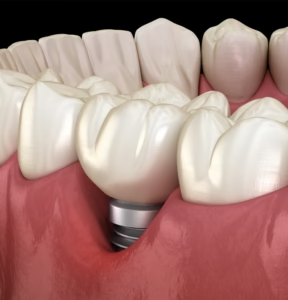
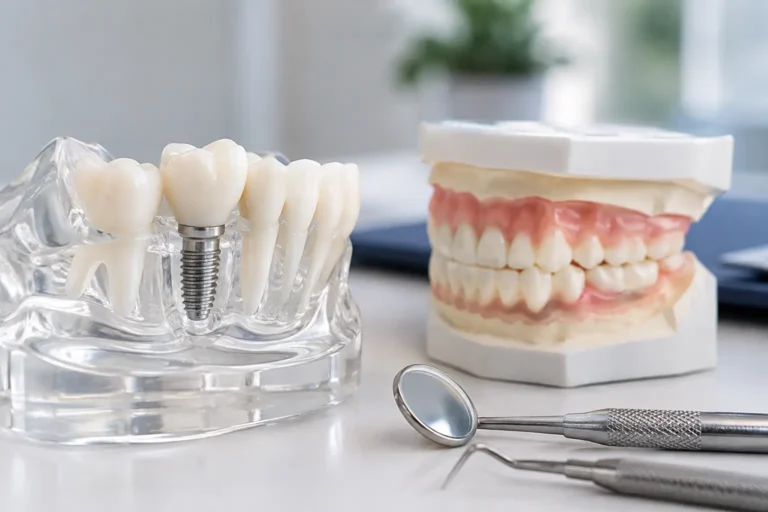
Your bite is also known clinically as occlusion. It describes how the teeth contact when you close together, chew, speak and move your lower jaw from side to side. Natural teeth have a small amount of cushioning because they are held in the jaw by a periodontal ligament. Implants are firmly integrated with bone and do not have the same cushioning mechanism.
This does not mean implants are fragile. Modern implant treatment is highly predictable when it is correctly planned and maintained. It does mean that the forces placed on implant teeth need to be considered carefully. A crown that contacts too heavily, a bridge that is poorly balanced, or a clenching habit that has not been accounted for can place excessive stress on the restoration and its supporting components.
Over time, unfavourable forces may contribute to complications such as loosening of a retaining screw, chipping or fracture of the ceramic restoration, wear of the opposing teeth, or discomfort in the jaw muscles. In more serious situations, persistent overload may affect the bone around an implant. These are not inevitable outcomes, but they illustrate why bite assessment is part of responsible implant care.
The Bite Is More Than How Teeth Look When You Smile
Many patients understandably focus first on tooth colour, shape and the appearance of the smile. These details matter, particularly in the front of the mouth. However, the teeth must work harmoniously when you eat and when your jaw moves.
A sound bite distributes forces across the appropriate teeth rather than concentrating them on one implant crown or one side of a bridge. The clinician also considers the direction of force. A vertical chewing load is generally easier for an implant restoration to manage than repeated sideways pressure. This is particularly relevant for back teeth, where chewing forces are stronger, and for patients who grind or clench.
The relationship between the upper and lower jaws also matters. A patient with a deep bite, an edge-to-edge bite, missing back teeth or uneven tooth wear may require a more considered restorative design. There is no single bite pattern that suits every implant case. The appropriate approach depends on your bone support, tooth positions, jaw relationship, remaining dentition and the type of restoration being provided.
Signs That Your Bite May Need Review
A bite concern is not always painful. Some people adapt gradually to changes in their teeth and may not notice that they chew mostly on one side or avoid certain foods. Others notice a specific sensation after an implant crown or bridge is fitted: the new tooth feels as though it touches first, food catches differently, or the jaw feels tired after meals.
Clues that warrant a review include repeated chipping, loosening of an implant crown or bridge, pressure when biting, new sensitivity in opposing natural teeth, headaches associated with clenching, or a feeling that your teeth no longer come together evenly. These symptoms do not automatically mean an implant has failed. Often, a careful examination and adjustment can identify a manageable cause.
Do not try to adapt by avoiding the restoration or changing the way you close your teeth. Contact the treating clinician instead. Small bite discrepancies are usually easier to correct before they create repeated stress.
Bite Planning for Full-Arch Implant Teeth
Bite planning becomes even more significant when replacing most or all teeth with an All-on-Four, All-on-Six or another full-arch implant solution. In these cases, the new teeth are restoring not only appearance but also the height, support and function that may have been lost as teeth wore down or were removed.
A fixed full-arch bridge has to be planned as a complete system. The number and position of implants, the available bone, the design of the bridge, the length of the back teeth and the opposing arch all influence how forces are managed. Extending a bridge too far towards the back, for example, can increase leverage on the implants. Shortening or reshaping certain areas may be a deliberate decision to improve long-term mechanical stability.
This can be a trade-off that deserves an honest discussion. The aim is not always to reproduce every tooth position exactly as it once was. The aim is to provide teeth that allow you to eat, speak and smile confidently while respecting the limits of the supporting bone and implants.
Patients who have worn removable dentures for many years may also need time to adapt to fixed teeth. Their muscles and chewing pattern have adjusted to a different way of closing. A carefully planned provisional restoration can be valuable because it allows the specialist to assess comfort, speech, appearance and bite function before the definitive bridge is made.
How a Specialist Plans a Stable Bite
A thorough implant consultation should include more than a scan and a discussion about tooth replacement. It should assess your existing teeth, jaw joints, muscle comfort, wear patterns and the way your jaw moves. Photographs, digital records, diagnostic models and provisional restorations may all be used where appropriate.
The process often begins by establishing the desired position and shape of the new teeth. From there, the implant positions and restoration design can be planned around both appearance and function. The clinician checks where contacts should occur when you bite together and how the teeth should guide movement when you slide your jaw forwards or sideways.
For some patients, the most suitable design gives implant teeth lighter contact than strong natural teeth. For others, particularly those with full-arch restorations, contact is balanced deliberately across the new bridge. The detail depends on the clinical situation, which is why a standardised approach is not sufficient for complex restorative work.
At Maison Dentaire, implant rehabilitation is planned with the bite considered from the outset, not adjusted as an afterthought. This specialist-led approach helps ensure that aesthetic decisions and functional decisions support one another.
Clenching, Grinding and Implant Protection
Clenching and grinding can place high forces on both natural teeth and implant restorations. Some patients know they grind because they wake with jaw tension or have been told their teeth are wearing down. Others are unaware, particularly if the habit happens during sleep.
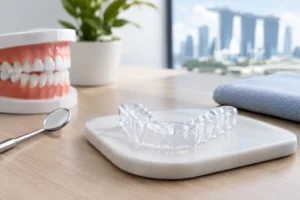
An implant restoration can still be appropriate for patients who clench or grind, but the design and maintenance plan may need to be adjusted. Stronger restorative materials may be selected in suitable cases, the bite may be refined to reduce harmful contacts, and a protective night guard may be recommended after treatment. A night guard does not eliminate all risk, but it can help reduce direct forces on restorations during sleep.
Regular reviews are equally valuable. They allow the clinician to check the bite, examine the restoration for wear or small fractures, assess the surrounding gums and bone, and address loose components before they become more disruptive problems.
What to Expect After Your Implant Teeth Are Fitted
A new implant crown, bridge or full-arch restoration should feel stable, not high or intrusive. Mild awareness is common during the first few days as your tongue, cheeks and chewing muscles adapt. However, persistent pressure, discomfort on biting or the sense that one side contacts before the other should be reviewed promptly.
It is also sensible to begin with a measured return to normal eating, especially after full-arch treatment. Your clinician will advise when firmer foods are appropriate. This is not simply about protecting the implants during healing. It also gives you time to become comfortable with a new bite and chewing pattern.
The best implant result is one you do not have to think about each time you close your teeth. Careful bite planning, thoughtful restoration design and ongoing review give your implant teeth the conditions they need to function quietly and reliably for the long term.