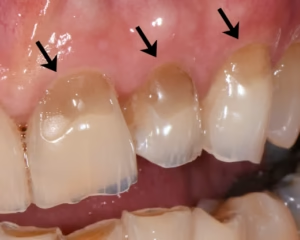

A tooth can look acceptable in a photograph yet be structurally compromised underneath. Large old fillings, cracks, repeated repairs and root canal treatment can leave very little healthy tooth material to carry the forces of chewing. Porcelain crowns are designed to protect and restore such teeth while closely matching the colour, translucency and shape of a natural smile.
A crown should not be treated as a quick cosmetic cover. Done well, it is a carefully planned restoration that must work with the tooth, surrounding gums and the way your upper and lower teeth meet. That planning is particularly important when several teeth are worn, broken or heavily restored.
What porcelain crowns do
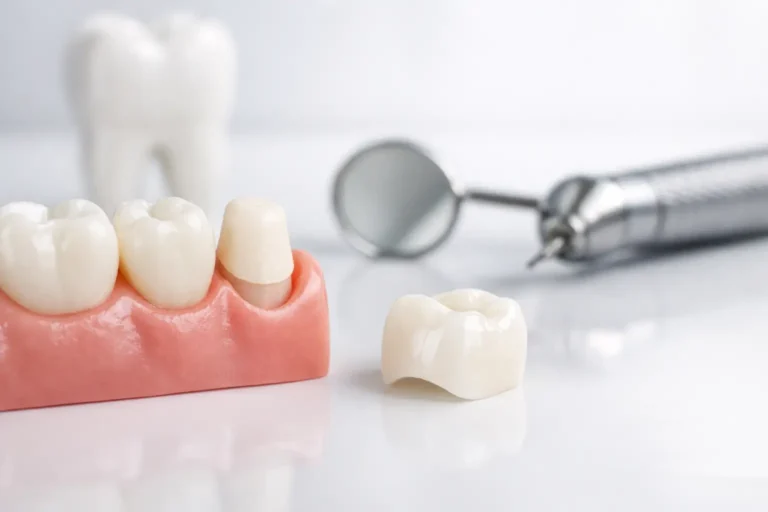
A dental crown is a custom-made covering that fits over the visible part of a prepared tooth. It restores the tooth’s form and strength, allowing it to function more predictably where a filling or smaller restoration may no longer be sufficient.
Porcelain is valued for its ability to reflect light in a way that resembles natural enamel. This makes it a popular choice for front teeth and visible premolars, where colour, shape and surface texture matter. Modern ceramic crowns can also be highly durable when the material is selected correctly and the bite is managed properly.
The term “porcelain crown” is sometimes used broadly. It may refer to a full ceramic crown, a porcelain-fused-to-metal crown, or a layered ceramic restoration. These materials do not perform identically. The right choice depends on the tooth’s position, how much healthy tooth remains, the space available, your bite and the appearance required.
When a crown is more appropriate than a filling or veneer
The most conservative treatment is usually preferred, provided it will last. A small or moderate defect may be better restored with a direct filling, inlay or onlay rather than a full crown. Preserving healthy tooth structure is always a meaningful objective.
A crown may be advised when a tooth has a large existing filling, weakened cusps, a significant fracture, severe wear or extensive decay. It is also commonly needed after root canal treatment, especially on back teeth that absorb considerable chewing forces. In these situations, the issue is not simply how the tooth looks. It is whether the remaining tooth can withstand daily loading without cracking further.
Veneers serve a different purpose. They cover the front surface of a tooth and can be an excellent option for selected cosmetic concerns when the tooth is otherwise sound. A crown wraps around the tooth and offers more complete protection, but it requires greater preparation. Neither treatment is automatically better. The diagnosis should determine the restoration, not the other way around.
Why the bite matters as much as the colour
A crown can be beautifully made and still fail prematurely if the forces placed on it have not been assessed. Patients who clench or grind their teeth, have uneven wear, missing teeth or a shifting bite may place excessive pressure on a new restoration.
Before crown treatment, a thorough assessment should consider how the teeth contact in normal biting and in side-to-side movements. This is known as occlusal planning. It helps guide the crown’s shape, thickness and contact points, reducing the risk of chipping, loosening, discomfort or stress on the opposing tooth.
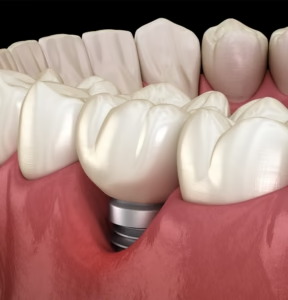
For patients with several failing restorations or widespread tooth wear, it is often unwise to assess each tooth in isolation. A full-mouth review may show that a staged plan, involving crowns, onlays, veneers or implants where appropriate, will provide a more stable long-term result than replacing one restoration at a time.
The process of planning porcelain crowns
The first consultation should establish why the tooth needs treatment and whether it is suitable for a crown. This usually involves a clinical examination, photographs, radiographs and an assessment of the gums and bite. If there is active decay, gum disease, infection or a crack extending too far below the gum line, these issues must be addressed before a definitive crown is placed.
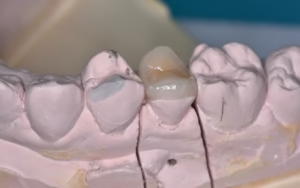
The tooth is then prepared conservatively to create the space needed for the chosen ceramic material. A precise impression or digital scan records the tooth and surrounding teeth so the dental laboratory can create a crown with accurate margins, contacts and contours. A temporary crown protects the tooth while the final restoration is being made.
At the fitting appointment, the crown is checked carefully for shade, shape, fit and bite. Minor adjustments can be made before it is permanently bonded or cemented. This stage should not be rushed. A crown needs to feel comfortable, cleanable and natural when you speak, smile and chew.
Where front teeth are involved, planning may include a preview of proposed tooth shapes. This can be particularly valuable for patients considering more than one crown, as symmetry and proportion need to be considered alongside the character of the natural teeth. A convincing smile does not necessarily mean every tooth is identical or unusually white.
Choosing the right ceramic material
There is no single “best” porcelain for every tooth. Highly aesthetic layered ceramics can create exceptional translucency for front teeth, but they may not always be the first choice in areas exposed to heavy biting forces. Stronger ceramics, such as zirconia-based materials, may be better suited to molars or patients with a powerful bite.
Porcelain-fused-to-metal crowns remain useful in selected clinical situations, although the metal substructure can sometimes limit translucency or create a darker appearance near the gum line over time. All-ceramic options generally offer the most natural light transmission, but material selection must balance appearance with strength, available space and the restoration’s position in the mouth.
A specialist-led plan does not begin with a preferred material. It begins with the tooth, the bite and the outcome that needs to be achieved.
How long do porcelain crowns last?
With sound planning, careful fitting and good maintenance, porcelain crowns can serve well for many years. However, no dental restoration is permanent. Its lifespan depends on the condition of the supporting tooth and gums, daily bite forces, oral hygiene, diet, grinding habits and regular dental review.
The crown itself may remain intact while the tooth underneath develops decay at the margin if plaque is allowed to accumulate. Daily brushing with fluoride toothpaste and cleaning between teeth are therefore essential. If you grind or clench, a professionally made night guard may be recommended to protect both the crown and your natural teeth.
Contact the clinic promptly if a crown feels high when biting, becomes loose, develops a rough edge or causes persistent sensitivity. Early review can prevent a minor issue from becoming a fracture or more complex repair.
A considered choice for lasting function
Porcelain crowns can restore confidence in a tooth that is weakened, worn or visibly damaged, but their value lies in more than a cosmetic improvement. The goal is a restoration that respects healthy tooth structure, supports a balanced bite and remains comfortable to live with.
At Maison Dentaire, crown treatment is planned around those long-term considerations rather than a standardised cosmetic result. The most reassuring next step is a detailed assessment of the tooth and the whole bite, so the treatment recommended is the one your smile genuinely needs.