
A missing tooth is rarely just a gap in a smile. It can change how you chew, the way neighbouring teeth move, and how confident you feel speaking or eating in company. Dental implants cost can therefore feel like a substantial decision, particularly when online prices vary widely. The useful question is not simply how much an implant costs, but what has been planned, provided and protected within that fee.
An implant is a long-term restoration with several clinical stages. The quality of diagnosis, the position of the implant, the materials used and the design of the final tooth all influence whether it feels comfortable and functions reliably for years. A lower initial figure can sometimes exclude essential parts of treatment or reflect a more standardised approach to a complex clinical situation.
What does dental implants cost usually include?
For a straightforward single missing tooth in Kuala Lumpur, fees may commonly range from around RM7,000 to RM12,000 or more when the implant, surgical placement and final crown are included. This is only a broad guide. It should not be treated as a meaningful quotation without an examination, scans and a review of your bite.
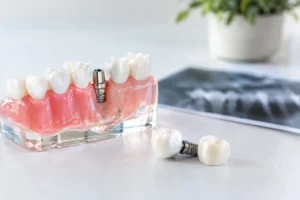
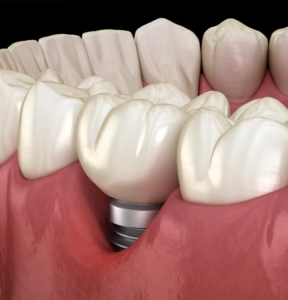
A complete treatment plan should make clear whether the fee covers the implant fixture placed in the jawbone, the connecting component beneath the crown, the custom crown itself, surgical planning, scans, review appointments and follow-up care. A temporary tooth may also be needed, especially in a visible part of the mouth. Some treatment plans include these items from the outset; others price them separately.
The implant fixture is not the whole treatment. It is the foundation. The final crown must be shaped to look natural alongside your teeth, meet the opposing teeth correctly and allow you to clean around it. If the bite is not assessed carefully, excessive forces can place the implant restoration, adjacent teeth or jaw joint under strain.
Why implant fees vary so much
Every mouth presents a different combination of bone, gum health, tooth position and bite forces. Two patients can both need one implant but require very different treatment. This is why a brief price comparison without clinical detail can be misleading.
Planning and specialist assessment
A detailed assessment may involve clinical photographs, digital scans, X-rays and, where appropriate, three-dimensional imaging. These records allow the clinician to assess the available bone, identify important anatomical structures and plan the ideal position before surgery.
For an implant to support a natural-looking, cleanable tooth, it must be positioned not only where bone is available but where the final crown needs to sit. This is particularly significant for front teeth and for patients with a high smile line. Prosthodontic planning begins with the finished tooth, then works backwards to plan the implant foundation.
At Maison Dentaire, treatment is personally planned and delivered by specialist prosthodontist Dr. Lee Pei Nee, with attention given to aesthetics, function and long-term maintenance rather than simply replacing a gap.
Bone and gum preparation
Some patients have sufficient healthy bone for implant placement without additional procedures. Others need bone grafting, sinus augmentation in the upper back jaw, or gum treatment before an implant can be placed predictably. These procedures add time, materials and surgical complexity, so they also affect the overall fee.
It can be tempting to avoid preparatory treatment in order to reduce the initial cost. Yet where it is clinically necessary, placing an implant without adequate support may compromise its position, appearance or long-term stability. Equally, grafting is not automatically required. Careful planning should distinguish between what is beneficial and what is genuinely necessary.
The implant system and restorative materials
Established implant systems are designed with precision-engineered components, traceability and long-term availability of replacement parts. Premium internationally recognised systems such as Straumann and Megagen carry a different cost from lesser-known alternatives, but they also offer confidence that the restorative components are supported and accessible in the future.
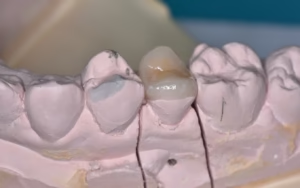
The crown material matters too. A well-made ceramic crown can be colour-matched and shaped to complement the surrounding teeth, while its design must also withstand the forces created by chewing. The best material depends on the location of the tooth, your bite, the available space and your aesthetic goals. There is no single crown material that suits every patient.
Surgical complexity and healing time
A simple implant placement is very different from replacing a tooth after infection, managing a narrow space between roots, or rebuilding an area that has lost bone over many years. Some cases allow an immediate temporary tooth on the day of surgery. Others require a healing period before the final restoration is made.
Neither approach is inherently better. Immediate treatment can be appropriate when stability and clinical conditions are favourable. Delayed restoration may be the safer route when bone or gum healing needs to take priority. A responsible plan explains why one route is recommended for you.
The cost of full-arch implant treatment
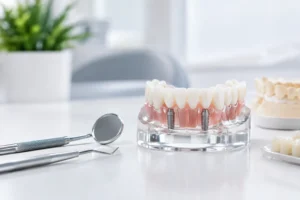
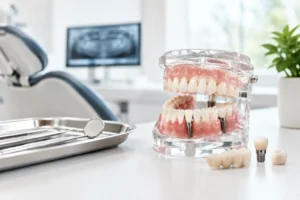
For patients who have lost most or all teeth, full-arch rehabilitation is assessed differently from replacing a single tooth. All-on-Four, All-on-Six and All-on-X treatment uses a carefully planned number of implants to support a fixed full-arch bridge. The final fee reflects the surgical treatment, any required extractions, provisional teeth, implant components, final bridge materials and the considerable planning involved in restoring an entire bite.
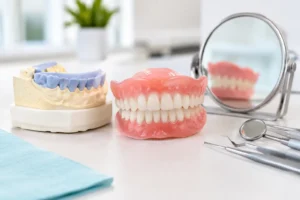
A full-arch fixed solution may range from tens of thousands of ringgit per arch, with the final figure varying substantially according to bone condition, number of implants, whether teeth need removal, provisionalisation and the final prosthesis. It should not be compared directly with the cost of a conventional denture. A denture rests on the gums and is removable; a fixed implant bridge is a more complex reconstruction designed to provide stability and chewing confidence.
The number in the name is not a promise that one solution suits everyone. Four implants can be effective in selected cases, while six or more may offer a more appropriate distribution of support in others. The right plan is based on bone quality, jaw shape, bite relationship and the desired final teeth, not a one-size-fits-all package.
Questions to ask before comparing quotations
A clear written treatment plan gives you a fair basis for deciding. Ask which implant system will be used, who will perform the surgery and restore the final teeth, and whether the quoted amount includes the crown or bridge. It is also sensible to ask whether scans, temporary teeth, grafting, sedation, reviews and maintenance are included or may be charged separately.
Ask how the final result will be planned. Will your gum line, tooth proportions and bite be assessed? If you grind your teeth, will a protective night guard be recommended? These are not minor details. They influence the longevity of the restoration and can prevent avoidable repairs later.
A transparent discussion should also cover what happens if an unexpected finding changes the plan. Dentistry cannot always predict every issue before surgery, but you should understand the likely contingencies and costs before proceeding.
Value is measured after treatment, not on the day of surgery
Dental implant treatment needs ongoing care. Implants cannot develop decay, but the gums and bone around them still require excellent cleaning and regular professional review. Smoking, untreated gum disease, poorly controlled diabetes and heavy grinding can all affect risk and maintenance needs.
The lowest quotation may be appropriate for a genuinely straightforward case with a clear scope of work. However, a price becomes less meaningful if it leaves out the diagnostic work, restorative planning or aftercare that protects the result. For complex cases, especially front teeth or full-arch rehabilitation, precision at the planning stage is often where long-term value begins.
Before choosing based on a headline figure, arrange a consultation that gives you a diagnosis, a written sequence of treatment and time to ask questions. The right implant plan should leave you clear not only about the fee, but about the care, judgement and long-term support behind your new tooth or teeth.