

A crown should not simply look convincing on the day it is fitted. It must also tolerate the way you bite, protect the remaining tooth structure and sit comfortably alongside neighbouring teeth for years. When considering zirconia crowns versus porcelain, the right answer depends less on which material is “best” and more on where the crown sits, how much force it receives and what the tooth beneath it needs.
Both materials can produce excellent results in the right hands. The difference lies in their behaviour: zirconia is valued for strength and modern versions can be highly natural-looking, while porcelain has long been chosen for its lifelike translucency and fine aesthetic character. A specialist assessment considers the whole picture before recommending either.
Zirconia crowns versus porcelain: the key difference
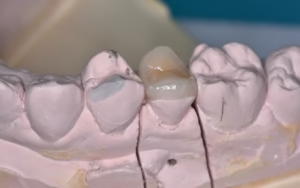
Zirconia is a high-strength dental ceramic. It is white, metal-free and manufactured using precise digital design and milling processes. Early zirconia crowns were known for being relatively opaque, which made them useful for masking dark teeth but less suitable for highly visible front teeth. Newer multilayer and more translucent zirconia materials have improved substantially, allowing a more natural transition in colour and light reflection.
Porcelain is also a ceramic material, but the term can describe several crown types. A traditional porcelain-fused-to-metal crown has porcelain layered over a metal substructure. An all-ceramic porcelain crown, often made from materials such as lithium disilicate, contains no metal and is selected for its optical qualities. These distinctions matter. Comparing zirconia with a metal-based porcelain crown is not quite the same as comparing it with a modern all-ceramic crown.
The decision should therefore be based on the specific material system, not a broad label alone. A crown is part of a carefully balanced restoration, not an off-the-shelf cosmetic cover.
When zirconia may be the better choice
Zirconia is often particularly suitable for back teeth, where chewing forces are greatest. Patients who clench or grind their teeth may also benefit from zirconia’s high fracture resistance, provided their bite is properly assessed and managed. A well-designed zirconia crown can be made with relatively conservative thickness in selected situations, which may help preserve more natural tooth structure.
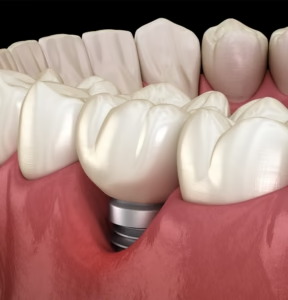
For bridges, zirconia can offer the strength needed to support replacement teeth across a space. It is also frequently considered for implant crowns, especially in areas where durability is a priority. The material does not corrode and contains no metal, which is reassuring for patients who prefer metal-free restorations.
A monolithic zirconia crown is made from a single block of zirconia rather than being coated with a separate outer porcelain layer. This removes the risk of the outer veneer chipping away, a relevant consideration for patients with strong bites. However, monolithic does not automatically mean appropriate. The crown still needs a precise shape, polished surface and bite adjustment to reduce unnecessary wear on opposing teeth.
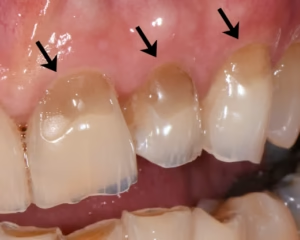
Zirconia can also be useful where a tooth is very discoloured or has a dark underlying core. Its opacity can help mask the background colour. Yet this same quality may make it less ideal for a front tooth where a high level of translucency is needed to match natural enamel.
When porcelain may offer the finer aesthetic result
For visible front teeth, porcelain often remains an excellent choice because it can reflect and transmit light in a way that resembles natural enamel. A carefully layered porcelain restoration allows a technician to create subtle changes in shade, translucency and surface texture. These details are what stop a crown from looking flat or artificial.
This is particularly relevant when restoring a single front tooth. Matching one crown to the teeth beside it requires more than selecting a shade from a chart. The clinician must consider the brightness of the surrounding teeth, the colour near the gumline, the level of translucency at the incisal edge and how the tooth appears in different lighting.
All-ceramic porcelain options can be highly beautiful, but they may require more material thickness than zirconia in some cases. If space is limited, creating enough room for the restoration without over-preparing the tooth becomes a significant planning issue. The ideal material is one that achieves the aesthetic goal while keeping preparation as conservative as possible.
Traditional porcelain-fused-to-metal crowns can still be appropriate in selected cases, particularly where a strong substructure is required. Their limitation is that a dark margin may become visible if gums recede over time, and metal can make it harder to reproduce the vitality of a natural tooth. For this reason, they are less commonly selected for prominent smile-zone restorations where appearance is the main priority.
Strength is not the same as longevity
It is tempting to choose the strongest material and assume it will last longest. In practice, crown longevity depends on several factors beyond the ceramic itself. The health of the tooth and gum, the quality of the bond or cement, the crown margins, oral hygiene and the forces placed on the restoration all play a role.
A beautifully made porcelain crown can perform very well for many years if it is placed in a favourable bite and cared for properly. Equally, a zirconia crown can fail if the tooth underneath develops decay, if the gum recedes or if severe grinding is left unmanaged.
The bite is especially important. A crown that is even slightly too high can receive repeated excessive force. Over time, this may cause discomfort, fracture, loosening or damage to the opposing tooth. For patients with multiple crowns, worn teeth, jaw discomfort or a history of failed dental work, the way the upper and lower teeth meet must be evaluated before finalising the material choice.
How the opposing teeth affect the decision
Another concern patients reasonably raise is whether zirconia will wear down the teeth it bites against. This is not simply a question of hardness. Surface finish, crown shape and bite contacts are highly relevant. A highly polished zirconia surface, designed and adjusted correctly, can be kind to opposing enamel. A rough surface or poorly balanced contact, regardless of material, is more likely to cause problems.
Porcelain can also wear opposing teeth if it is roughened, chipped or incorrectly adjusted. This is why a final polish after any bite adjustment is essential. The clinical detail matters as much as the material itself.
For patients who grind their teeth, a professionally made night guard may be recommended after crown treatment. It protects both the restoration and the remaining natural teeth from excessive nocturnal forces.
Crowns for implants and full-mouth rehabilitation
The material decision becomes more complex when crowns are supported by implants or form part of a full-mouth rehabilitation. Implants do not have the same natural shock absorption as teeth, so force distribution requires careful planning. The design of the crown, the implant position, the available space and the opposing dentition all influence whether zirconia, porcelain or a combination approach is appropriate.
For full-arch implant restorations, zirconia is often considered because of its durability and the ability to create a strong, fixed prosthesis. However, not every patient needs or benefits from the same full-arch material. Facial support, smile line, available restorative space, speech and the ability to maintain hygiene must all be considered. A strong material cannot compensate for an unsuitable design.
At Maison Dentaire, material selection is part of a specialist-led treatment plan that considers aesthetics, occlusion and long-term maintenance together. This is particularly valuable when treatment involves several teeth, implants or a worn bite, where each restoration affects the others.
The practical questions to ask before choosing
Rather than asking only, “Is zirconia better than porcelain?”, ask which material is best for this particular tooth. Is it at the front or back of the mouth? Is there enough healthy tooth structure remaining? Do you clench or grind? Are you matching a single front crown, or rebuilding several teeth? Is the tooth natural, root-treated or implant-supported?
You should also ask how the proposed crown will be designed. A natural result depends on more than the ceramic. Good photographs, shade analysis, diagnostic planning and communication with an experienced dental technician are central to predictable aesthetic work. For more extensive cases, provisional restorations may be used to assess comfort, speech, tooth shape and bite before the final crowns are made.
A crown should feel like part of your own dentition, not merely look acceptable in a mirror. The most reliable choice is usually the one made after a careful examination of your bite, gums, tooth structure and expectations – with enough time allowed to plan the detail properly.