

Replacing missing teeth with implants is a significant decision, particularly if you are considering a full arch solution such as All-on-Four, All-on-Six or All-on-X. Knowing how to choose an implant dentist means looking beyond a reassuring smile, a promotional price or a promise of fast treatment. The right clinician should understand how your new teeth will look, bite, feel and perform years from now.
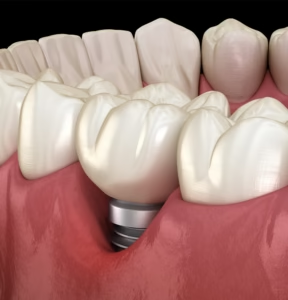
Implants are not simply screws placed into bone. They are part of a carefully planned restoration involving your gums, jawbone, bite, facial proportions and the final teeth that you will use every day. For patients with failing teeth or loose dentures, that level of planning can make the difference between a result that merely looks acceptable and one that feels stable, natural and dependable.
How to choose an implant dentist: start with the right expertise
An implant case has two closely connected parts: the surgical placement of implants and the restorative design of the teeth supported by them. Both matter. However, the final teeth determine how you bite, speak, clean around the implants and feel about your appearance.
Ask who is responsible for planning the final restoration before implants are placed. A prosthodontist is a registered dental specialist trained in rebuilding teeth, restoring complex bites and planning full-mouth rehabilitation. This expertise is especially relevant when several teeth are missing, existing teeth are worn or unstable, or you need a fixed alternative to a conventional denture.
A general dentist may provide implant treatment very well within their experience and training. Yet more complex cases often benefit from specialist-led planning, particularly when there is limited bone, gum recession, a collapsed bite, an uneven smile line or a need for full arch replacement. The question is not whether one title is automatically better than another. It is whether the clinician’s qualifications, experience and planning process are appropriate for your particular case.
Ask who will plan and deliver your treatment
It is reasonable to ask whether the dentist you meet will personally plan your case and provide the restorative work, or whether key stages will be delegated. Continuity matters because small decisions made at the diagnostic stage affect the eventual position, appearance and function of the teeth.
You should also ask how the surgical and restorative teams work together. Implant position should be guided by the desired final teeth wherever possible, rather than placing implants first and attempting to work around their position later. This is known as prosthetically driven planning, and it is central to predictable implant dentistry.
Look beyond implant placement alone
A successful implant must integrate with bone, but osseointegration is only one measure of success. A well-integrated implant can still lead to problems if the crown or bridge is difficult to clean, poorly shaped, overloaded by the bite or aesthetically out of balance with the face.
During a thorough consultation, your dentist should assess your teeth, gums, jaw relationship, bite, smile, medical history and expectations. Digital scans, photographs, X-rays and, where indicated, 3D imaging may all form part of the assessment. Not every patient needs every scan, but a full arch or complex implant case should not be planned from a quick glance and a single X-ray alone.
For patients with removable dentures, this assessment should also consider facial support, lip position and the amount of tooth visible when speaking and smiling. Replacing all teeth is not only about making a bridge that fits the implants. It is about restoring appropriate proportions and function without creating an artificial or bulky appearance.
Assess experience with cases like yours
A single missing tooth, a short bridge and a complete upper or lower arch present very different clinical challenges. When choosing an implant dentist, ask about their experience with the type of treatment you need.
If you are considering All-on-Four or All-on-Six, the dentist should be comfortable discussing why a particular number and position of implants is being recommended. All-on-X is not a one-size-fits-all procedure. Bone quality, anatomy, bite forces, gum display, oral hygiene and the design of the final bridge can all influence the appropriate approach.
Ask to see relevant examples of completed work where appropriate. Before-and-after photographs can be helpful, but they should not be your only measure. Discuss the clinical reasoning behind the plan, how the bite was managed and how the final bridge will be maintained. A natural-looking photograph is valuable, but long-term success also depends on details you cannot see in a picture.
Ask about implant systems and restorative materials
Implant systems are not interchangeable commodities. Established, internationally recognised systems generally offer a strong evidence base, reliable component availability and ongoing support. This becomes particularly important years after treatment, when a crown, screw or bridge component may need servicing or replacement.
Your dentist should be able to explain which implant system is proposed and why. Premium systems such as Straumann and Megagen are widely recognised, but the brand alone does not guarantee an excellent result. Precise placement, appropriate restoration design, good oral hygiene and regular maintenance remain essential.
The material used for the final teeth also deserves discussion. Some patients may suit individual ceramic crowns, while others may need a full arch bridge with a carefully selected framework and tooth-coloured material. The choice depends on aesthetics, available space, bite strength, opposing teeth and the ability to repair or maintain the restoration over time. A clinician should explain the advantages and limitations clearly rather than presenting one material as the answer for everyone.
Expect a written plan and transparent fees
Implant treatment has several stages, which may include extractions, bone or gum treatment, implants, temporary teeth, final crowns or bridges and follow-up care. A clear written treatment plan should set out what is included, what may be required later and where costs could change if the clinical situation differs from the initial assessment.
Be cautious with a headline price that does not identify the implant system, provisional teeth, final restoration, imaging, sedation, laboratory work or review appointments. A lower initial figure may not reflect the total cost of a well-planned, complete result.
Transparency does not mean a dentist can predict every eventuality before treatment begins. Occasionally, a hidden infection, weak bone or healing concern changes the plan. What matters is that you understand the likely pathway, the alternatives and the financial implications before proceeding.
Pay attention to bite, maintenance and aftercare
Implants do not decay, but the gum and bone around them still require care. Inflammation around implants can lead to bone loss if it is not detected and managed early. Your dentist should explain how to clean around your new teeth, how often you should attend for reviews and what maintenance your restoration may require.
The bite is equally important. Natural teeth have a small degree of movement, whereas implants are fixed in bone. A poorly balanced bite can place excessive force on an implant crown or full arch bridge, increasing the risk of loosening, chipping or fracture. For patients who grind their teeth, a protective night guard may be recommended.
A careful clinician will not treat the final fitting as the end of the relationship. Implant dentistry requires long-term review, particularly for full arch restorations where screws, bite surfaces and gum health must be checked periodically.
Notice how the consultation feels
You should leave a consultation with a clearer understanding of your options, not greater pressure to decide quickly. A good implant dentist will listen to what is troubling you, whether that is loose dentures, pain from failing teeth, embarrassment when smiling or difficulty eating familiar foods.
They should also be honest when an implant is not the first or only answer. In some situations, preserving a healthy tooth, improving a denture or treating gum disease first may be the more conservative choice. Minimal intervention with the best long-term outcome should guide the recommendation.
Four warning signs deserve particular attention:
- a fixed treatment recommendation before a full examination and diagnostic records
- no discussion of your bite, gum health or maintenance requirements
- unclear information about who will provide each stage of treatment
- pressure to accept a time-limited offer without a written plan
At Maison Dentaire, implant and full-mouth rehabilitation cases are planned around the final function and appearance of the teeth, with direct specialist prosthodontic involvement throughout treatment.
The best choice is not necessarily the nearest clinic or the quickest plan. Choose a dentist who takes time to understand your mouth, explains the reasoning behind every recommendation and remains focused on the teeth you will be living with for many years. That care at the beginning gives your treatment the strongest foundation.