A Straumann implant system review should not begin with a logo, a country of manufacture, or a claim that one implant brand is automatically right for everyone. It should begin with the clinical question: can the implant, restoration and bite be planned to give you stable, comfortable teeth for the long term?
For patients replacing one tooth, several teeth, or an entire arch, Straumann is widely regarded as a premium implant system. Its reputation is earned through extensive research, well-developed component design and a broad range of solutions for different bone and restorative situations. However, the implant itself is only one part of a successful result. Specialist diagnosis, precise placement, the quality of the final teeth and long-term maintenance carry equal weight.
What is the Straumann implant system?
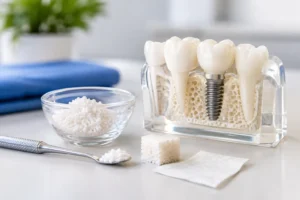
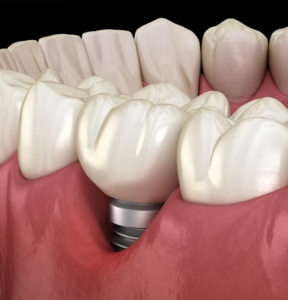
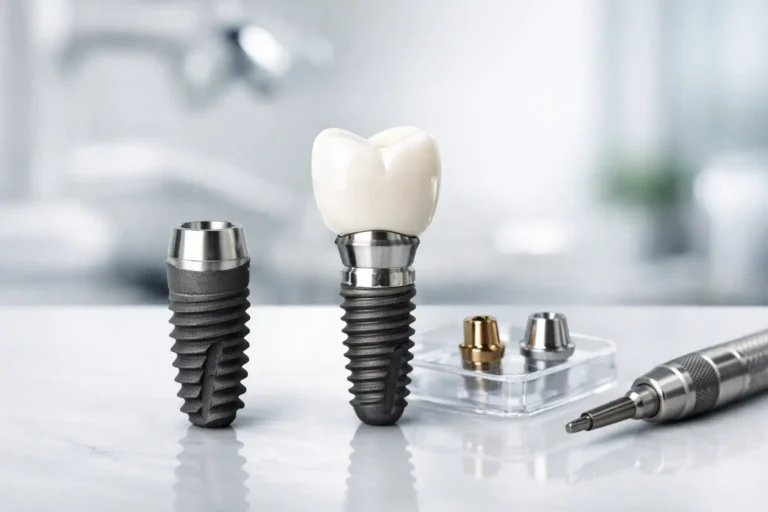
A dental implant is a small, carefully engineered fixture placed in the jawbone to support a crown, bridge or fixed full-arch restoration. Straumann is a Swiss implant manufacturer with a long history in implant dentistry. The system includes the implant body, connecting components, healing parts, abutments and restorative materials used to create the visible teeth.
This matters because an implant restoration is not a generic product. Each element must fit accurately and work together under chewing forces. A recognised system also provides reassurance that compatible components and restorative options are available should future maintenance be required.
Straumann offers several implant designs and surface technologies. Your clinician may select different options according to bone density, the position of the tooth, available space, gum levels and whether the restoration is a single crown or a full arch. The best choice is therefore not always the newest or most heavily marketed implant. It is the one that suits the treatment plan.
Straumann implant system review: key strengths
Straumann’s principal strength is the depth of its restorative ecosystem. For a straightforward single missing tooth, this can support a highly aesthetic crown with carefully controlled contours at the gumline. For more complex cases, it provides prosthetic flexibility for bridges and full-arch treatment, where accuracy and retrievability are particularly valuable.
Some Straumann implants are made from Roxolid, a titanium-zirconium alloy designed to offer high mechanical strength. This can be useful where space is limited or where a narrower implant may be considered. It does not mean that every patient needs a narrower implant, nor does it remove the need for adequate bone support. It simply gives the treating clinician another evidence-based option when planning around anatomy.
The company is also known for implant surface technologies intended to encourage bone healing and integration. Surface design can influence early healing, but it is not a substitute for good surgical technique, stable implant placement, careful infection control and sensible timing of loading. Patients should be cautious of any promise that a surface alone guarantees faster treatment or better results.
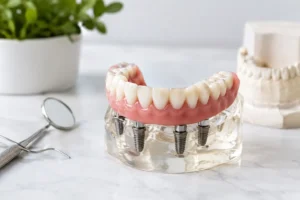
For patients considering All-on-Four, All-on-Six or another All-on-X approach, the availability of coordinated restorative components is a meaningful advantage. A full-arch bridge must be designed around the implant positions, smile line, lip support, speech, bite forces and cleansability. A system that allows the restorative plan to guide surgical decisions can make a material difference to the final outcome.
Where the system needs perspective
Premium implant systems come at a higher cost than less established alternatives. That cost reflects research, manufacturing standards, component support and the breadth of restorative options, but it does not mean a Straumann implant is the only clinically acceptable choice. There are other reputable implant systems, and an ethical recommendation should be based on your needs rather than brand prestige alone.
Nor should implant selection be separated from the condition of your mouth. Uncontrolled gum disease, smoking, poorly managed diabetes, active tooth infection, clenching and inadequate bone volume can all affect treatment risk. A high-quality implant cannot compensate for an incomplete assessment of these issues.
In full-mouth rehabilitation, an overly simplified plan can create problems even when excellent implants are used. For example, placing a fixed bridge without properly assessing jaw position and bite may leave the restoration exposed to excessive forces. Equally, placing implants only where bone is easiest to find may compromise tooth position, appearance or hygiene access. These are planning issues, not failures of a particular implant brand.
Is Straumann suitable for full-arch teeth?
Straumann can be an excellent option for full-arch rehabilitation, but suitability depends on far more than the implant system. Patients with loose dentures, severely worn teeth or failing bridges often want to know whether they can have fixed teeth quickly. In selected cases, immediate provisional teeth may be possible. In others, a staged approach is safer and more predictable.
The decision depends on the quality and volume of bone, the stability achieved when implants are placed, the presence of infection, your bite and habits such as grinding. A provisional bridge may be used while healing takes place, followed by a definitive bridge once the tissues and bite have stabilised. This slower route can be the wiser investment when precision is needed.
The number of implants is not a measure of quality by itself. All-on-Four can be appropriate in carefully selected cases, particularly where anatomy favours angled posterior implants. All-on-Six may provide additional support in other circumstances. What matters is whether the design distributes forces sensibly, leaves room for hygiene and supports a bridge that looks natural at rest and when smiling.
The restoration matters as much as the implant
Patients understandably focus on the implant because it is the surgical element. Yet the crown or bridge above it is what you use every day. It affects how you chew, speak, clean and feel about your smile.
A well-made implant crown must meet the gum tissue naturally, sit in a position that is easy to clean and contact the opposing teeth appropriately. A full-arch bridge requires even more attention. The teeth should not look flat, bulky or unnaturally uniform, and the bridge must provide enough support for the lips without becoming difficult to clean.
This is why specialist prosthodontic planning is central to implant treatment. The final teeth should be designed first in principle, then the implants positioned to support that design where anatomy allows. Digital scans, photographs, diagnostic mock-ups and three-dimensional imaging can all support this process, but they do not replace clinical judgement.
Questions worth asking at a consultation
Rather than asking only, “Which brand do you use?”, ask how your treatment will be planned and maintained. You should understand whether teeth can genuinely be saved, why implants are being recommended, what type of restoration is proposed and what alternatives exist.
It is also reasonable to ask who will place the implants and design the final bridge or crowns, whether the provisional stage is included, and how bite forces will be assessed. For a full-arch case, ask how you will clean beneath the bridge and what happens if a tooth, screw or ceramic surface needs repair in future.
At Maison Dentaire, implant care is planned with the final function and appearance in mind, rather than treating implant placement as an isolated procedure. Detailed planning helps ensure that the treatment remains appropriate for your bone, gums, bite and expectations.
The practical verdict
Straumann is a strong, premium implant system with a well-established clinical reputation and useful versatility for single-tooth, multiple-tooth and full-arch rehabilitation. It is particularly reassuring for patients who value internationally recognised components and a comprehensive restorative pathway.
Still, the best Straumann implant system review is not a simple verdict of “good” or “bad”. It is a reminder that long-term success comes from the relationship between the implant, your biology, the final restoration and the clinician’s planning. Choose a team that takes time to examine the whole picture, explains the trade-offs clearly and designs teeth you can live with comfortably for years to come.