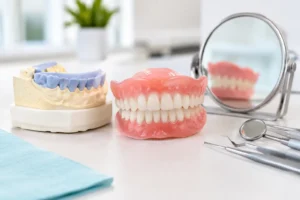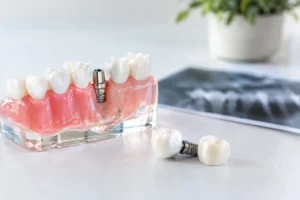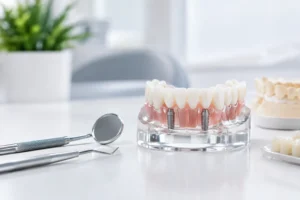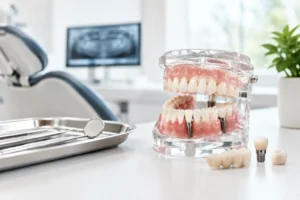


When several teeth are missing, worn down, loose or repeatedly failing, the decision is not simply about replacing teeth. A full mouth reconstruction dentist must determine why the mouth has reached this point, what can genuinely be saved, and how every new restoration will work together when you eat, speak and smile. This is detailed restorative care, not a standard cosmetic treatment.
For patients living with uncomfortable dentures, broken crowns, advanced tooth wear or failing bridges, the prospect of treatment can feel both hopeful and overwhelming. The right plan should bring clarity. It should explain the clinical findings plainly, set out the realistic options and prioritise long-term function as carefully as appearance.
What full mouth reconstruction really involves
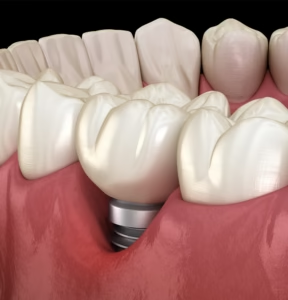
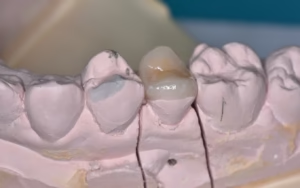
Full mouth reconstruction is a tailored programme of treatment used to rebuild oral function and appearance when multiple teeth require significant care. It may involve dental implants, fixed full-arch implant bridges such as All-on-Four, All-on-Six or All-on-X, crowns, bridges, veneers, dentures, or a considered combination of these treatments.
The term does not mean that every tooth must be removed or restored. In many cases, the most conservative approach is to preserve healthy teeth and focus treatment only where it is needed. A tooth that is structurally sound and has a favourable long-term outlook should not be replaced simply to make a treatment plan appear more uniform.
The complexity lies in ensuring that the final teeth relate properly to the jaw joints, facial muscles and opposing teeth. A beautiful result that is too long, too bulky or poorly balanced can make chewing uncomfortable, strain restorations and create frustration after treatment. This is why planning must begin with function, not with the shade of the teeth alone.
The causes matter as much as the visible damage
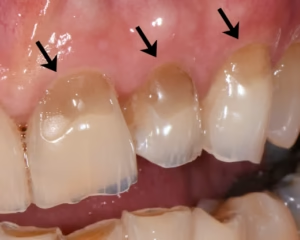
Teeth can fail for very different reasons. Gum disease may have caused progressive tooth loss. Decay beneath old fillings and crowns may have weakened several teeth. Grinding can shorten and fracture teeth over many years, while acid erosion can gradually reduce enamel. Some patients have worn dentures for so long that changes in bone and bite position need to be considered before replacement teeth are designed.
A careful diagnosis identifies these causes. Without it, new teeth may be placed into the same unfavourable conditions that damaged the previous ones. Treating active gum disease, managing grinding or adjusting an unstable bite may be essential parts of a successful reconstruction.
What a full mouth reconstruction dentist should assess
A responsible assessment is unhurried and comprehensive. It should include the condition of each tooth, gum health, bone levels, jaw relationship, bite pattern, tooth wear and the appearance of the lips and face in relation to the teeth. Photographs, digital scans, X-rays and, where appropriate, three-dimensional imaging give the clinician the information needed to plan with precision.
Equally important is understanding the person behind the clinical records. Some patients want fixed teeth because removable dentures move when they speak or limit what they can eat. Others value a natural-looking smile after years of hiding worn or discoloured teeth. Medical history, anxiety, time commitments and budget all influence which route is sensible.
A written treatment plan should distinguish between what is clinically necessary, what is advisable for durability and what is elective. It should also explain the stages involved, likely treatment times, provisional teeth where relevant, fees and the maintenance required afterwards. Clear information allows patients to make a considered decision rather than feel pressured into a pre-set solution.
Fixed implants, dentures and saving natural teeth
For people who have lost all teeth in one or both jaws, a fixed implant bridge can provide a stable alternative to conventional dentures. All-on-Four, All-on-Six and All-on-X refer to full-arch concepts where a custom bridge is supported by strategically placed implants. The appropriate number and position of implants depend on bone quality, anatomy, bite forces and the design of the final restoration. No particular number is automatically right for every patient.
Implant-supported solutions can improve stability and confidence, but they involve surgery, healing and committed cleaning around the bridge. They are not maintenance-free. Conventional dentures remain a valuable treatment for some patients, particularly where surgery is unsuitable, anatomy limits implant placement or a removable option better matches personal circumstances.
Where teeth can be retained predictably, crowns, bridges, inlays, onlays or carefully planned veneers may restore them with less intervention. However, retaining a tooth merely because it is present can be a false economy if its foundation is poor. The judgement lies in balancing preservation with a realistic prognosis.
Why specialist prosthodontic care makes a difference
Prosthodontics is the dental specialty focused on replacing and restoring teeth, including complex implant rehabilitation, dentures and bite reconstruction. In full-mouth cases, the treating clinician needs to consider more than individual teeth. The whole system must work together.
Specialist-led planning is particularly valuable where there is extensive tooth wear, several failed restorations, loss of bite height, multiple missing teeth or a desire for full-arch implant teeth. The clinician must be able to plan the final teeth before implants are placed, rather than treating implant surgery and the finished restoration as separate decisions.
At Maison Dentaire, Dr Lee Pei Nee personally plans and delivers treatment, with attention to occlusion, facial aesthetics and the long-term serviceability of each restoration. This direct involvement matters because fine details – the position of a tooth, the contour of a bridge and the way upper and lower teeth meet – can have a substantial effect on comfort and longevity.
The treatment journey should be planned in stages
Complex rehabilitation is rarely completed in one appointment. The first stage is diagnosis and discussion, followed by a detailed plan. This may include treating gum inflammation, removing teeth that cannot be saved, building up weakened teeth or placing implants. Temporary restorations are often used to protect teeth and test the planned bite and appearance before final restorations are made.
For full-arch implant treatment, suitable patients may receive fixed provisional teeth soon after implant placement. This is not guaranteed in every case. Primary implant stability, bone condition, infection risk and bite forces all affect whether immediate loading is appropriate. A cautious recommendation is sometimes the safer recommendation.
Once tissues have healed and the bite has been reviewed, the final bridge, crowns or dentures are made. This phase should not be rushed. The final result needs to be checked for speech, comfort, appearance, cleaning access and even contact between the teeth. Small adjustments at this stage are part of meticulous care, not a sign that something has gone wrong.
Questions worth asking before you proceed
A consultation should leave you better informed, not simply impressed by a before-and-after photograph. Ask who will plan and deliver the treatment, how the bite will be assessed, which teeth can be saved and why, and what happens if an implant or restoration needs attention in future.
It is also reasonable to ask about the implant system used, the likely lifespan of the restorations, cleaning requirements and total fees across all stages. Premium implant systems and well-made restorations have value, but no clinician can honestly promise that dental work will last forever. Teeth, implants and prostheses require review, hygiene care and occasional maintenance.
Be cautious of recommendations that offer a full set of fixed teeth without a careful examination or that make permanent-sounding guarantees. Predictable outcomes come from sound diagnosis, precise execution and an honest discussion of risk, not from a one-size-fits-all package.
Looking after a reconstructed smile
Long-term success depends on daily care. Natural teeth require careful brushing, interdental cleaning and regular hygiene reviews. Implant bridges need specific cleaning beneath and around the restoration, often with specially selected brushes or flossing aids. Patients who grind their teeth may also need a protective night guard, even after extensive treatment.
Regular reviews allow small issues to be identified before they become larger repairs. A loose screw, chipped ceramic surface, inflamed gum tissue or changing bite is usually easier to manage early. This continuing care is part of protecting the investment made in reconstruction.
The best next step is a thorough consultation that gives you a clear picture of your oral health and the choices available. With a plan built around your anatomy, bite and goals, it becomes possible to move forward with confidence rather than simply hope that the next set of teeth will be better than the last.