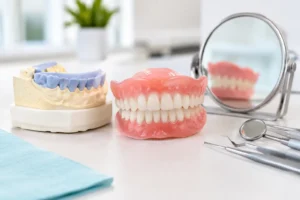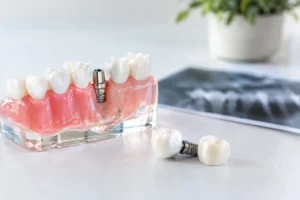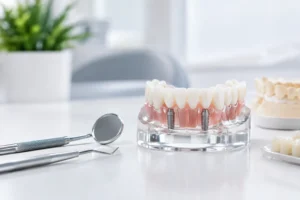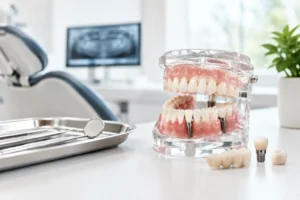


A fixed set of teeth on the day of implant surgery can feel like the finish line, especially after years of loose dentures, failing teeth or avoiding favourite foods. In reality, temporary versus final implant teeth is a purposeful two-stage process. The temporary teeth help you function and heal; the final teeth are designed once the foundations are stable enough to support a precise, long-lasting result.
For full-arch treatments such as All-on-Four, All-on-Six and All-on-X, this distinction matters greatly. A beautiful outcome is not only about the shade or shape of the teeth. It depends on implant integration, gum healing, facial support, speech, bite forces and the way you use your new teeth every day.
Why temporary implant teeth are not simply a short-term copy
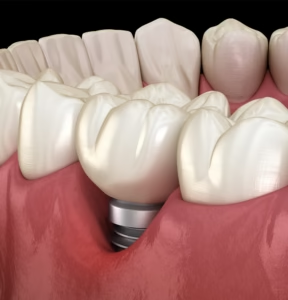
Temporary implant teeth, often called provisional teeth, are fitted during or shortly after implant placement where the clinical situation allows. For patients having a full arch restored, they are commonly fixed to the implants, rather than being removable like a conventional denture. This gives an immediate sense of security and helps protect confidence during treatment.
Their role, however, is broader than appearance. Temporary teeth allow the prosthodontist to assess how the smile looks in the face, how the lips are supported, whether speech is clear and whether the bite feels balanced. They also provide time for the gums and underlying bone to heal and settle around the implants.
This is particularly valuable when failing teeth have been removed. Swelling reduces, extraction sites remodel and the gum contours mature over the following months. Making a definitive bridge too early can mean committing to a shape that no longer matches the healed tissues.
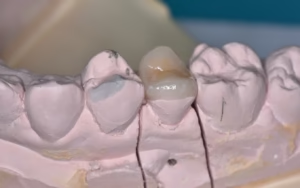
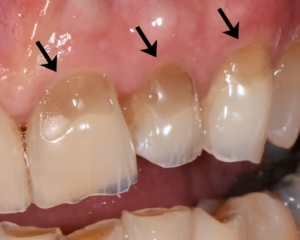
Temporary teeth are usually made from a lighter acrylic or composite-based material. They are intended to look natural and function well, but they are not designed to tolerate unlimited force. Small chips, wear or loosening can occur, especially in patients who clench or grind their teeth. These are not necessarily signs that treatment has failed. They may show that the bite needs adjustment or that a night guard will be important once the final teeth are fitted.
Temporary versus final implant teeth: the practical differences
The most visible difference is the material. Final implant teeth are commonly made from high-strength ceramic, zirconia or another carefully selected restorative material. The right option depends on the number and position of implants, available restorative space, bite forces, smile line, cleaning access and aesthetic goals. There is no single material that is best for every full-arch patient.
Final teeth are also more refined. During the provisional stage, adjustments are expected. The teeth may be reshaped to improve speech, lengthened or shortened to improve facial proportions, or altered to reduce pressure on an implant. Those lessons guide the final restoration.
A definitive bridge is designed with more detailed attention to long-term contours, contact points and polish. Smooth, well-planned surfaces help patients clean around the bridge and gums effectively. This is essential because implants do not decay, but the surrounding tissues can still become inflamed if plaque accumulates.
The bite is equally important. Natural teeth have a periodontal ligament that provides subtle feedback when biting. Implants are directly supported by bone and do not provide the same sensation. A bite that is even slightly unbalanced may place repeated stress on a bridge, screw connections or implants. Final teeth should therefore be planned only after the clinician has confirmed that healing is progressing well and the provisional bite is comfortable and stable.
How long will you wear temporary implant teeth?
The answer depends on your biology and the complexity of treatment. Many patients wear fixed temporary teeth for several months while implants integrate with the jawbone. In more complex cases, particularly where grafting, infection, significant bone loss or extensive extractions are involved, the provisional phase may need to be longer.
A rushed timetable is rarely in the patient’s interest. Implant integration cannot be judged by a calendar alone. The prosthodontist will consider clinical healing, radiographic findings, gum health, implant stability and how the temporary bridge has performed in function.
There are situations where immediate fixed temporary teeth are not advisable. If implant stability at surgery is insufficient, if the bone quality is compromised or if medical factors affect healing, a different approach may be safer. This can include a carefully fitted removable temporary denture while the implants heal. The preferred plan is the one that protects the implants, not the one that makes the quickest promise.
The temporary stage is where valuable adjustments happen
Patients sometimes worry that asking for changes to temporary teeth will delay the final result. In fact, the temporary stage is exactly when meaningful refinements should be made. It is far easier to test a small adjustment in tooth length, lip support or bite position before the final restoration is manufactured.
Speech provides useful information. Certain sounds, particularly “s”, “f” and “v”, can reveal whether the front teeth are positioned appropriately. A lisp may settle as you adapt, but it can also indicate that an adjustment is needed. Eating is another useful test. You should gradually regain confidence, but hard foods and strong biting forces should be avoided until you have been advised otherwise.
For patients replacing all teeth, the provisional bridge also helps establish a comfortable jaw relationship. Years of tooth wear, missing teeth or an unstable denture can alter the way the jaws close. Restoring the correct bite height is a clinical decision that must balance appearance, muscle comfort, speech and function. It should not be based on photographs alone.
Caring for temporary and final implant teeth
Both stages require consistent cleaning. A fixed bridge is not maintenance-free simply because it cannot be removed at home. You will usually need a soft toothbrush, interdental brushes selected for your bridge design and, where appropriate, a water flosser. Your clinician or hygienist should demonstrate how to clean beneath the bridge rather than leaving you to work it out yourself.
With temporary teeth, take particular care with hard, sticky and brittle foods. Avoid biting into foods such as whole apples or crusty bread with the front teeth unless you have been specifically cleared to do so. Cut food into smaller pieces and chew evenly on both sides. This reduces the risk of damaging the provisional bridge while the implants are healing.
Final implant teeth are stronger, but they still benefit from sensible habits. Do not use them to open packaging, bite fingernails or crack hard objects. If you grind your teeth, a protective night guard may be recommended. Regular reviews are not optional extras: they allow the bite, screws, bridge surfaces and tissues around the implants to be checked before minor concerns become larger problems.
What should you ask before moving to final teeth?
Before approving the final bridge, it is reasonable to ask whether the implants and gums have healed as expected, whether the bite has remained stable and how the chosen material suits your individual needs. You should also understand how the bridge will be cleaned, how it can be maintained or repaired if necessary, and what ongoing review appointments involve.
At Maison Dentaire, full-arch implant treatment is planned around these functional details as carefully as the visible smile. The final teeth should reflect what has been learned during healing, not replace that process.
The best final result is usually not the fastest one. It is the restoration made after your implants, gums, bite and confidence have had time to settle into the right position.