
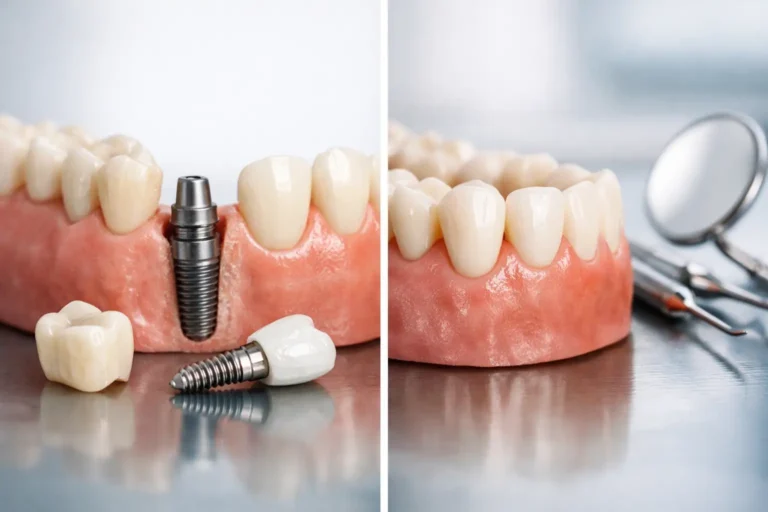
A dental implant transformation is not simply a change in photographs. The most meaningful dental implants before and after results are often felt first: eating without avoiding one side of the mouth, speaking without worrying about a denture moving, and smiling without instinctively covering the teeth.
For some patients, treatment replaces one missing tooth. For others, it is the turning point after years of loose dentures, failing bridges or teeth that have become painful and difficult to maintain. In either situation, a successful result depends on far more than placing an implant. It requires careful assessment of the bone, gums, bite, facial proportions and the way the final teeth will function every day.
Dental Implants Before and After: What Actually Changes?
Before treatment, a missing tooth can affect more than appearance. Adjacent teeth may drift or tilt into the space, making cleaning harder and changing the bite. Where several teeth have been lost, patients may struggle to chew fibrous food, pronounce certain words clearly or feel secure in social settings. Over time, loss of the tooth root can also contribute to bone shrinkage in that area.
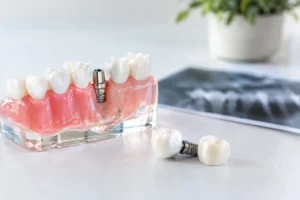
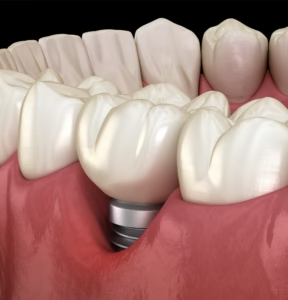
After treatment has healed and the final crown, bridge or full-arch prosthesis is fitted, the goal is a stable, natural-looking replacement that feels integrated with the rest of the mouth. An implant is a precision-made titanium fixture placed in the jawbone to support a replacement tooth or teeth. It acts as an artificial root, while the visible tooth is individually designed to suit the smile, gum line and bite.
The visible change can be considerable, but a good result should not look artificial or overdone. The shade, shape, translucency and position of the teeth must be considered alongside the patient’s face and lips. Equally, the new teeth must meet correctly when biting and move safely during chewing. A beautiful restoration that is poorly balanced can chip, loosen or create discomfort over time.
Before Treatment: The Planning That Determines the Result
There is no responsible one-size-fits-all implant plan. A patient with a single missing molar has different needs from someone with advanced gum disease, multiple failing teeth or a full removable denture. The number of implants required, whether grafting is needed and whether teeth can be retained should be decided only after a thorough clinical assessment.
Planning normally begins with a detailed discussion about your health, dental history, priorities and concerns. A specialist examination assesses the teeth, gums, jaw joints and bite. Three-dimensional imaging may be used to evaluate the available bone and to map important structures such as nerves and the sinus cavities. This allows implant placement to be planned with accuracy rather than estimated during surgery.
For patients who have worn dentures for many years, the planning stage also considers facial support. Tooth loss can reduce support for the lips and cheeks, while worn dentures may have altered the lower face height. A full-arch implant restoration should restore function without making promises that dentistry cannot realistically fulfil. It can improve support and confidence, but the final design must remain biologically sound and comfortable.
At Maison Dentaire, implant treatment is personally planned and delivered by Dr Lee Pei Nee, a registered specialist prosthodontist. The focus is on a written, individual treatment plan that explains what is recommended, why it is recommended and what alternatives may be appropriate.
Can Every Missing Tooth Be Replaced Immediately?
Not always. Immediate implant placement or immediate fixed teeth can be suitable in selected cases, particularly where bone quality, gum condition and implant stability are favourable. However, an immediate solution is not automatically the best solution.
Where there is active infection, significant bone loss, uncontrolled gum disease or insufficient stability, a staged approach may be safer. This may involve removing a tooth, allowing the site to heal, rebuilding bone where necessary, then placing the implant. It takes longer, but careful timing can protect the long-term result.
Patients should be cautious of treatment plans that focus only on speed. The right sequence depends on the condition of the mouth, not on a standard timetable.
The Implant Journey: From Surgery to Final Teeth
Implant surgery is usually carried out under local anaesthetic. Many patients are surprised that it is more manageable than expected, although some swelling, tenderness and bruising can occur afterwards. The extent of recovery depends on the number of implants placed, whether teeth are removed at the same appointment and whether grafting has been required.
Following placement, the implant needs time to integrate with the bone. During this healing period, a temporary tooth, bridge or denture may be used where appropriate, especially in visible areas. Temporary restorations are not merely cosmetic. They can help assess speech, bite, tooth position and smile appearance before the final work is made.
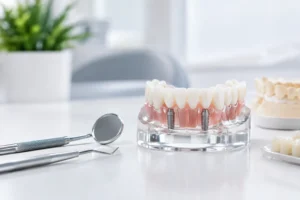
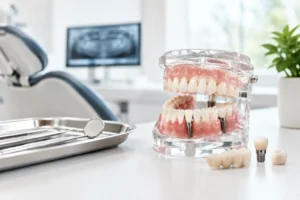
Once healing is complete, the final restoration is designed and fitted. This may be a single implant crown, an implant-supported bridge, or a fixed full-arch restoration such as All-on-Four, All-on-Six or an individually planned All-on-X solution. The number and position of implants should be determined by bone availability, bite forces, the desired prosthesis and long-term maintenance needs. More implants are not always necessary, but too few can compromise support in the wrong situation.
Premium implant systems, including Straumann and Megagen, offer established components and long-term restorative options. Yet the brand of implant alone does not create the outcome. Precise diagnosis, correct placement, restoration design and ongoing care remain central to success.
Full-Arch Dental Implants Before and After Dentures
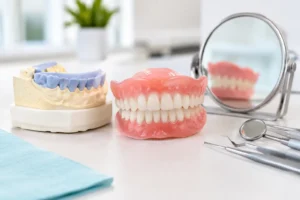
For someone living with a loose full denture, the difference after fixed implant treatment can feel especially significant. Conventional dentures rest on the gums and rely on suction, fit and muscle control. Even well-made dentures can move during eating or speaking, particularly in the lower jaw.
A fixed implant bridge is supported by implants rather than sitting directly on the gums. This can provide greater stability and stronger chewing confidence. Patients may find it easier to eat a wider range of foods, speak more naturally and avoid the daily inconvenience of adhesive products or removing teeth at night.
There are trade-offs to understand. Full-arch implant treatment is a significant clinical and financial commitment. It often involves removing failing teeth, surgery and a period of adjustment. The bridge still needs meticulous cleaning underneath and around the implants, and regular professional reviews are essential. Fixed does not mean maintenance-free.
For some patients, an implant-retained removable denture is the more appropriate option. It can be markedly more stable than a conventional denture while remaining easier for certain patients to clean or repair. The best choice depends on manual dexterity, anatomy, budget, expectations and the condition of the existing teeth and gums.
What Makes an Implant Result Look Natural?
Natural-looking implant dentistry is usually quiet rather than conspicuous. It avoids teeth that are too white, too uniform or too large for the face. In the front of the mouth, the gum contour is particularly important. If gum tissue has receded or bone has been lost, recreating the ideal appearance may require additional treatment or a carefully designed restoration that manages those limitations honestly.
The bite deserves equal attention. Patients who clench or grind their teeth place greater forces on implants and restorations. A protective night guard may be advised, and the bite may need periodic adjustment. This is particularly relevant for full-mouth rehabilitation, where every new tooth must work together as a system.
Photographs can be useful for showing the possibilities of treatment, but they should be interpreted carefully. Each before-and-after case reflects a particular starting point, anatomy and treatment plan. The right question is not whether your result will look identical to someone else’s. It is whether the proposed result is appropriate, stable and achievable for your mouth.
Maintaining the After Result
Implants cannot decay, but the surrounding gums and bone can still develop disease. Inflammation around implants, known as peri-implant disease, can threaten their long-term stability if not identified early. Daily cleaning, professional hygiene visits and regular specialist reviews are therefore part of the treatment, not an optional extra.
Your restoration may also require maintenance over the years. Crowns and bridges can experience wear, ceramic chipping, screw loosening or changes in the surrounding gum tissue. These are manageable when caught early, but they reinforce why good planning includes a clear maintenance strategy from the beginning.
The most worthwhile change after implant treatment is not a dramatic smile alone. It is the quiet confidence of having teeth that look considered, feel secure and are designed to serve you well for years to come.