
A tooth that repeatedly breaks, loosens, becomes infected or hurts when you chew is rarely an isolated problem. When several teeth are deteriorating, the way they meet, support one another and distribute biting forces may also be compromised. A prosthodontist for failing teeth looks beyond the immediate symptom to establish which teeth can be predictably retained, which cannot, and how to restore a comfortable, stable bite for the long term.
This distinction matters. Removing every compromised tooth too quickly can mean losing healthy structure unnecessarily. Trying to preserve teeth with a poor long-term outlook, however, can lead to repeated emergency treatment, escalating costs and a restoration plan that becomes harder to manage over time. The right answer is not the same for every patient. It depends on the condition of each tooth, gum and bone health, bite forces, medical history and what you need from your teeth every day.
What does it mean when teeth are failing?
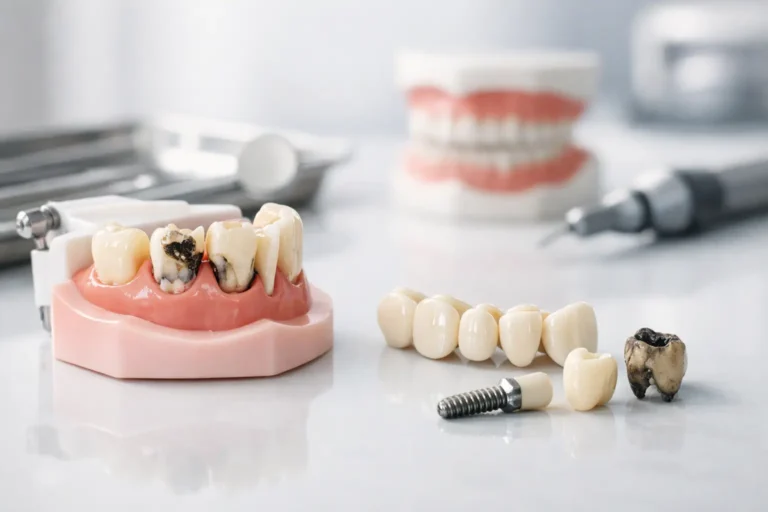
Failing teeth are teeth that no longer have a reliable prognosis without significant intervention, or teeth that have been restored repeatedly but continue to deteriorate. They may be affected by extensive decay beneath old crowns or fillings, fractures, advanced gum disease, root canal infections, severe wear, looseness or a combination of these problems.
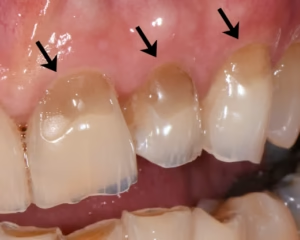
Some patients notice obvious warning signs: pain, swelling, bleeding gums, bad taste, loose teeth or crowns that keep coming off. Others have adapted gradually to difficulty chewing, avoid certain foods, or feel self-conscious about worn, shortened or discoloured teeth. A lack of pain does not always mean a tooth is healthy. Chronic infection and bone loss can progress quietly.
Teeth often fail as a pattern rather than one by one. For example, missing back teeth may overload the front teeth. Night-time grinding can crack heavily filled teeth. Gum disease can reduce the support around otherwise intact teeth. A plan that treats only the most troublesome tooth may bring short-term relief while leaving the underlying cause untouched.
Why see a prosthodontist for failing teeth?
Prosthodontics is the dental speciality focused on replacing and restoring teeth, rebuilding damaged bites and planning complex rehabilitation. Where several teeth are affected, the central question is not simply, “Can this tooth be treated?” It is, “Will retaining this tooth support a stable and functional result alongside the rest of the mouth?”
A specialist prosthodontist considers the whole system: teeth, gums, jawbone, jaw joints, facial support, speech, appearance and occlusion – the way the upper and lower teeth meet. This is particularly valuable when you have multiple failing crowns, loose teeth, widespread wear, old bridges, missing teeth or dentures that no longer fit well.
The aim is not to recommend the most extensive treatment by default. A sound tooth with a favourable prognosis may be restored conservatively with an inlay, onlay, crown or carefully designed bridge. A tooth with a vertical root fracture, severe recurrent infection or inadequate remaining structure may be better removed before it affects the wider treatment plan. Clear decisions require detailed assessment, not guesswork.
The value of prognosis, not just repair
A repair can be technically possible without being wise. A heavily restored tooth may accept another crown, for instance, but if there is little sound tooth structure remaining, persistent infection around the root, or an unfavourable bite, that crown may not offer the longevity you expect.
This is where a written, phased treatment plan is helpful. It sets out the current condition, the likely prognosis of each tooth, recommended priorities, alternatives and associated fees. You should understand both the advantages and limitations of retaining a tooth before proceeding.
How a specialist assessment is planned
A thorough consultation begins with listening. Your concerns may be pain and repeated dental emergencies, but they may also be the inability to eat confidently, fear of a removable denture, or uncertainty about whether your remaining teeth can be saved.
The assessment normally includes a clinical examination, appropriate radiographs and photographs, evaluation of gum health and bone levels, and a detailed bite assessment. Existing crowns, bridges, fillings and dentures are examined for fit, wear and hidden decay. Where implant treatment is being considered, three-dimensional imaging may be required to assess bone volume and important anatomical structures precisely.
Your habits and health also matter. Clenching or grinding, smoking, diabetes, dry mouth, reflux and certain medications can influence healing, decay risk and the expected lifespan of restorations. A careful plan accounts for these factors rather than treating every mouth as though it behaves in the same way.
At Maison Dentaire, Dr. Lee Pei Nee personally plans and delivers specialist restorative treatment, with attention to function as well as natural appearance. For patients considering major rehabilitation, that continuity helps ensure that the treatment is guided by one clear clinical vision from diagnosis through to the final result.
Treatment options when teeth cannot all be saved
Treatment can range from targeted restoration to full-arch replacement. The appropriate option depends on how many teeth are involved and whether the remaining teeth provide dependable support.
Saving suitable teeth
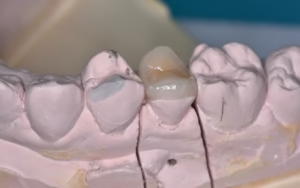
Where disease is limited and the tooth has a good foundation, treatment may involve managing decay or infection, stabilising gum health and restoring the tooth with a crown, onlay or bridge. In some cases, veneers or crowns are used as part of a broader smile and bite rehabilitation, particularly where wear has shortened the teeth and altered the bite.
Preserving natural teeth is generally worthwhile when the prognosis is sound. It may also allow treatment to be staged, reducing the immediate extent of care. The trade-off is that retained teeth still need ongoing monitoring and maintenance. They are not made immune to future decay, gum disease or fracture simply because they have been restored.
Replacing individual or several teeth with implants
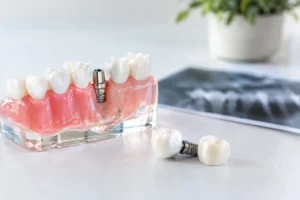
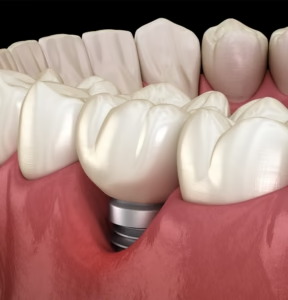
When one or more teeth have a poor prognosis, dental implants can replace the missing roots and support fixed crowns or bridges. Unlike a conventional bridge, an implant-supported replacement does not rely on preparing neighbouring teeth for support.
Implants require adequate planning, healthy gums and a commitment to long-term cleaning and review. They are highly effective when well indicated, but they are not a shortcut around oral hygiene or uncontrolled gum disease. Premium implant systems and precise placement are part of the equation; careful diagnosis and maintenance are equally essential.
Full-arch implant rehabilitation
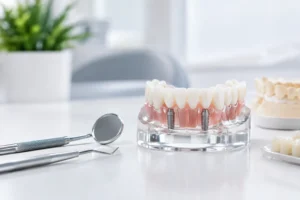
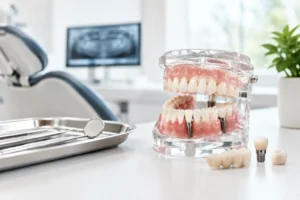
For patients with many failing teeth, unstable dentures or teeth that cannot be retained predictably, a fixed full-arch implant solution may be more appropriate. All-on-Four, All-on-Six and All-on-X refer to approaches in which a full arch of teeth is supported by a planned number of implants.
The number and position of implants should not be selected as a marketing label. Bone quality, bite forces, jaw anatomy, smile line, opposing teeth and the design of the final bridge all influence the decision. Some patients may be suitable for immediate fixed provisional teeth after implant placement, while others benefit from a staged approach to allow healing or bone grafting. A specialist will explain why one route is safer or more predictable for your particular situation.
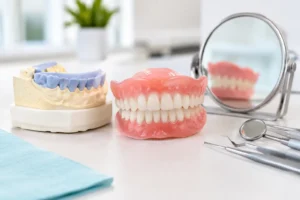
For others, a carefully designed full or partial denture remains the most sensible solution. Modern dentures can restore appearance and function effectively, especially when they are planned around facial support, speech and bite stability. Where feasible, implants can also be used to improve denture retention.
Do not wait for a dental emergency to decide
Repeated antibiotics, temporary repairs and emergency extractions can create pressure to make major decisions quickly. If you are coping with loose teeth, recurring abscesses, broken crowns or difficulty eating, seek an assessment before the next crisis determines the treatment timeline.
Early planning does not mean committing immediately to extractions or implants. It means understanding the condition of your teeth while there may still be choices: which teeth are worth retaining, how to protect vulnerable areas, whether treatment can be phased, and what a durable final outcome should look like.
The most reassuring plan is usually not the one that promises the fastest transformation. It is the one that explains what can be saved, what should be replaced, and how every decision supports your ability to eat, speak and smile with confidence for years to come.