When loose, painful or missing teeth make every meal a calculation, replacing them one at a time may no longer be the most sensible answer. This guide to full arch implants explains how a carefully planned fixed solution can restore a complete upper or lower arch, while protecting comfort, appearance and long-term bite function.
Full arch treatment is not simply about placing implants and fitting teeth quickly. It is a full-mouth rehabilitation decision. The quality of the planning, the health of the gums and bone, the position of the implants, and the design of the final bridge all influence how confidently you can eat, speak and smile for years to come.
What are full arch implants?
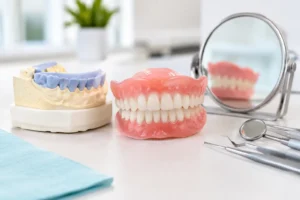
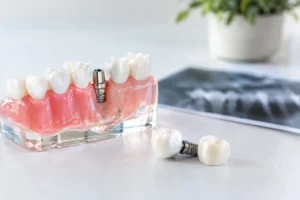
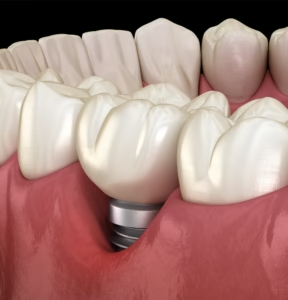
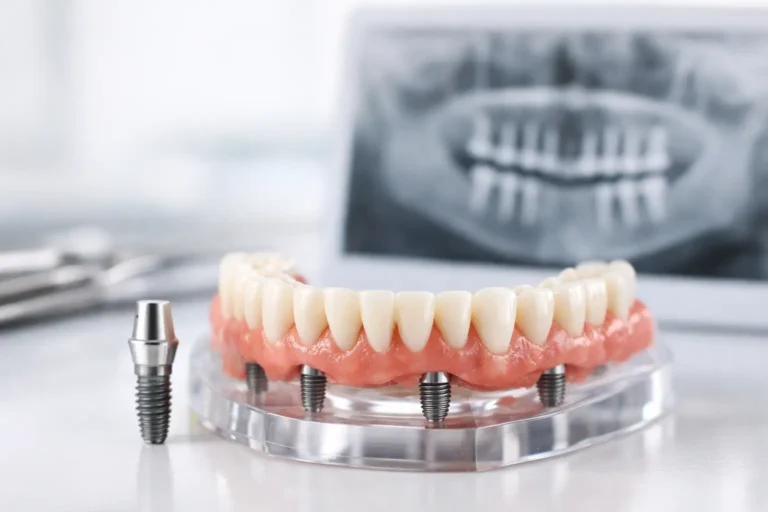
Full arch implants replace all the teeth in one jaw using a small number of dental implants that support a fixed bridge. Unlike a conventional removable denture, the bridge is secured to implants placed in the jawbone. It does not rely on suction, adhesive or the pressure of the gums for stability.
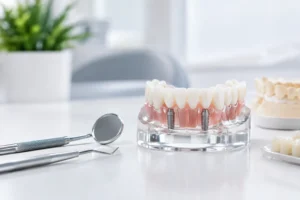
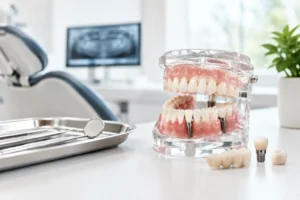
The term All-on-X is often used because the number of implants varies according to the individual case. All-on-Four uses four implants to support a full arch, while All-on-Six uses six. In some patients, a different number may be clinically appropriate. The right approach depends on bone volume and quality, bite forces, anatomy, gum condition and the design required for the final teeth.
A full arch bridge is generally removed only by the dental team for maintenance. This gives many patients a much more secure feeling than removable dentures, particularly when speaking or eating firmer foods. However, fixed does not mean maintenance-free. It requires daily cleaning and regular professional review.
Who may benefit from full arch implant treatment?
Full arch implants can be suitable for people who have already lost most or all teeth in an arch, as well as those with teeth that are severely compromised by advanced gum disease, repeated decay, fractures or longstanding wear. They can also be considered by denture wearers who are tired of movement, sore spots, reduced chewing ability or the fear of a denture slipping at an inconvenient moment.
The important question is not simply whether teeth are missing. It is whether the remaining teeth are genuinely maintainable. A specialist assessment should distinguish between teeth that can be predictably restored and teeth that have a poor long-term outlook. Removing every tooth because it is convenient is not a responsible treatment philosophy. Where healthy teeth can be retained with a sound prognosis, keeping them may be the more conservative choice.
General health matters too. Controlled medical conditions do not automatically prevent implant treatment, but healing capacity must be assessed carefully. Smoking, uncontrolled diabetes, active gum disease and certain medications can increase risk and may require treatment or stabilisation before surgery. A consultation should be candid about these factors rather than offering false certainty.
Why planning matters more than the implant number
Patients often ask whether All-on-Four or All-on-Six is better. Neither is universally better. Four well-positioned implants can provide excellent support in the right situation. Six implants may offer additional support and a more favourable distribution of force where bone, anatomy and the planned bridge design allow it.
The number alone does not determine success. Implant position is critical. Each implant must be placed with the final teeth, the bite and the available bone in mind. A bridge that looks attractive but is poorly designed for the way your jaws meet can overload implants, fracture porcelain or create tension in the jaw muscles.
A thorough assessment typically includes a detailed clinical examination, photographs, digital scans or impressions, bite analysis and three-dimensional imaging. These records allow the clinician to assess bone volume, identify the position of important anatomical structures and plan the most suitable implant sites. They also support a discussion about tooth shape, smile line, lip support and the amount of gum that may show when you smile.
This is where prosthodontic planning is particularly valuable. Full arch rehabilitation involves more than surgery. The final teeth must be designed to work harmoniously with the face, lips, jaw joints and opposing teeth. A natural-looking result is carefully engineered, not selected from a standard template.
The treatment journey, step by step
Assessment and treatment planning
Your first appointments should be unhurried enough to establish what is actually needed. If teeth need to be removed, the reasons should be explained clearly. You should also receive a written plan that sets out the proposed stages, the restoration type, expected treatment times and fees.
In some cases, bone grafting or treatment for gum infection is needed before implants can be placed. This can lengthen the process, but may provide a safer foundation. In other cases, angled implant placement can make use of available bone and avoid the need for extensive grafting. The appropriate route depends on your anatomy, not on a marketing promise.
Implant placement and temporary teeth
During implant surgery, any planned extractions are completed and implants are placed in carefully selected positions. When the implants achieve sufficient initial stability and the clinical conditions are favourable, a fixed temporary bridge may be fitted on the same day or shortly afterwards. This is commonly described as immediate loading.
Immediate teeth are not automatically suitable for every patient. If implant stability is limited, infection is significant, bone is poor in quality, or the bite creates excessive force, a different temporary arrangement may be safer. Good clinical judgement means knowing when not to rush.
The temporary bridge allows you to leave with teeth during healing, but it is part of the treatment process rather than the final result. A softer diet is usually required while the implants integrate with the bone. This healing period commonly takes several months.
Final bridge design
Once healing is complete and the gums have settled, the final bridge is made. This stage deserves time and precision. The team checks tooth position, speech, smile appearance, bite contacts and how easy the bridge will be to clean.
Final materials may include high-strength ceramic, zirconia or a carefully designed combination of materials. Each has advantages and limitations. Zirconia can be strong and aesthetically refined, but the best material choice also depends on the available space, bite forces and the design of the opposing teeth. A specialist should explain the recommendation in practical terms rather than presenting one material as right for every mouth.
Recovery and adjustment after full arch implants
Most patients experience swelling, tenderness and bruising after surgery. These symptoms are normally most noticeable in the first few days and then improve steadily. Your clinician will provide individual instructions about medication, oral hygiene, diet and follow-up appointments.
Eating will feel different at first, even with a fixed temporary bridge. You may need time to adjust to the feel of the teeth, pronunciation and chewing pattern. Start with softer foods and follow the dietary guidance closely. Biting into hard foods too early can place avoidable stress on healing implants.
It is also normal to need minor adjustments. A small change to a bite contact can make a meaningful difference to comfort. This is one reason ongoing review is an essential part of full arch care, not an optional extra.
Looking after a fixed full arch bridge
Implants cannot decay, but the gums and bone around them can become inflamed. Poor cleaning can lead to peri-implant disease, which may threaten the long-term stability of the implants. A fixed bridge therefore requires a consistent home-care routine and professional maintenance.
You will usually need a soft toothbrush, interdental brushes where appropriate, and devices designed to clean beneath the bridge. Some patients also benefit from a water flosser, but it should support rather than replace mechanical cleaning. The most effective method depends on the shape of the bridge and the space beneath it.
Regular reviews allow the bridge, implants, gums and bite to be checked. The bridge may need to be removed periodically for thorough professional cleaning and inspection. This is particularly important for people who clench or grind, have a history of gum disease or find cleaning difficult due to hand mobility.
Questions to ask before committing
A full arch solution is a significant investment in health and quality of life. Ask who will plan the final teeth and how your bite will be assessed. Ask what happens if immediate loading is not advisable, what temporary teeth will be provided, and how the bridge will be maintained over time.
It is equally reasonable to ask about the implant system, the anticipated number of appointments, material options, fees and possible additional procedures. Premium implant systems with established research and reliable component availability may support long-term maintenance, but the system is only one part of a successful outcome. Diagnosis, surgical execution and restorative design remain central.
For patients in Kuala Lumpur seeking a fixed alternative to failing teeth or unstable dentures, a consultation with a specialist prosthodontist should bring clarity before any irreversible decision is made. The right full arch treatment should feel considered from the first conversation: designed around your health, your face, your bite and the life you want to return to.