
A missing tooth is rarely just a gap. It can affect how confidently you smile, what you choose to eat and how the remaining teeth cope with daily biting forces. When researching dental implant price KL, patients often ask — how much should I expect to pay, what does the fee include, and why do prices vary so much between clinics? The most useful answer is not a single number, but an understanding of what goes into planning a result that looks natural, feels stable and is built to last.
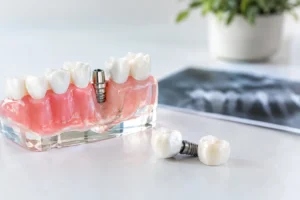
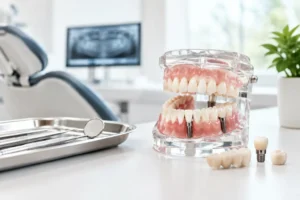
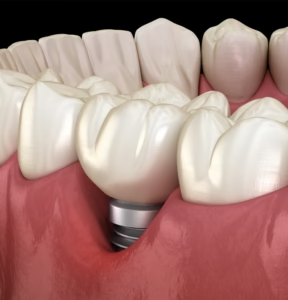
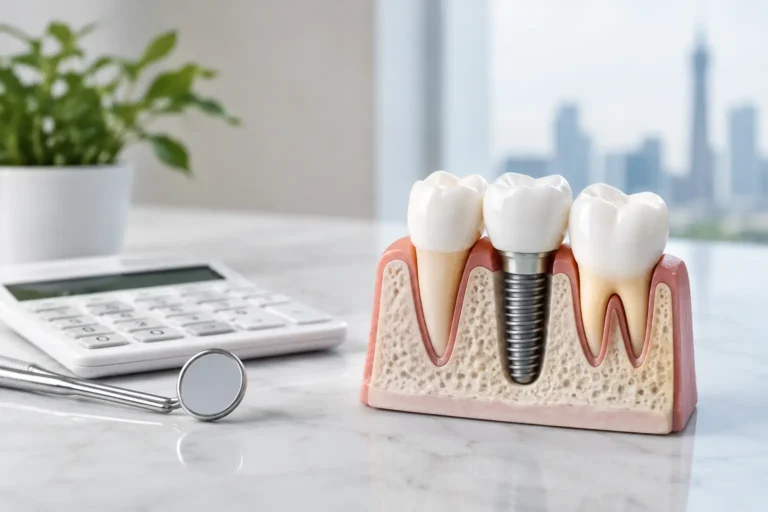
An implant is not a single item. It is a carefully planned restoration made up of the implant fixture in the jawbone, the connecting component and the visible crown or bridge. For patients replacing several teeth or an entire arch, the plan can also involve temporary teeth, a fixed final bridge and detailed bite management. The scope of treatment determines the fee. Understanding each component helps patients ask better questions and make more informed comparisons between providers.
Key Points
- Dental implant prices in KL range from RM3,000 to RM10,000+ depending on clinician qualifications, implant brand and planning thoroughness
- Mid-range specialist treatment from RM6,000 typically includes branded implant with lifetime warranty, CBCT scan, oral surgeon placement and prosthodontist restoration
- Bite assessment before placement is critical — poor occlusal planning causes crown fracture, implant stress and failure over time
- Removing a failed implant is complex — revision treatment can cost RM15,000 to RM25,000 or more
- Ask any provider what is included in the quoted price and whether a registered specialist is involved
What Affects Dental Implant Price in KL?
Several factors determine the final cost of implant treatment in KL, and understanding them helps patients move beyond comparing headline numbers.
The implant system used matters significantly. Internationally recognised implant brands with long-term clinical data and manufacturer warranties are priced differently from generic or unbranded alternatives. The distinction is clinically relevant — established implant systems have decades of published research supporting their long-term survival rates, and in the event of a component issue, replacement parts remain consistently available. Generic systems may cost less at the outset, but their long-term performance data is less robust and their components less reliably sourced.
The qualifications of the treating clinician affect both the cost and the nature of the treatment itself. Implant treatment provided by a general practitioner differs considerably from treatment that is planned and restored by a registered specialist prosthodontist, or surgically placed by a qualified oral and maxillofacial surgeon. Specialist training involves additional years of postgraduate study focused specifically on tooth restoration and replacement, and registration with the Malaysian Dental Council as a recognised specialist. This training is directly relevant to the planning and execution of implant treatment, particularly in cases involving compromised bone, complex bite situations or full-arch rehabilitation.
Pre-surgical imaging is another variable that significantly affects both cost and outcome. A CBCT three-dimensional scan allows the treating clinician to assess bone volume, bone quality, nerve positions, and the precise anatomy of the implant site before surgery begins. This level of detail reduces surgical risk and improves placement accuracy in ways that standard two-dimensional xrays cannot consistently achieve. Not all clinics include this as part of their quoted fee — and in some cases, treatment proceeds without it entirely, increasing the risk of surgical complications and suboptimal implant positioning.
Additional procedures including bone grafting, sinus lifts, or tooth extractions will add to the overall cost when clinically indicated. These are not optional add-ons — they are preparatory steps that directly affect whether an implant is placed on a stable foundation and whether it is likely to succeed long term. A thorough pre-treatment assessment identifies these needs upfront, allowing for honest and complete fee disclosure before treatment begins.
Understanding the Price Range in KL
Dental implant prices in Kuala Lumpur vary considerably — from around RM3,000 at general dental clinics to RM10,000 or more at established specialist centres. At the lower end, general practitioners typically use unbranded implant systems without specialist planning or CBCT scanning. Treatment at this price point may be appropriate for straightforward cases in experienced hands, but the absence of specialist planning, three-dimensional imaging and occlusal assessment increases the risk of longer-term complications.
At the mid-range, specialist clinics such as Maison Dentaire offer complete implant treatment from RM6,000 — this typically includes a branded implant system with lifetime warranty, CBCT scanning, surgical placement by a qualified oral and maxillofacial surgeon, and prosthodontist-planned restoration. At established premium specialist centres, fees of RM8,000 to RM10,000 or above reflect longer-standing reputations, higher overheads and in some cases decades of senior clinical experience.
Understanding what each quote actually includes is more useful than comparing headline figures alone. You can find a full overview of implant options at our dental implants KL page.
The Role of Bite Assessment
One aspect of implant planning that receives less attention than it deserves is occlusal assessment — the evaluation of how the implant restoration will function within the patient’s overall bite.
When an implant crown is not properly integrated into a patient’s occlusion, it can be subjected to bite forces it was not designed to absorb. The human bite generates considerable force — particularly in the posterior region where most implants are placed. Over time, an unbalanced occlusion places mechanical stress on the crown, the abutment, and the implant fixture itself. The clinical consequences can include crown fracture, loosening or failure of implant components, stress on adjacent natural teeth, accelerated wear, temporomandibular discomfort and in some cases implant failure. These problems do not always present immediately — they may develop gradually over two to three years following treatment, by which point the connection to the original planning is not always obvious to the patient.
For patients undergoing smile makeovers or more comprehensive restorative treatment alongside implant placement, this planning stage becomes significantly more involved. The implant, the surrounding teeth, the gum architecture, the facial proportions, and the bite all need to be assessed and coordinated together. A restoration that looks correct but functions poorly will create problems that are costly and time-consuming to resolve.
Specialist prosthodontists are specifically trained in occlusal assessment and full-mouth treatment planning. You can read more about what a prosthodontist does on our prosthodontist guide. This forms a core part of the prosthodontic curriculum and is one of the key differences between specialist and non-specialist implant care.
Why Specialist-Led Planning Can Change the Value
Dental implants involve surgery and restoration, but the success of the final result depends on how these stages work together. A prosthodontist is trained to plan and deliver complex tooth replacement with close attention to function, appearance and occlusion.
At Maison Dentaire, Dr Lee Pei Nee, a registered specialist prosthodontist, personally plans and delivers treatment. Dr Lee holds a Master of Dental Surgery in Prosthodontics from the University of Hong Kong and dual Membership of the Royal College of Surgeons of Edinburgh and Glasgow. This provides continuity from the first assessment through to the final teeth. Rather than fitting a standard recommendation to every patient, the treatment plan is based on what can be achieved predictably while preserving as much healthy tissue as possible.
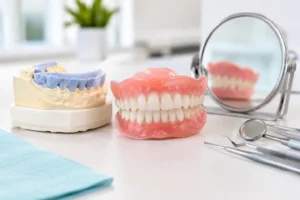
For some patients, replacing one missing tooth with an implant is the right choice. For others, a failing dentition may be better managed with a full-arch fixed solution. In certain circumstances, a carefully designed denture may be the more appropriate option. The best recommendation is the one that suits your oral health, your expectations and your ability to maintain the result over time — not the option that generates the highest fee.
What Happens When an Implant Fails
Patients considering implant treatment should understand what happens when things go wrong, because the clinical and financial consequences of implant failure are considerable and are frequently underestimated at the time of the original treatment decision.
Once placed, a dental implant undergoes osseointegration — a biological process in which the titanium fixture fuses with the surrounding jawbone over several months. This is what gives implants their stability and function. It also means that removing a failed implant is not a straightforward procedure. Unlike a crown or a bridge, an implant cannot simply be detached and replaced.
Explantation — the surgical removal of a failed implant — requires specialist intervention and carries its own risks, including further bone loss at the site. When failure has resulted in bone loss around the implant, reconstruction becomes necessary before any replacement treatment can proceed. Depending on the extent of bone loss, this may involve bone grafting using synthetic or donor material, or in more complex cases, autogenous bone harvested from another site in the patient’s own body such as the chin, jaw ramus, or in severe cases the hip. Each of these approaches adds surgical complexity, healing time and cost.
The total cost of revision treatment in complex cases can reach RM15,000 to RM25,000 or more, with treatment timelines of twelve months or longer not uncommon. Patients who initially saved RM2,000 to RM3,000 by choosing a lower-cost provider often find themselves facing a bill many times larger than the difference they hoped to save. This context is relevant when evaluating the difference between a RM3,000 and a RM6,000 initial treatment cost.
Ask What the Quotation Covers
A clear written treatment plan should explain each stage of care, rather than presenting a single unexplained total. It should clarify the diagnostics required, the number and type of implants, provisional teeth where relevant, the final restoration, laboratory work and review appointments. Patients should expect to understand what they are agreeing to before treatment begins — not after the first invoice arrives.
It is also reasonable to ask who will be responsible for planning the bite and final appearance, what implant system is proposed, whether the system carries a manufacturer warranty, and how potential complications or additional treatment needs are handled. Transparency allows patients to compare plans on clinical substance, not on headline figures alone.
Full-Arch Treatment Requires a Different Conversation
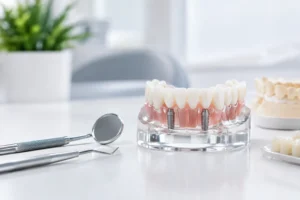
Patients considering fixed teeth for an entire upper or lower jaw often see terms such as All-on-Four or All-on-Six. These describe approaches using a planned number of implants to support a full arch, but they are not interchangeable packages. Bone quality, jaw anatomy, biting forces, aesthetic requirements and the condition of any remaining teeth all influence the most suitable design. A number in a treatment name does not determine the outcome — the planning does.
A temporary fixed bridge may allow suitable patients to leave with teeth on the day of surgery. However, the final bridge is usually planned after healing and detailed assessment of appearance, speech and bite. This staged process is clinically valuable because it gives the treating team time to refine the result — adjusting the tooth position, size and bite relationship before committing to the permanent restoration. Rushing this stage in the interest of speed or cost savings can compromise a result that will be worn for decades.
If you are comparing dental implant options in Kuala Lumpur, prioritise a consultation that gives you clarity, not pressure. A careful assessment and a written plan can help you decide whether the proposed treatment is genuinely designed for your mouth and for the years ahead. To arrange a consultation at Maison Dentaire Specialist Clinic, visit our contact page or call 018-2588366.
Why We Charge RM6,000 — A Note from Dr Lee Pei Nee
When patients ask me why our implant fee is RM6,000, I think it is a fair and important question. Pricing in dentistry is rarely transparent, and patients deserve a straight answer.
Before opening Maison Dentaire, I encountered a pattern that concerned me professionally. Patients were coming in after implant treatment elsewhere — some with crowns that had fractured, some with implants that had failed to integrate, and some with bite problems that had developed gradually and were now affecting multiple teeth. In several cases, the original treatment had been carried out without proper occlusal assessment, without three-dimensional imaging, and with implant systems that had limited clinical backing. The cost of revision in these cases was significant — in complex situations involving bone loss and reconstruction, patients were facing RM15,000 to RM25,000 or more to correct what had gone wrong. The original implant had cost them RM3,000 to RM4,000.
This is not an argument against affordable dentistry. It is an argument for transparency about what affordable actually means in a clinical context.
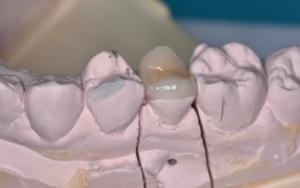
When I set our implant fee, I wanted it to reflect the actual cost of doing the procedure correctly — not the minimum cost of placing a fixture and attaching a crown. Our RM6,000 complete implant package includes a free initial consultation and comprehensive assessment, a CBCT three-dimensional scan for surgical planning, a premium branded implant system with a manufacturer lifetime warranty, surgical placement by a qualified oral and maxillofacial surgeon, a prosthodontist-planned custom abutment and crown, a full occlusal assessment before treatment begins, and all follow-up review appointments.
Two specialist professionals are involved in every case — a qualified oral and maxillofacial surgeon who performs the surgical placement, and myself as the treating prosthodontist responsible for planning, bite management and the final restoration. This is not standard practice at general clinics. It reflects how I believe implant treatment should be delivered.
I am aware that established specialist centres in KL charge RM8,000 to RM10,000 or above for comparable treatment. Some of that reflects genuine seniority and decades of experience. Some of it reflects clinic overheads, location costs and the premium that comes with a long-standing reputation. Maison Dentaire is a newer clinic. I made a deliberate decision not to price at a level that places specialist care out of reach for patients who need it. The clinical outcome of a well-planned implant does not depend on how long a clinic has been open. It depends on the qualifications of the clinician, the quality of the materials, and the rigour of the planning process.
RM6,000 allows us to cover those costs properly — the imaging, the surgery, the laboratory work, the follow-up — without cutting corners, and without pricing ourselves into a bracket that excludes the patients we most want to help.
If you would like to discuss your situation, you are welcome to book a free consultation. There is no obligation, and I will always give you my honest assessment of what I think is right for your oral health — not what generates the highest fee.