A missing tooth is rarely only a cosmetic concern. It can affect the way you chew, speak and feel about smiling, while several missing teeth may change the way your bite is supported. When researching dental implant alternatives KL, it helps to look beyond the quickest replacement option and consider what your remaining teeth, gums, bite and long-term goals require.
Dental implants are not the right choice for every person or every stage of treatment. Some patients need a temporary solution while their mouth stabilises. Others prefer a removable appliance, or have teeth that can support a fixed bridge. The best decision comes from a careful assessment, not a standard recommendation.
Dental Implant Alternatives in KL: Your Main Options
Removable partial dentures
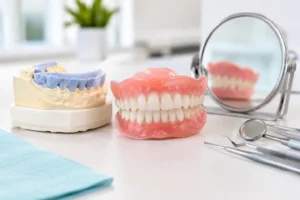
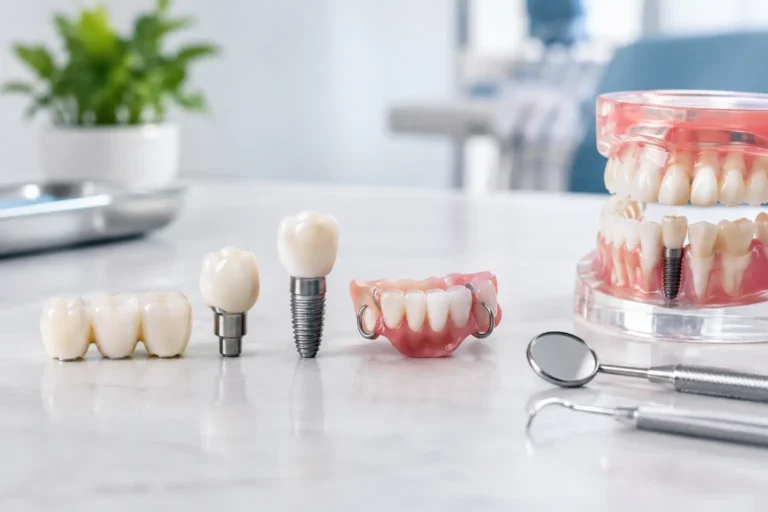
A partial denture replaces one or more missing teeth and is taken out for cleaning. It may be made from acrylic, metal or a flexible material, depending on the clinical situation and the design required. For patients with several missing teeth, it can restore appearance and provide useful support for speech and eating without altering healthy teeth extensively.
The trade-off is stability. A removable partial denture can move slightly during function, particularly when eating firmer foods, and some patients take time to adapt to its feel. Its fit should be reviewed over time because the gums and underlying bone can change shape after teeth are lost.
Complete dentures
When all teeth in an arch are missing, a complete denture remains a practical and well-established solution. A carefully made denture should support the lips and facial profile, provide natural-looking teeth and allow clear speech. It can also be an appropriate choice for someone who does not wish to undergo implant surgery or needs a more straightforward treatment route.
However, lower dentures are often less stable than upper dentures because there is less surface area for suction and the tongue is constantly in motion. Even a well-fitted denture has limits when it comes to biting force. This is why some long-term denture wearers eventually consider implant-retained or fixed full-arch teeth for greater stability.
Fixed dental bridges
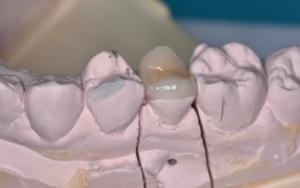
A conventional bridge uses the teeth on either side of a gap to support a replacement tooth. It can feel fixed, look natural and restore a single missing tooth or a short span of teeth. A bridge may be a sensible option where the supporting teeth already need crowns, or where implant placement is not suitable.
Its limitation is that the neighbouring teeth must be prepared to carry the bridge. Those supporting teeth need to remain healthy and strong over the long term. A bridge also does not replace the root of the missing tooth, so it cannot prevent the gradual bone changes that occur in the gap.
Resin-bonded bridges
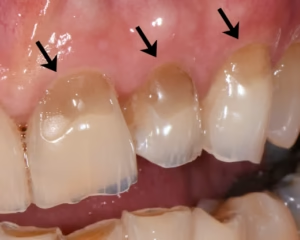
For a carefully selected front-tooth space, a resin-bonded bridge can be a conservative solution. It is attached to the back of an adjacent tooth with minimal preparation, making it particularly useful where preserving tooth structure is a priority.
This option is not designed for every situation. It may not be suitable where there is heavy biting pressure, an unstable bite or a larger gap. It can also detach and require re-bonding, although this is often manageable.
When an Implant-Supported Solution May Still Be Preferable
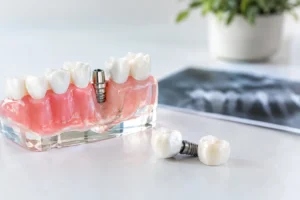
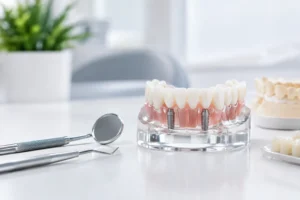
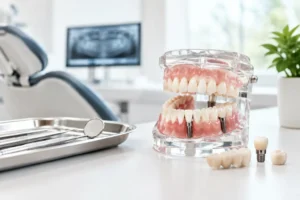
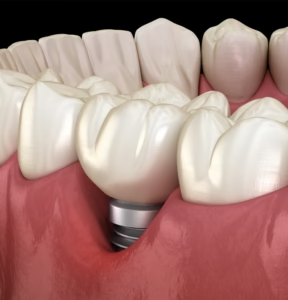
An implant is different from a bridge or denture because it replaces the tooth root as well as the visible tooth. For a single missing tooth, this can avoid preparing healthy neighbouring teeth. For patients missing many or all teeth, implants can provide support for a removable overdenture or a fixed full-arch restoration such as All-on-Four, All-on-Six or another individually planned All-on-X approach.
That does not mean more implants are always better. The number and position of implants must be determined by available bone, bite forces, the planned teeth and the desired maintenance pathway. A fixed full-arch solution may offer outstanding stability, but it also requires diligent cleaning and regular professional review. A well-designed removable prosthesis may be the better choice for some patients.
The Questions That Shape the Right Choice
Before choosing among dental implant alternatives, a prosthodontic assessment should consider more than the visible gap. The condition of your remaining teeth, gum health, bone volume, bite relationship, jaw joint comfort and smile line all influence the result. If you have worn dentures for years, it is also important to understand how much bone and facial support has been lost and what can realistically be restored.
A written plan should explain which teeth are worth retaining, which replacement options are clinically suitable, and the likely maintenance involved. It should also distinguish between a short-term fix and a solution designed for many years of function. This is particularly valuable where several failing teeth are involved, as treating each tooth in isolation can lead to a compromised result.
At Maison Dentaire, treatment planning is personally led by a registered specialist prosthodontist, with attention to appearance, bite function and long-term comfort. There is no single correct replacement for every missing tooth. The most reassuring next step is a considered consultation that lets you understand the choices clearly before committing to one.