
A small gap between the front teeth can be a distinctive feature. For others, it becomes the one detail they notice in every photograph or conversation. Closing it successfully is not simply a matter of making two teeth wider. The best veneer options for gaps must preserve natural tooth proportions, support a healthy bite and blend convincingly with the surrounding smile.
That is why a gap should be assessed as part of the whole mouth. Its width, the shape and position of the teeth, the gum line, enamel quality and the way the teeth meet all influence whether veneers are appropriate and which material will give the most refined result.
Best veneer options for gaps: the main choices
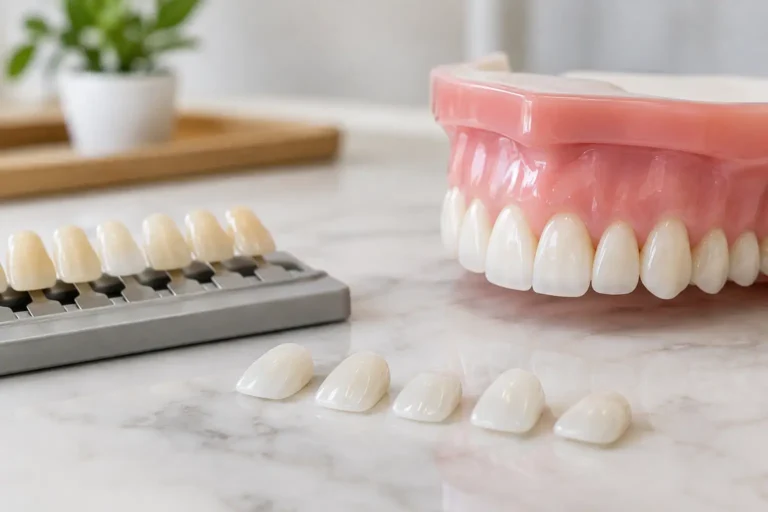
For a healthy, modest gap between otherwise well-positioned front teeth, porcelain veneers are often the most precise long-term option. They are thin, custom-made ceramic shells bonded to the front surface of the teeth. A skilled clinician can use them to adjust width, shape, colour and light reflection at the same time, rather than merely filling empty space.
Composite veneers can also be suitable, particularly where the change required is conservative or where a patient prefers a more reversible starting point. In some cases, direct composite bonding rather than a full composite veneer is sufficient to close a very small space. The right choice depends on the amount of correction needed and the condition of the natural teeth.
Porcelain veneers
Porcelain is valued for its translucency, colour stability and ability to mimic the way natural enamel reflects light. For gaps between the upper front teeth, these qualities matter. The two central incisors are highly visible, and even a technically closed gap can look artificial if the teeth are too opaque, too broad or too uniform.
Modern ceramic veneers can be planned very conservatively when there is enough enamel and the existing tooth shape allows it. Some preparation may still be necessary. This is not a failure of minimal dentistry; careful preparation can create room for the ceramic and prevent an over-contoured result that looks bulky or feels unnatural behind the lips.
Porcelain is generally more resistant to staining than composite. It can therefore be particularly appropriate for patients seeking stable colour over many years, provided they maintain good oral hygiene and attend regular reviews. It is also a strong option when a gap is accompanied by worn edges, uneven contours or a desire for a more comprehensive smile refinement.
Composite veneers and composite bonding
Composite resin is shaped directly on the tooth and hardened in layers. It can be an excellent conservative solution for a narrow gap, especially when the teeth already have pleasing colour and form. Little or no tooth preparation may be needed, and small repairs or adjustments are usually more straightforward than with porcelain.
The trade-off is that composite is more susceptible to staining, surface wear and loss of polish over time. Tea, coffee, red wine and smoking can make this more noticeable. It may require periodic polishing, repair or replacement to keep the result looking fresh.
Composite also demands careful artistic judgement. Adding resin only to the inner edges of two front teeth may close the space, but the final teeth must not appear square or disproportionately wide. The clinician needs to manage line angles, edge contours and the point where the teeth contact each other so the smile remains natural at conversational distance as well as close up.
No-preparation veneers: possible, but not automatic
No-preparation veneers are often presented as the simplest answer for gaps. They can be appropriate in selected cases where the teeth are slightly narrow, the gap is small and there is adequate space to add ceramic without creating excessive thickness.
However, no preparation is not always the most conservative outcome in practical terms. If ceramic is added to teeth that are already full in shape, the result can look prominent or collect plaque around the gum margin. A minimal amount of carefully planned enamel reduction may allow a more harmonious, cleansable and durable restoration.
The aim should not be to avoid preparation at all costs. It should be to preserve as much healthy tooth structure as possible while achieving a stable and natural result.
When veneers are not the right answer
Veneers work best on teeth with sufficient healthy enamel and a stable foundation. If a tooth has a large existing filling, significant fracture, extensive decay or has previously had root canal treatment, a crown may offer more complete protection than a veneer. If several teeth are worn, missing or failing, closing a front gap in isolation may not address the underlying bite problem.
Gum health also matters. A gap can appear larger because the gum tissue between the teeth has receded, leaving a dark triangular space near the gum line. Simply widening the teeth may improve this, but it may not eliminate it completely. The solution must be planned around the anatomy of the gum tissue rather than promised as a purely cosmetic correction.
Patients who clench or grind their teeth need particularly careful assessment. Veneers can be successful in these situations, but the bite must be designed thoughtfully and a protective night guard may be recommended. Without managing excessive forces, even beautiful ceramic can chip or debond prematurely.
Closing a gap without making teeth look too wide
This is the central aesthetic challenge. Two teeth should not be widened independently just because there is space between them. Their proportions must relate to each other, the adjacent teeth, the curve of the smile and the face.
A specialist-led plan will usually begin with photographs, digital records and an analysis of the bite. Where appropriate, a trial smile or mock-up can show how the proposed tooth shapes will look before final veneers are made. This is especially valuable for patients considering changes to more than two teeth, as subtle adjustments across several teeth can look more natural than placing all the correction on the central incisors.
The contact point between the teeth is also important. It should be positioned and shaped to reduce the visible gap while allowing the gum tissue to sit naturally. A gap that appears closed in a photograph but traps food or creates an awkward contour is not a successful result.
How to choose between porcelain and composite
Porcelain may be the better choice when colour stability, refined translucency and long-term surface polish are priorities. It is often well suited to patients who want a carefully planned smile makeover or who need changes in both tooth shape and shade.
Composite may be preferable where the gap is very small, tooth structure should be preserved to the greatest possible extent, or a patient wants a conservative repair that can be modified more easily in future. It can produce an attractive result, but it requires maintenance and realistic expectations about staining and wear.
Neither material is universally superior. The best option is the one that meets the clinical requirements without unnecessarily removing healthy tooth structure or compromising the bite.
Questions worth asking at a veneer consultation
Before proceeding, ask whether the proposed design has been assessed in relation to your bite, whether your gums are healthy enough for the planned margins, and how many teeth genuinely need treatment to achieve balanced proportions. It is also sensible to ask what preparation is expected, why it is necessary and how the result will be previewed.
A detailed written treatment plan should explain the material selected, the sequence of treatment, the likely maintenance requirements and the limitations specific to your mouth. This is particularly important if you have old restorations, signs of tooth wear or a history of chipping.
At Maison Dentaire, veneer planning is approached as restorative care rather than a quick cosmetic add-on. Each case is considered in relation to tooth preservation, gum health, function and the appearance you want to achieve.
A well-designed veneer should not announce itself. It should simply make the gap feel like it was never there, while allowing you to speak, smile and bite with confidence.