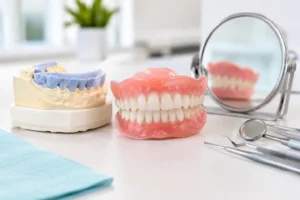

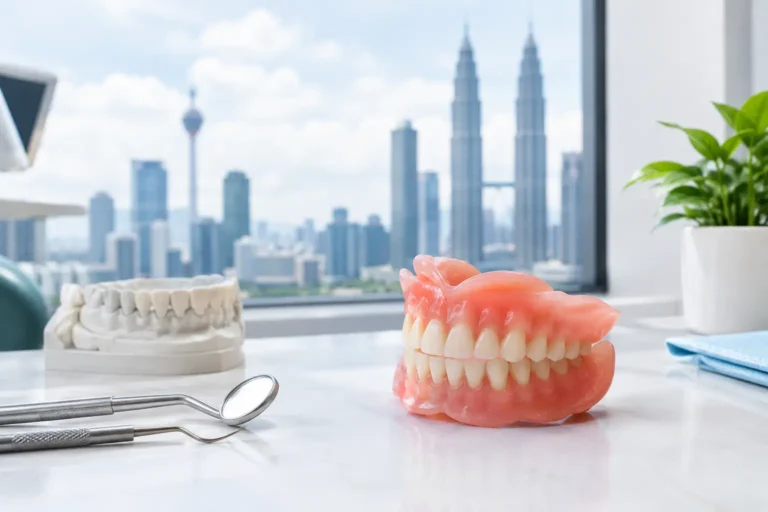
A denture that looks acceptable in the mirror but moves when you speak, rubs when you eat or leaves you avoiding favourite foods is not a successful result. Kuala Lumpur denture fitting should be treated as a carefully planned restorative process, not simply the collection of an appliance. The goal is a denture that supports your appearance, speech, bite and day-to-day confidence as reliably as possible.
For some people, a well-made removable denture is the most appropriate solution. For others, persistent looseness, advanced bone loss or difficulty managing a lower denture may mean that implant-supported options deserve consideration. The right answer depends on your mouth, your health, your expectations and what will remain maintainable over time.
Why denture fitting requires more than an impression
Dentures sit on living tissues that change over time. The gums compress under pressure, the jawbone gradually remodels after teeth are lost, and the muscles of the cheeks, lips and tongue can either help stabilise a denture or dislodge it. A denture therefore cannot be planned well from a quick impression alone.
A specialist assessment considers the shape and quality of the supporting ridges, the condition of any remaining teeth, the space available between the jaws and the relationship of the upper and lower teeth when you close together. It also considers facial support. Teeth that are too short, too prominent or incorrectly positioned can affect speech and alter the support of the lips.
The bite is especially important. If the contact between upper and lower dentures is uneven, the appliance may rock with each bite. This can cause sore areas, reduce chewing efficiency and make a technically well-made denture feel disappointing. Careful occlusal planning distributes forces more evenly and helps protect the tissues beneath.
The stages of a careful Kuala Lumpur denture fitting
A high-quality denture fitting is usually a sequence of appointments, not a one-visit event. The exact process varies according to whether you need a partial denture, a complete denture, an immediate denture after extractions or a replacement for an existing appliance.
Assessment and treatment planning
The first consultation should establish what is possible and what is sensible. This includes examining your gums, jaw relationship, existing restorations and any remaining teeth. If teeth are failing, the discussion should be honest: can they be predictably maintained, or will retaining them compromise the result?
Your clinician should also ask how you use your current denture. Does it lift while eating? Does the lower denture float? Are you struggling with certain sounds? Have you stopped smiling because the teeth look artificial? These details guide the planning more effectively than a generic denture design ever could.
At Maison Dentaire, denture treatment is planned by Dr. Lee Pei Nee, a registered specialist prosthodontist. This matters because prosthodontics is focused on restoring missing teeth while balancing appearance, bite function and the long-term health of the supporting tissues.
Precise records and impressions
Preliminary impressions provide a starting point, but final impressions are intended to capture the supporting tissues with greater accuracy. Depending on the clinical situation, this may involve custom-made trays that allow the borders of the denture to be shaped around the movement of the lips, cheeks and tongue.
This border detail is not a minor technicality. If a denture extends too far, it may rub or be displaced during normal movement. If it is too short, it may lose valuable support and stability. The aim is not to make a denture large, but to make it correctly shaped for your anatomy.
Records are then taken to establish how the jaws relate to one another. Where all teeth are missing, this stage helps determine the appropriate height of the bite and the position of the new teeth. Restoring lost facial support must be done thoughtfully. An overly opened bite can feel strained, while insufficient support may leave the face looking collapsed.
Trying in the proposed teeth
Before the final denture is completed, a trial version is often assessed. This is the point at which tooth position, tooth shade, lip support, speech and bite can be reviewed before the material is finalised.
Patients should use this appointment to speak normally, smile, read aloud if helpful and raise concerns. A natural denture does not need to look unnaturally perfect. Slight variation in tooth character, shape and arrangement can sometimes create a more believable result, but the design should always suit the individual rather than follow a trend.
Fitting, adjustments and review
Delivery day is the beginning of adaptation, not the end of treatment. Even with excellent planning, minor pressure points can become apparent only after a denture has been worn during meals and conversation. Follow-up adjustments are a normal and necessary part of care.
New dentures can initially feel full or unfamiliar. Saliva may increase temporarily, and speech can take practice. Most people adjust progressively, but ongoing pain, repeated ulceration or a denture that consistently lifts should not simply be endured. It warrants review.
What makes a denture comfortable and stable?
Comfort is usually the result of several factors working together: accurate fit against the gums, appropriate extension around the borders, balanced bite contacts and teeth positioned where the muscles can help rather than hinder stability. Oral tissues also need to be healthy. Inflammation, dry mouth and irregular bone contours can all affect how a denture feels.
Upper dentures often gain support from the palate and may be reasonably secure when the ridge shape is favourable. Lower complete dentures are more challenging because they have a smaller supporting area and must coexist with constant tongue movement. This is why a lower denture may feel less secure even when it has been made carefully.
Denture adhesive can be useful in selected situations, particularly during the adaptation period or where anatomy limits retention. It should not, however, be used to mask a denture that is badly fitting, cracked or long overdue for replacement. A review is the better starting point if adhesive has become essential every day.
When should implant support be considered?
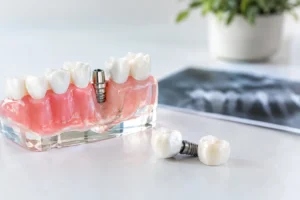
Conventional dentures remain a valid treatment, particularly when surgery is not appropriate or when a removable solution suits the patient’s needs. Yet implants can provide valuable additional support for people whose dentures repeatedly move, cause sore spots or limit their diet.
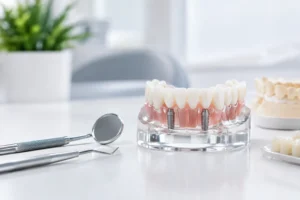
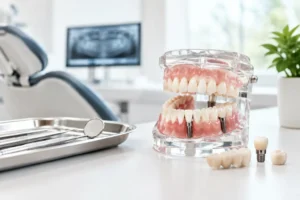
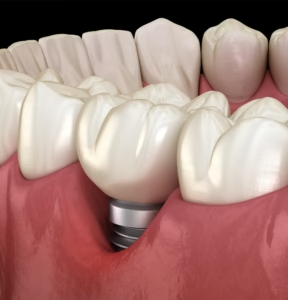
For a lower denture, a small number of implants may help retain a removable denture more securely. For patients seeking fixed teeth, full-arch solutions such as All-on-Four, All-on-Six or an individually planned All-on-X restoration may be considered where suitable. These are significant treatments and need proper assessment of bone, bite forces, medical history and maintenance needs.
Fixed implant teeth are not automatically better for every patient. They require committed cleaning and regular professional review. A removable implant-retained denture may offer an excellent balance of stability, hygiene access and practicality for some patients. The best plan is the one that you can care for confidently in the years ahead.
Looking after a new denture
Remove and clean your denture daily with a suitable denture brush and non-abrasive cleaner. Ordinary toothpaste can be too abrasive for many denture materials and may create fine scratches that retain plaque and stain. Clean your gums, tongue and any remaining natural teeth as well.
Unless you have been specifically advised otherwise, remove the denture overnight to give the tissues time to rest. Keep it safely in water or an appropriate soaking solution so it does not dry out or distort. Never try to adjust a denture yourself, as small changes can affect the bite and damage the appliance.
Your mouth changes even when you no longer have natural teeth. Regular reviews help identify loosening, worn teeth, changes in the supporting bone or early signs of tissue irritation. Relining, repair or replacement may eventually be needed to keep the denture functioning properly.
A carefully fitted denture should let you return to ordinary moments – ordering a meal without calculation, speaking without covering your mouth and smiling without wondering whether your teeth will move. If your current denture is stopping you from doing those things, a considered specialist assessment can clarify what can be improved and which solution genuinely fits your needs.