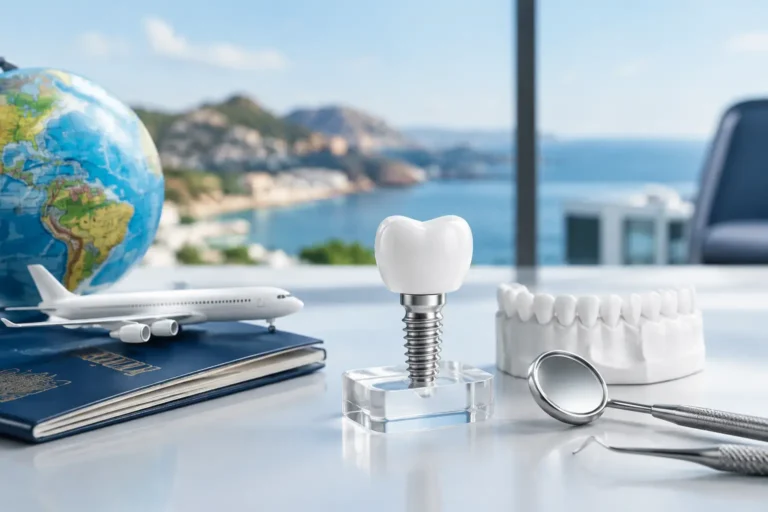
When treatment involves replacing several teeth or rebuilding a full arch, Medical tourism is not simply a question of choosing a destination and booking a flight. The quality of planning before you travel, the clinical skill behind the treatment, and the arrangements after you return home all influence the long-term result.
For patients considering dental implants, All-on-Four, All-on-Six or a more comprehensive full-mouth rehabilitation, the right overseas treatment can be a considered and positive choice. It should never be rushed. Complex restorative dentistry needs careful diagnosis, realistic timing and direct specialist oversight – not a standard package built around a short stay.
Medical tourism for complex dental treatment
Dental treatment abroad is often discussed as though every procedure follows the same pathway. In reality, a single crown and a full-arch implant restoration have very different clinical requirements. Replacing a full arch requires an assessment of the teeth, gums, bone support, bite, facial proportions and the way the jaws function together.
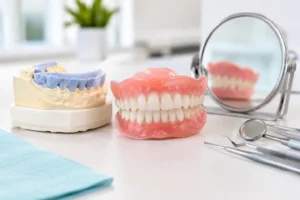
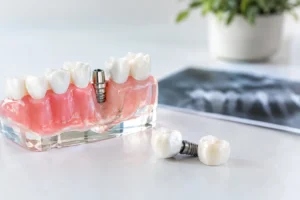
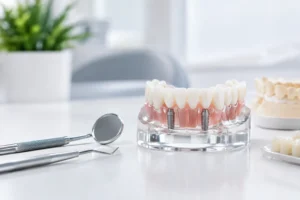
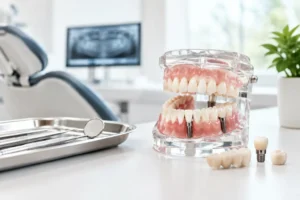
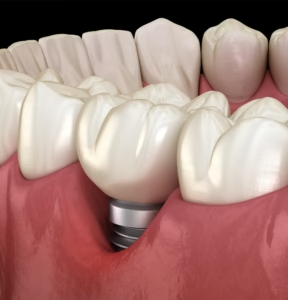
For patients with failing teeth or loose, uncomfortable dentures, a fixed implant solution can be life-changing. It can improve stability when eating and speaking, while restoring a more natural appearance. However, implant treatment is not a cosmetic shortcut. The implants, provisional teeth and final bridge must be planned as one functional system.
A specialist prosthodontist considers where the final teeth need to sit before deciding where implants should be placed. This prosthetically driven approach helps protect speech, bite comfort, facial support and the long-term cleansability of the restoration. It may also identify situations where a simpler or more conservative treatment is the better choice.
What should be planned before travelling?
A responsible process begins well before the first appointment. Recent dental records, radiographs and medical information can help establish whether travel is appropriate and how much time should be allowed. A remote discussion can be useful, but it does not replace a clinical examination, detailed imaging and a final diagnosis in person.
Your written treatment plan should explain the proposed treatment, the sequence of visits, the type of restoration planned and the likely need for provisional teeth. It should also set out what may change once the mouth has been examined directly. For example, teeth that appear manageable on a scan may prove unsuitable to retain once decay, fractures or infection are assessed clinically.
There is a trade-off between convenience and biological healing. Some patients are suitable for immediate teeth on the day implants are placed, while others require a staged approach to achieve a more predictable result. Immediate provisional teeth are not always the same as the final bridge. Healing, bite refinement and aesthetic adjustments take time, particularly where several teeth are being replaced.
Allow time for review, not only treatment
A short visit may be sufficient for assessment, preparation or the delivery of a straightforward restoration. Full-arch work usually needs more time and may require more than one visit. A sensible itinerary allows for examinations, imaging, surgery where indicated, review appointments and any necessary adjustment of temporary teeth.
Travelling immediately after treatment may be uncomfortable, especially following more extensive procedures. Patients should also consider the practicalities of rest, medication, soft-food arrangements and the possibility that a review is needed before flying home. Treatment plans should be built around clinical needs rather than flight schedules.
Questions worth asking a dental provider
Credentials matter most when treatment is complex. Ask who will diagnose, plan and carry out each stage of your care. In a specialist-led practice, the clinician responsible for the final bite, appearance and function should be directly involved throughout, rather than only reviewing the case at the end.
It is also reasonable to ask about the implant system, the materials used for the final restoration, and the approach to temporary teeth. Internationally recognised implant systems can support long-term maintenance because components and clinical support are more readily available. The most suitable system still depends on the anatomy of the case and the restoration being planned.
You should receive clear information about likely maintenance. Implant-supported teeth require daily cleaning and periodic professional review, just as natural teeth do. A fixed bridge is stable, but it is not maintenance-free. Patients who have struggled with dentures may find this responsibility worthwhile, provided it is understood from the outset.
Plan follow-up before you leave
The best Medical tourism arrangements include a realistic follow-up plan. Ask how the clinic will support you once you are home, what records you will receive, and how concerns are handled from abroad. Keep copies of your scans, implant details, treatment summary and restoration information for future care.
For international patients visiting Kuala Lumpur, choosing a clinic that is straightforward to reach can make review appointments less stressful during a longer treatment stay. At Maison Dentaire, complex restorative care is personally planned and delivered by a registered specialist prosthodontist, with attention to bite function, aesthetics and long-term oral health.
The most reassuring choice is rarely the fastest itinerary. Choose a treatment team that is willing to explain what your case needs, what can wait, and how your new teeth will be cared for long after the journey home.