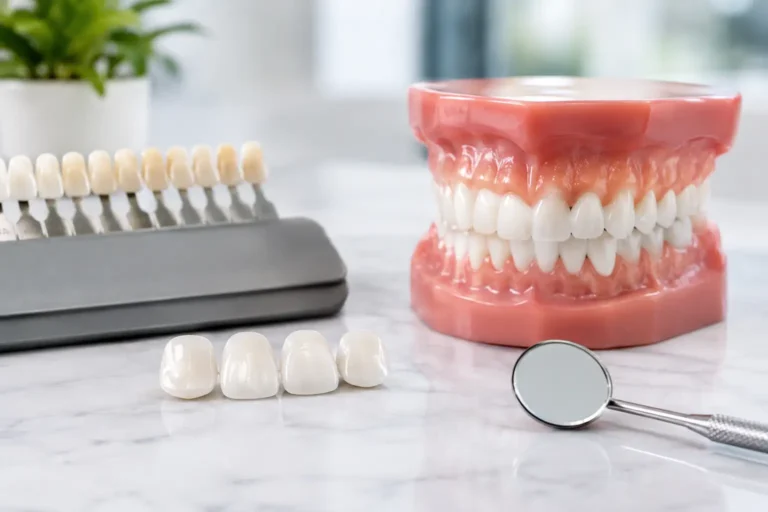
A veneer can transform a tooth that looks worn, uneven, discoloured or out of proportion with the rest of the smile. Yet dental veneers are not simply a cosmetic covering placed on the front of teeth. They are a precise restorative treatment that should be planned around the condition of each tooth, the way you bite, and the appearance you want to achieve over the long term.
For patients who want a refined, natural-looking smile, the quality of planning matters as much as the final porcelain. A beautifully shaped veneer that is too bulky, poorly matched in colour or placed without considering bite forces may look acceptable initially but create problems later. The goal is not to make every tooth look identical. It is to create a smile that suits your face, functions comfortably and preserves as much healthy tooth structure as possible.
What are dental veneers?
Dental veneers are thin, custom-made restorations bonded to the front surface of teeth. They are most often made from high-quality ceramic, chosen for its translucency, strength and ability to reflect light in a way that resembles natural enamel. Composite resin veneers are another option in selected situations, although they generally do not offer the same resistance to staining and wear as ceramic.
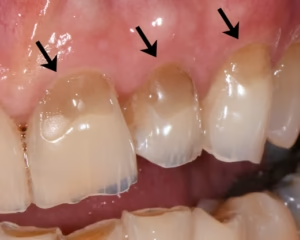
Veneers can improve the appearance of teeth affected by persistent staining, small chips, minor cracks, irregular edges, spaces, uneven shapes or mild crowding. They are commonly used on the front teeth, where even small changes can have a significant effect on the overall smile.
The right treatment may involve one veneer, several veneers or a broader smile makeover. It depends on the concern being addressed. Treating only one noticeably darker or damaged tooth requires meticulous shade matching. Creating a more balanced smile across several front teeth requires attention to proportion, symmetry and the way the teeth show when you speak and smile.
When veneers may be a suitable treatment
Veneers are often suitable when the underlying teeth are healthy enough to support them and the changes required are primarily on the visible front surfaces. They can be a conservative option where the tooth needs modest reshaping rather than full coverage.
A person with naturally small lateral incisors, for example, may benefit from veneers that improve proportion without removing unnecessary tooth structure. Someone with old discoloured restorations or enamel staining that does not respond predictably to whitening may also be a candidate. Worn front teeth can sometimes be rebuilt with veneers as part of a carefully planned bite rehabilitation.
However, suitability is never determined by appearance alone. Teeth with extensive decay, large existing fillings, significant fractures or previous root canal treatment may be better protected with crowns. Where tooth loss, gum disease or unstable bite forces are present, those concerns need to be assessed and managed before aesthetic treatment is considered.
The importance of bite and function
Your front teeth do more than show when you smile. They guide certain movements of the jaw and are exposed to repeated forces when you bite, chew and speak. If this relationship is not assessed, veneers may chip, loosen or cause discomfort.
This is particularly relevant for people who grind or clench their teeth, have worn edges, headaches associated with jaw tension, or a history of restorations breaking. Grinding does not automatically rule out veneers, but it changes the planning. The design, material, thickness and bite adjustment must be considered carefully, and a protective night guard may be recommended after treatment.
A specialist prosthodontic assessment looks beyond the individual tooth. It considers how the upper and lower teeth meet, how the jaw moves, where enamel has been lost, and whether existing restorations are stable. This is the difference between placing veneers for a quick visual change and planning a result designed to remain comfortable and durable.
How much tooth preparation is needed?
One of the most common questions about dental veneers is whether teeth need to be filed down. The honest answer is that it depends. Some cases allow very minimal preparation, while others require a small amount of enamel to create sufficient space for the ceramic and avoid an over-contoured result.
A veneer should not make a tooth look thick or feel prominent behind the lip. At the same time, unnecessary preparation should be avoided. Careful diagnostic planning helps determine where space can be created, whether through small adjustments to tooth shape, changes in position, or conservative preparation limited largely to enamel.
So-called no-preparation veneers can be appropriate in selected cases, particularly where teeth are naturally small or set back. They are not automatically the most conservative choice for every smile. If there is insufficient space, adding material without preparation can produce a bulky appearance and make cleaning more difficult. A good plan is based on the individual teeth, not a label.
Seeing the proposed result before treatment
For more involved cases, a diagnostic design can be used to plan tooth proportions and preview the intended changes. This allows adjustments to be discussed before the final ceramics are made. Temporary restorations may also be used where appropriate, giving the patient an opportunity to assess the proposed length, shape and speech.
This stage is valuable because aesthetic preferences are personal. Some patients prefer a softer, more natural character; others want a brighter, more defined look. The aim is to establish a result that feels right for the individual rather than following a standardised template.
Choosing shade, shape and material
Natural teeth are not flat white blocks. They have subtle variations in translucency, surface texture and colour from the gumline to the edge. High-quality ceramic veneers can reproduce these details, but only when the design is tailored to the patient.
Shade selection should account for the surrounding natural teeth, skin tone, lip shape and the amount of tooth visible in conversation. If only a few veneers are being placed, matching neighbouring teeth is especially demanding. Whitening may be discussed beforehand if the patient wants the natural teeth to be lighter, as veneers themselves do not respond to whitening once fitted.
Shape also matters. Longer teeth may create a more youthful appearance for some people, but excessive length can affect speech or look out of balance with facial features. Squarer edges, rounded corners and surface texture each create a different impression. These are small decisions, but together they determine whether the finished smile looks convincing.
What treatment usually involves
Veneer treatment begins with a detailed consultation and examination. This may include photographs, scans or impressions, radiographs where clinically required, and an assessment of the gums, existing restorations and bite. A written treatment plan should explain what is being recommended, why it is appropriate and what alternatives may be available.
Once the design is agreed, the teeth are prepared conservatively where needed. Temporary veneers may be fitted while the final restorations are made. At the fit appointment, each veneer is assessed for colour, shape, marginal accuracy and bite before being bonded into place.
Bonding is a highly technique-sensitive stage. The tooth surface and ceramic must be prepared correctly, and moisture control is essential. Small inaccuracies can affect fit, appearance and longevity. For this reason, veneers should be delivered with the same care given to any precision restoration.
Looking after veneers over time
Ceramic veneers do not decay, but the teeth and gums around them still require regular care. Brush twice daily with a non-abrasive toothpaste, clean between the teeth every day and attend review appointments as advised. Good gum health is central to keeping veneer margins looking natural.
Avoid using veneered teeth to open packaging, bite hard objects or crack shells. If you clench or grind, wear any protective guard prescribed for you. Veneers can last well for many years, but they are not indestructible and may eventually need repair or replacement.
If a veneer chips, feels rough, becomes loose or changes at the edge near the gum, arrange an assessment promptly. Early review often allows a simpler solution than waiting until a small issue becomes more extensive.
A considered decision, not a cosmetic shortcut
Veneers can be an excellent choice when they solve a genuine aesthetic or restorative concern with minimal intervention. They are less appropriate when the underlying issue is tooth weakness, active disease, unstable bite forces or expectations that cannot be achieved predictably.
At Maison Dentaire, veneer planning is approached as part of the whole mouth, not as an isolated cosmetic procedure. A specialist-led consultation can clarify whether veneers, crowns, whitening alongside conservative restoration, or no treatment at all is the soundest path. The best result is one that looks like it belongs to you and continues to feel comfortable every time you smile, speak and eat.