If your denture lifts when you speak, shifts when you eat, or leaves you avoiding certain foods altogether, the question is no longer whether something feels wrong. It is whether there is a better long-term option. For many patients, the best alternative to dentures is not one single treatment for everyone, but a carefully planned solution based on bone support, gum health, bite, medical history, and how many teeth need replacing.
That distinction matters. Removable dentures can still be the right choice in some cases, but they are not the only answer for missing teeth. If you want more stability, stronger chewing function, and a more natural feel, implant-based treatment is often the option worth serious consideration.
What is the best alternative to dentures?
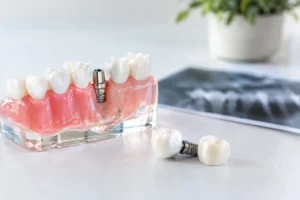
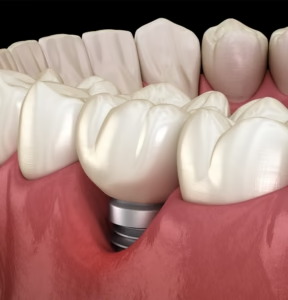
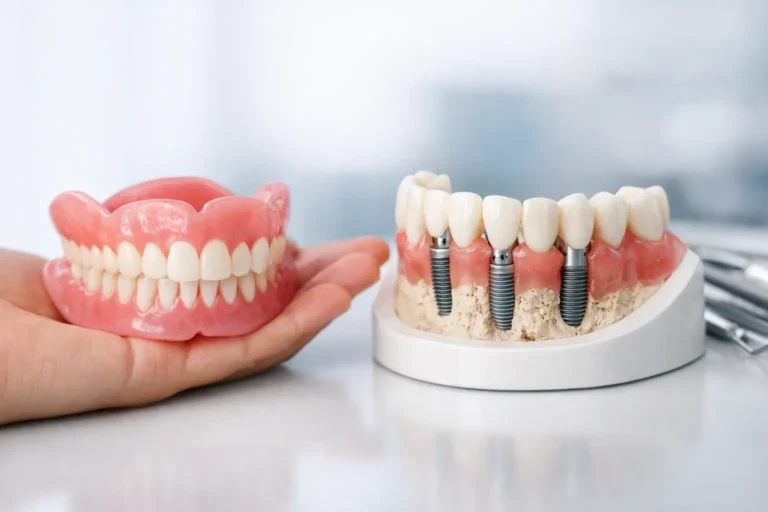
In straightforward terms, dental implants are usually considered the best alternative to dentures, particularly for patients who want teeth that feel more secure and function more like natural teeth. Implants are placed in the jawbone and act as artificial tooth roots. They can support a single crown, a bridge, or a full arch of fixed teeth.
The reason patients often prefer implants is simple. Traditional dentures rest on the gums and rely on suction, muscle control, and fit. Over time, the jawbone beneath missing teeth tends to shrink, and that can make dentures loosen further. Implants change that equation by anchoring the replacement teeth more firmly and helping to preserve bone.
That said, there is an important point of nuance here. The best alternative depends on whether you are missing one tooth, several teeth, or all teeth, and whether you want a removable or fixed solution. A person missing all upper and lower teeth has different needs from someone with a few failing back teeth.
Why many patients look beyond conventional dentures
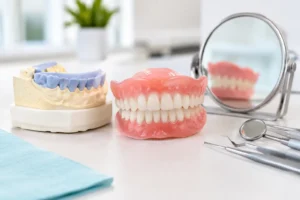
Dentures can restore appearance and basic function, but they also come with compromises. Some patients adapt very well. Others never truly get used to them.
The most common frustrations are movement during eating, sore spots, reduced bite strength, changes in speech, and concern about appearance. Lower full dentures are often especially difficult because they have less surface area for retention and can feel unstable even when made carefully.
There is also the longer-term issue of bone loss. Once teeth are removed, the body gradually resorbs bone in those areas because it is no longer being stimulated by tooth roots. This can lead to facial collapse, thinner ridges, and a denture that becomes progressively less secure.
For patients who want more than a removable appliance, these drawbacks are often what prompt the search for a more stable alternative.
The main alternatives to dentures
Dental implants for single or multiple missing teeth
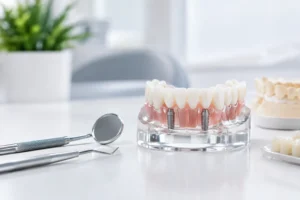
If you are missing one tooth or several teeth in different areas, individual implants or implant-supported bridges can be an excellent option. Unlike a traditional bridge, implants do not always require neighbouring healthy teeth to be cut down for support.
This is one of the clearest advantages. Treatment can replace the missing teeth while preserving more of the surrounding natural structure. Patients also tend to find implant restorations more comfortable because they do not rely on a plate covering the palate or a removable base sitting on the gums.
Implants are strong, but they are not automatic. Success depends on bone volume, gum health, bite forces, and careful planning. A patient who grinds heavily at night, for example, may still be a suitable candidate, but the design of the final teeth must take that into account.
Implant-supported dentures
Some patients want more security than a conventional denture but do not necessarily need or want a fully fixed bridge. In these cases, an implant-supported overdenture can be a very practical middle ground.
This type of denture clips onto implants, which improves stability significantly compared with a standard removable denture. It still comes out for cleaning, but it tends to feel firmer during speaking and eating. For lower dentures in particular, this can make a meaningful difference to daily comfort.
An implant overdenture is often more cost-effective than a full fixed implant bridge, but it remains removable. For some people that is perfectly acceptable. For others, especially those seeking the closest experience to natural teeth, a fixed solution may still be preferable.
Full arch fixed implant teeth
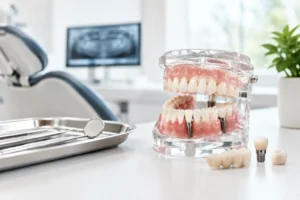
For patients who have lost all teeth in an arch, or whose remaining teeth are failing and cannot be predictably maintained, full arch implant rehabilitation is often the strongest alternative to dentures. This includes treatments commonly known as All-on-4, All-on-6, or All-on-X.
These approaches use a carefully planned number of implants to support a full set of fixed teeth. The teeth are not removed by the patient, and the overall aim is to restore stability, aesthetics, and function in a way that feels far more secure than a conventional denture.
This is often the answer for patients who say, very simply, “I want my teeth back.” They want to eat with confidence, speak without worrying about movement, and avoid the daily inconvenience of adhesives or loose-fitting plates.
However, full arch treatment is not just about placing implants. It requires prosthodontic planning, evaluation of bite, assessment of smile line, gum support, jaw relationships, and long-term maintenance. A full arch case can look attractive at first glance yet fail functionally if the bite is poorly managed or the design is not suited to the patient.
Bridges as an alternative in selected cases
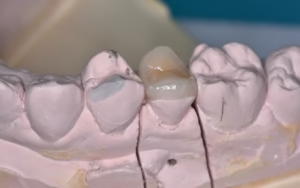
A conventional fixed bridge can still be a good alternative to a denture when only one or a few teeth are missing and the adjacent teeth already need crowns. In the right situation, this can be efficient and effective.
But bridges are not always the best first choice if the supporting teeth are otherwise healthy. They also do not prevent bone loss in the missing tooth area in the same way implants can. This is why bridges remain useful, but more selective, in modern treatment planning.
Best alternative to dentures for a full mouth
When patients ask about the best alternative to dentures for replacing a full set of teeth, the answer is usually between two implant-based paths: an implant-supported overdenture or a fixed full arch implant bridge.
The choice depends on priorities. If your main concern is better retention and lower cost than a full fixed solution, an overdenture may be enough. If your priority is a non-removable set of teeth with stronger confidence during eating and speaking, fixed full arch treatment is often the better fit.
Neither option should be chosen on marketing terms alone. “Permanent teeth” can mean different things in different clinics. What matters is the exact prosthetic design, the materials used, the number and position of implants, whether bone grafting is needed, and how the bite will be managed over time.
Who may not be suitable for implants straight away?
Implants are often the best solution, but not every patient can proceed immediately. Some have significant bone loss, active gum disease, uncontrolled diabetes, heavy smoking habits, or medical factors that raise surgical risk. Others may need extractions, healing time, or staged treatment before implants become realistic.
This does not always rule treatment out. It often means planning needs to be more detailed. In specialist-led care, the aim is not to force a patient into the most ambitious option. It is to recommend the option that is clinically sound and sustainable.
There are also cases where a very well-made denture remains the most sensible answer, especially if surgery is not appropriate or the patient prefers a non-surgical route. Good treatment planning is not about proving that one treatment is superior in every situation. It is about matching the treatment to the patient.
What to ask before choosing an alternative
If you are comparing options, ask how the treatment will affect chewing, speech, cleaning, longevity, and future maintenance. Ask whether the teeth will be removable or fixed. Ask what happens if bone volume is limited. Ask who is planning the bite, not just placing the implants.
These questions matter because long-term success is not only about having implants in the bone. It is about how the final teeth are designed to function every day, year after year.
At a specialist prosthodontic clinic such as Maison Dentaire, that planning process is central. The goal is not simply to replace missing teeth, but to restore comfort, appearance, and function in a way that is tailored to the individual rather than selected from a standard package.
If you are tired of managing a loose denture or worried that your remaining teeth are reaching the end of the road, it is worth having the conversation properly. The best alternative to dentures is the one that fits your mouth, your expectations, and your long-term oral health, not just the one that sounds most appealing on paper.