
Type in dental implants near me and you will see page after page of clinics promising a new smile, fast treatment, or attractive package prices. What you often do not see at first glance is the part that matters most – who is planning your case, how carefully it is being assessed, and whether the result is being designed to last.
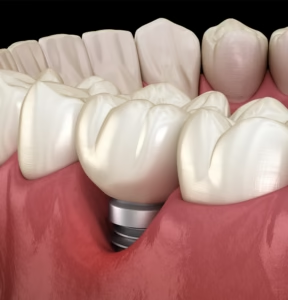
Dental implants are not a commodity. They are a medical and restorative treatment that must work biologically, mechanically and aesthetically. If you are replacing one missing tooth, several teeth, or considering full-arch treatment because dentures feel unstable or your remaining teeth are failing, the right provider matters as much as the implant itself.
What to look for when searching for dental implants near me
A useful search should lead you to more than the nearest clinic. It should help you identify the right level of expertise for your situation. The most important question is not simply whether a clinic offers implants, but who is personally diagnosing, planning and restoring them.
This is where specialist input makes a real difference. Implant treatment involves bone levels, gum health, bite forces, smile design, the position of neighbouring teeth and the long-term maintenance of the restoration. If these factors are rushed or treated as standard for every patient, problems can appear later as looseness, fracture, food trapping, speech issues, gum recession or an unnatural appearance.
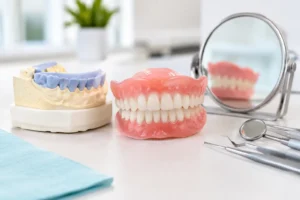
Patients with more complex needs should be especially careful. If you have worn dentures for years, have multiple broken or missing teeth, or have been told you may need All-on-Four, All-on-Six or another full-arch solution, your treatment should not begin with a sales conversation. It should begin with a proper clinical assessment and a detailed plan.
Not all implant cases are equally straightforward
A single implant in an otherwise healthy mouth is very different from a full-mouth rehabilitation. Both can be successful, but they require different levels of planning. One of the reasons patients feel overwhelmed is that many clinics present implants as if every case follows the same script.
That is rarely true. Bone volume may be limited. Teeth may have drifted into the space. Existing crowns or bridges may affect the bite. Gum thickness can influence the final appearance. Medical history matters too, especially if healing may be slower or if there is a history of gum disease.
For full-arch cases, the planning becomes even more critical. Replacing all teeth in one jaw is not simply about placing several implants and attaching a bridge. The position of the teeth, lip support, facial profile, phonetics, chewing balance and ease of cleaning all need careful attention. A result can look acceptable in photos and still feel wrong in daily life.
Why the person planning your case matters
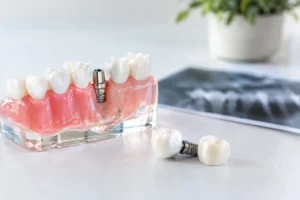
Implants succeed long term when surgical placement and restorative design are aligned. In plain terms, the implant must be in the right place for the final tooth or bridge, not just in a place where it was easiest to insert. That seems obvious, but it is one of the main reasons poor outcomes happen.
A prosthodontic approach brings the final result into the plan from the start. That means considering appearance, bite, jaw movement and how the implant restoration will function over many years. It is particularly important for patients who want fixed teeth instead of removable dentures, because comfort alone is not enough if the bite is unstable or the design is difficult to maintain.
The questions worth asking at your consultation
When comparing options, patients often focus first on cost. Cost matters, but it should not be the only filter. A lower fee may reflect a simpler case, a different implant system, less detailed planning, or a more standardised workflow. Sometimes that is perfectly reasonable. Sometimes it is false economy.
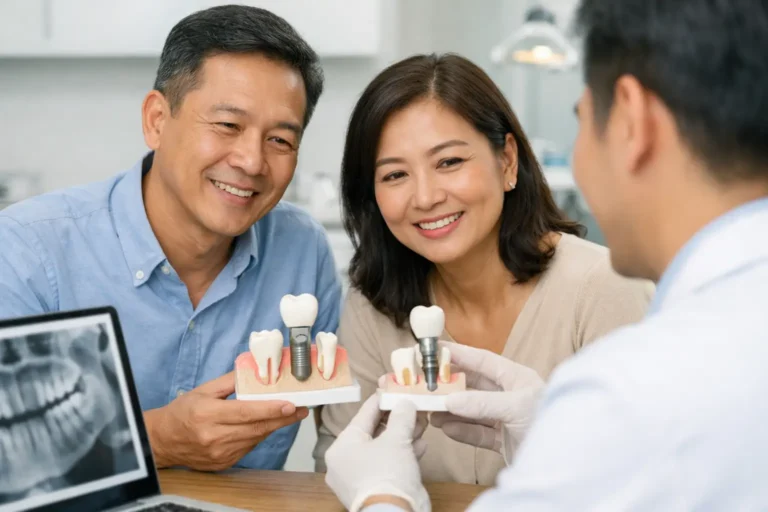
A better consultation should help you understand what is being recommended and why. Ask who will personally carry out the planning and treatment. Ask what imaging and records are needed. Ask whether bone grafting, sinus work or staged treatment may be necessary. Ask what type of final restoration is planned and how it will be maintained.
You should also expect clarity about alternatives. In some situations, a bridge, a specialist-made denture, or a phased approach may be more sensible than immediate implant treatment. Good clinicians do not recommend implants simply because a patient asks for them. They recommend what is appropriate for the mouth in front of them.
Red flags when comparing clinics
Be cautious if the conversation is dominated by discounts, limited-time offers or promises that everyone can leave with fixed teeth immediately. Immediate loading can be excellent in selected cases, but it is not suitable for all patients. Bone quality, bite force, general dental condition and the stability of the implants on the day all influence whether it is wise.
Another concern is vague pricing without a written breakdown. Implant treatment often has several components, including assessment, imaging, surgery, temporary teeth, final restorations and maintenance. If costs are not explained clearly from the outset, misunderstandings tend to follow.
It is also reasonable to ask about the implant system being used. Established premium systems with strong clinical evidence and long-term support are not the same as budget alternatives chosen mainly on price.
Dental implants near me for denture wearers and full-arch patients
If you are living with loose dentures, sore spots, or the frustration of not being able to bite confidently, implants can be life-changing. But the right solution depends on your goals, anatomy and budget.
Some patients want a fixed full-arch bridge that stays in place and feels closer to natural teeth. Others may benefit from implant-retained dentures that clip in securely but remain removable for cleaning. Neither option is automatically better. It depends on chewing needs, lip support, cleaning ability, bone availability and how much treatment you are willing to undergo.
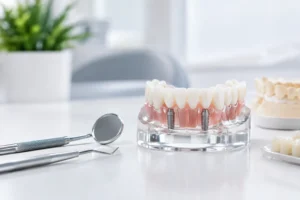
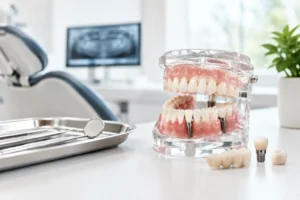
All-on-Four, All-on-Six and All-on-X treatments are often presented as simple categories, but they are really planning concepts rather than one-size-fits-all products. The number and position of implants, the design of the bridge, and whether treatment is carried out immediately or in stages should be tailored to the individual. Patients with advanced wear, collapsing bites or significant bone loss usually need more detailed assessment than an online quote can provide.
This is where specialist-led treatment is valuable. At a clinic such as Maison Dentaire, the emphasis is not on pushing every patient towards the same full-arch package, but on designing a restoration that suits the face, bite and long-term oral health.
Why long-term success is about more than osseointegration
Many patients are told that implants fuse with bone, which is true. But successful osseointegration is only the beginning. A well-integrated implant can still fail functionally if the crown is poorly shaped, the bite is unbalanced, or hygiene around the restoration is difficult.
Long-term success depends on several factors working together. The implant must be placed correctly, the restoration must distribute force properly, the gums must remain healthy, and the patient must be able to clean the area effectively. This is why careful planning and review are not luxuries. They are part of the treatment.
Aesthetic success also deserves proper attention. Front tooth implants, in particular, require precision. Small differences in position can affect gum contours, symmetry and the way light reflects off the tooth. For patients who smile broadly or have high cosmetic expectations, that detail matters.
Choosing local care without choosing hastily
Searching locally makes sense. Follow-up is important, and implant treatment is not usually a single visit event. You may need diagnostics, surgery, review appointments, fitting of temporary restorations, final impressions and maintenance over time. Having your care within reasonable reach can make the whole process less stressful.
For patients in Kuala Lumpur and across the Klang Valley, convenience should still sit alongside expertise. A clinic being nearby is helpful, but it should not outweigh the quality of planning and the level of clinician involvement. If your case is complex, travelling slightly further for the right care may be the better decision.
The best implant treatment rarely feels rushed. It should feel measured, well explained and specific to you. When a clinician takes time to assess your mouth properly, explain trade-offs honestly and provide a detailed written plan, that is usually a sign you are looking at healthcare rather than marketing.
If you are currently searching for dental implants near me, use that search as a starting point, not the final answer. The right choice is the clinic that treats your implant case as a long-term restoration of comfort, function and confidence – not just a space to fill.