
So, you’ve got missing teeth. Maybe it’s getting harder to chew, your speech feels different, or you’ve simply stopped smiling as much as you used to.
Or perhaps you’re using dentures but find them loose, uncomfortable, or inconvenient.
If you’re exploring fixed options to replace missing teeth, this guide walks you through everything you need to know about dental bridges in Malaysia — what they are, how they work, and whether they suit your needs.
What Are Dental Bridges?
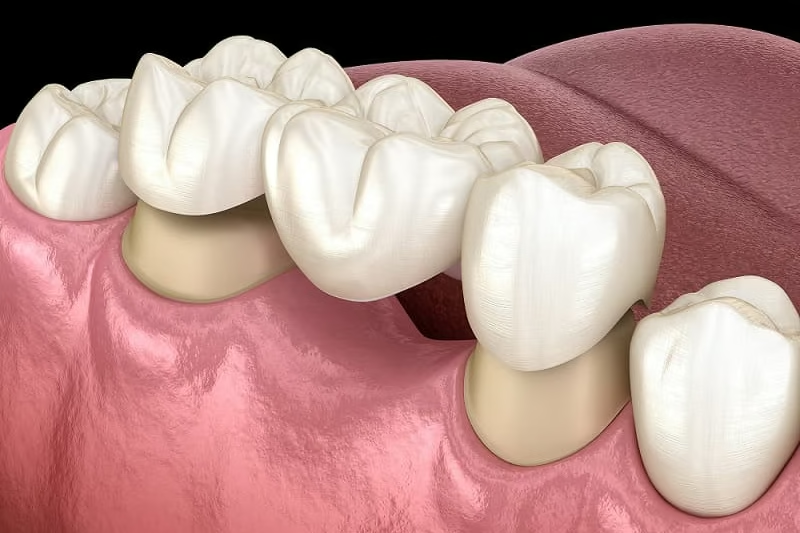
A dental bridge is a fixed replacement for one or more missing teeth. Unlike dentures, a bridge is cemented in place so you don’t have to take it out every night, and it doesn’t shift around during meals or… fly off when you’re blowing birthday candles.

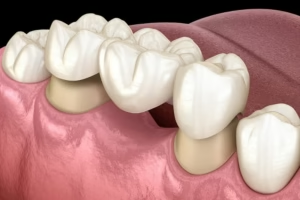
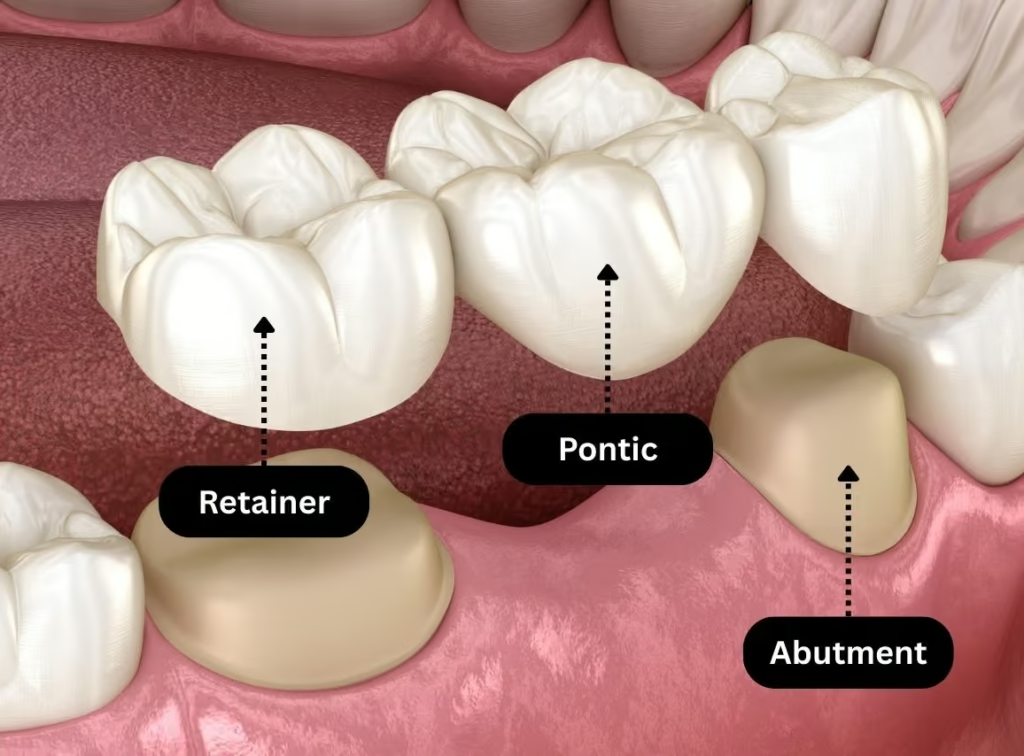
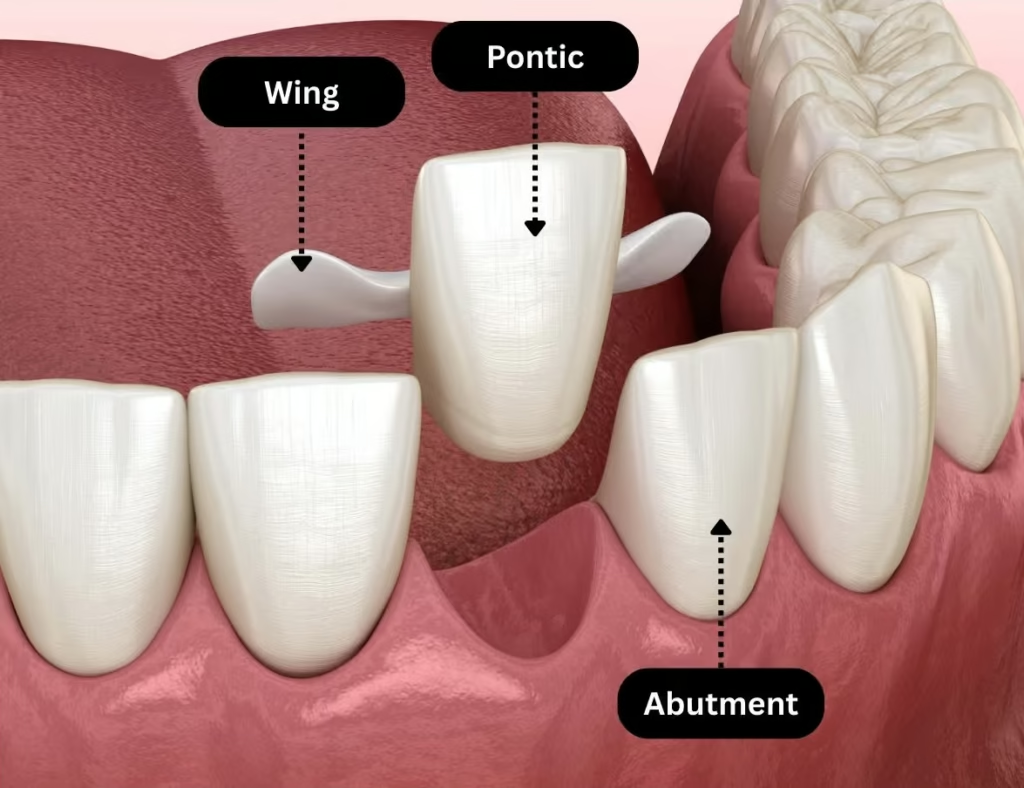
A typical bridge has three components:
- Retainer or wing – part of the bridge that attaches to the abutment
Pontic – the suspended artificial tooth that replaces the missing tooth
Abutment – natural tooth or implant which retains or supports the bridge
Dental bridges can help restore:
Chewing function
Speech
Aesthetics and facial shape
Confidence
Maintain tooth alignment
By filling the gap, bridges prevent surrounding teeth from drifting out of position.
What to Expect During the Dental Bridge Procedure
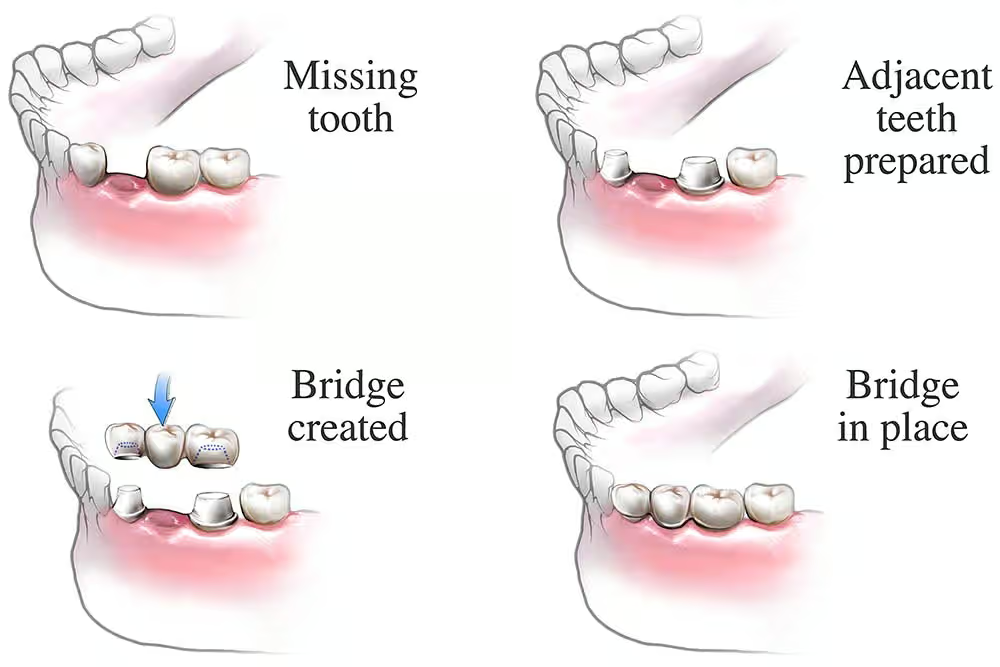
1. First Visit: Assessment & Preparation
Your dentist will examine the area and may take X-rays to make sure the teeth next to the gap are strong enough to support a bridge.
If those teeth will be used for support, they are reshaped to create enough space for the bridge. An impression or digital scan is then sent to a dental laboratory to fabricate your customised bridge.
A temporary bridge is placed to protect your teeth and maintain appearance.
2. Second Visit: Fitting the Final Bridge
Your permanent bridge is tried in, checked for bite, shape, comfort, and appearance. Once everything fits well, it is cemented securely.
You may require follow-up visits, especially if implants are involved.
Types of Dental Bridges in Malaysia
Choosing the right bridge depends on the number of missing teeth, the strength of the supporting teeth, your bite, aesthetic needs, and budget.
1. Traditional Dental Bridge
This is the most common type.

Features:
Supported by the teeth on both sides of the gap
These supporting teeth require reshaping to accommodate the bridge
Strong and durable
Suitable for replacing one or a few missing teeth
Best suited for:
Patients with healthy supporting teeth
Back teeth or areas requiring strong support
Pros:
Strong, reliable, long-lasting
Good aesthetics
Cons:
Supporting teeth need to be reshaped
Since the bridge is all one piece, cleaning it takes a little extra finesse — but nothing you can’t handle
2. Cantilever Bridge
A cantilever bridge attaches to only one neighbouring tooth.
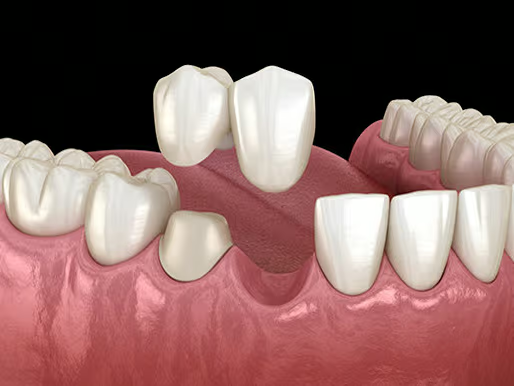
Features:
Only one tooth needs reshaping
Not ideal for areas with heavy biting forces (e.g., molars)
Think of it like a one-sided lever—effective only if the anchor tooth is strong.
Pros:
More conservative than a traditional bridge
Useful when only one side has a suitable supporting tooth
Cons:
Puts extra stress on the single supporting tooth
Higher risk of the supporting tooth becoming damaged or loosened
3. Resin-Bonded Bridge (also known as a Maryland Bridge)
Often used for replacing missing front teeth, this bridge uses a metal or ceramic wing bonded to the back surfaces of the neighbouring teeth.
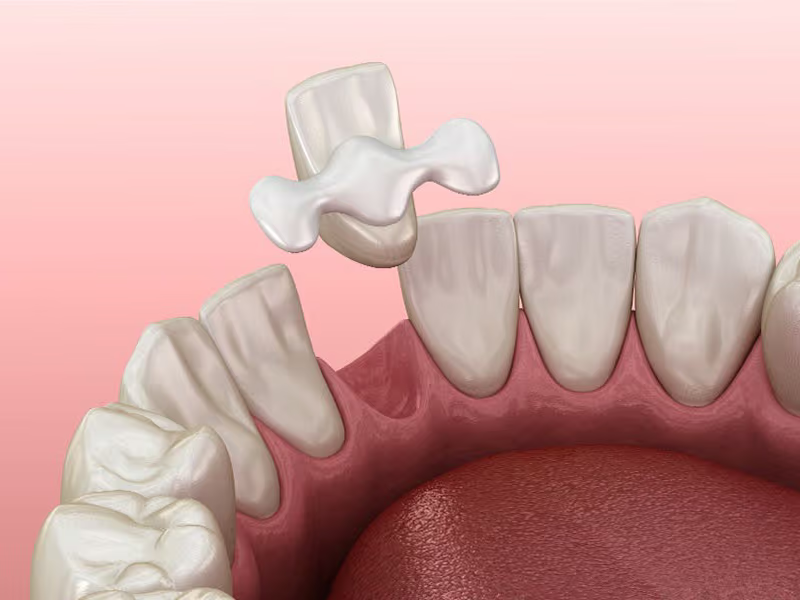
Features:
Minimal or no tooth preparation
Conservative and reversible
Best for front teeth where chewing forces are lighter
Pros:
Preserves most natural tooth structure
Aesthetic and cost-effective
Cons:
May debond under heavy biting
Not suitable for patients with deep bite, heavy grinding, or large restorations on the supporting teeth
4. Implant-Supported Bridge
Instead of relying on natural teeth, this bridge is supported by dental implants surgically placed in the jawbone.

Features:
Very stable and strong
Helps maintain jawbone
Suitable for replacing multiple missing teeth
Requires surgery and longer treatment time
Pros:
Very secure
Does not affect neighbouring teeth
Helps prevent bone shrinkage
Cons:
Higher initial cost
Requires adequate bone and good oral health
Longer time frame compared to traditional bridges
Advantages of Dental Bridges
1. Quick and Predictable Treatment
Most dental bridges can be completed within 2-3 weeks, making them one of the fastest fixed options for replacing missing teeth. There’s no months-long healing period like implants, so you regain chewing function and aesthetics relatively quickly.
2. No Surgery Needed (Except for Implant Bridges)
Traditional, cantilever, and resin-bonded bridges are non-surgical procedures. This makes them suitable for patients who prefer to avoid surgery, have medical conditions that limit surgical options, or want a more straightforward treatment process.
3. Natural Look and Feel
Modern materials such as porcelain or zirconia closely mimic natural teeth in colour and translucency. Once fitted, bridges blend seamlessly into your smile, giving you a natural appearance when speaking, laughing, or chewing.
4. Stable and Comfortable
Because bridges are cemented in place, they don’t shift or loosen like removable dentures. Patients often appreciate that bridges feel more natural and reliable during daily activities, especially eating.
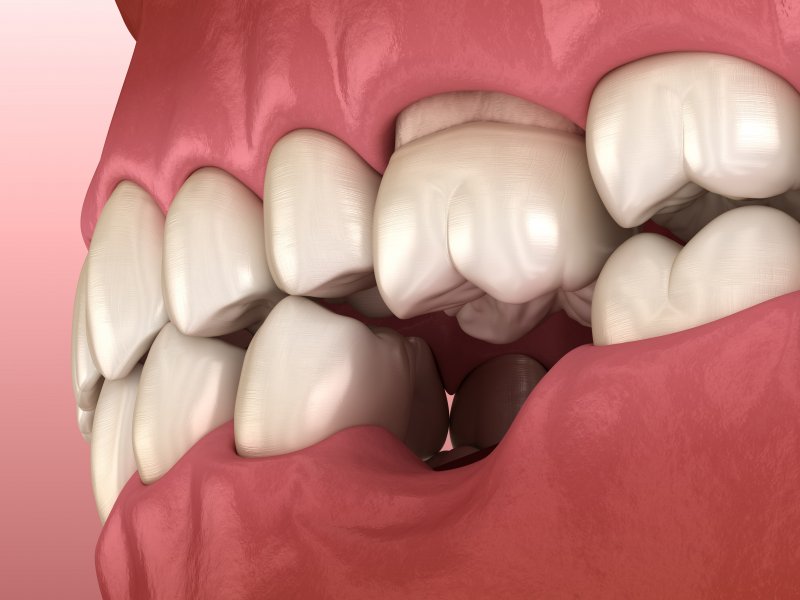
5. Prevents Shifting of Neighbouring Teeth
Gaps in the mouth can cause nearby teeth to drift into the empty space over time. This leads to misalignment, bite changes, and even gum problems. A bridge acts as a stabiliser, keeping your remaining teeth in their proper positions.
6. Easy to Maintain
Bridges don’t require special removal or soaking. You maintain them with normal brushing and flossing, with just a bit of additional care under the pontic. Once you get the hang of it, cleaning becomes part of your regular routine.
7. Generally More Affordable Than Implants
Bridges offer a balanced combination of aesthetics, function, and cost. They restore missing teeth without the higher upfront cost associated with surgery and implants, making them a practical option for many patients.
Disadvantages of Dental Bridges
1. Supporting Teeth May Need Reshaping
Traditional and cantilever bridges require the neighbouring teeth to be reshaped to hold the bridge securely. This may reduce some natural tooth structure, and in certain cases, the supporting teeth may become more prone to sensitivity or future risk of needing a root canal treatment.
2. Does Not Prevent Bone Shrinkage in the Missing Area
Since the bridge sits above the gumline, it doesn’t stimulate the jawbone where the tooth is missing. Over time, the bone in that area may slowly shrink, which is a natural process when a tooth is lost. This can eventually lead to a small gap forming between the pontic and the gum.
3. Limited Lifespan
With proper care, bridges can last between 5 to 15 years, and sometimes even longer. However, they may eventually need replacement due to wear and tear, decay around the supporting teeth, changes in your bite, or gum recession.
4. Requires Extra Cleaning Technique
Even though bridges are easy to care for, cleaning under the pontic requires a bit of skill. Plaque can accumulate beneath the bridge if not cleaned properly. Tools like floss threaders, superfloss, interdental brushes, or water flossers can help keep the area healthy.
5. Not Suitable for All Cases
If the supporting teeth are weak, shaky, heavily restored, or decayed, a bridge may not hold properly. In cases where the gap is too large or the bite forces are too strong, alternatives like implants or partial dentures may be more appropriate.
Frequently Asked Questions (FAQs)
1. How long do dental bridges last?
Most bridges last 5–15 years depending on oral hygiene, diet, bite habits, and dental check-ups. Some last much longer with excellent care.
2. Does getting a bridge hurt?
Local anaesthesia keeps the procedure comfortable. Mild sensitivity is normal for a few days.
3. Will the bridge look natural?
Yes. Modern materials are customised to match the colour and shape of your natural teeth.
4. How do I clean a dental bridge?
Brush twice daily
Floss under the bridge using floss threaders or superfloss
Use interdental brushes or water flossers if recommended
Regular dental check-ups
5. Can a bridge replace several teeth?
Yes. Depending on support, bridges can replace multiple missing teeth in a row.
6. What are the alternatives?
Dental implants (more long-term, preserve bone)
Removable dentures (more affordable, non-invasive)
Your dentist will help you choose the best option for your needs.
Should You Get a Dental Bridge?
Dental bridges offer a stable, natural-looking, and relatively fast solution for replacing missing teeth — without the inconvenience of removable dentures. They’re a great option for many people, especially if implants aren’t suitable or simply not your preference.
Not sure which option fits you best?
The easiest way to find out is to request a consultation at Maison Dentaire Specialist Clinic. Our prosthodontist will carefully assess your teeth, bite, and overall oral health to determine the treatment that’s right for you.
Every smile is unique — and a personalised assessment is the most reliable way to choose the right solution with confidence.