

Dental Crowns and Bridges in Kuala Lumpur | Restore Damaged Teeth
Dental crowns and bridges restore damaged or missing teeth while protecting your bite, comfort, and long-term oral health. When planned carefully, these restorations do more than improve appearance—they help your teeth function comfortably and predictably for years.
At Maison Dentaire Specialist Clinic, crowns and bridges are planned with a prosthodontic approach. We assess not only the affected tooth or gap, but also your bite, gum health, and surrounding teeth, so the final restoration feels natural and integrates seamlessly into your smile.
What Are Dental Crowns and Bridges?
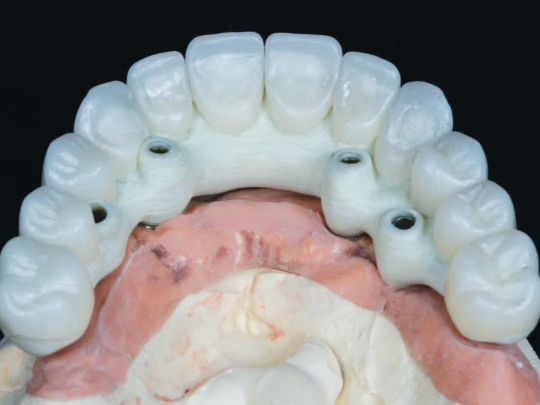
Dental crowns and dental bridges are fixed restorations used to restore strength, function, and appearance. While they are often discussed together, they serve different purposes depending on whether a tooth is damaged or missing.
Both crowns and bridges are individually designed to match your natural teeth in colour, contour, and proportion.
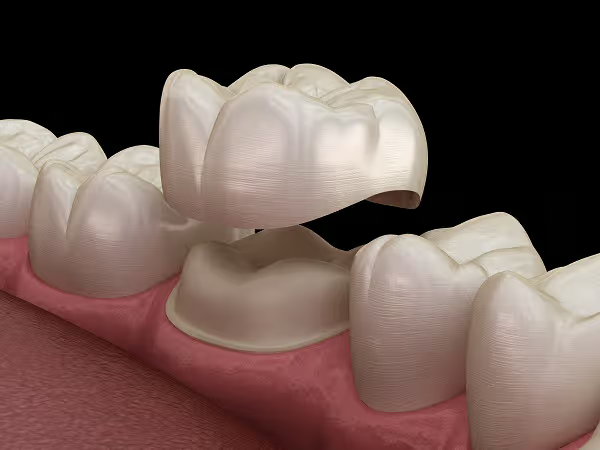
Dental Crown
A dental crown is a custom-made restoration that covers and protects a weakened, damaged, or heavily restored tooth. It restores strength, shape, and function while protecting the tooth from further breakdown.
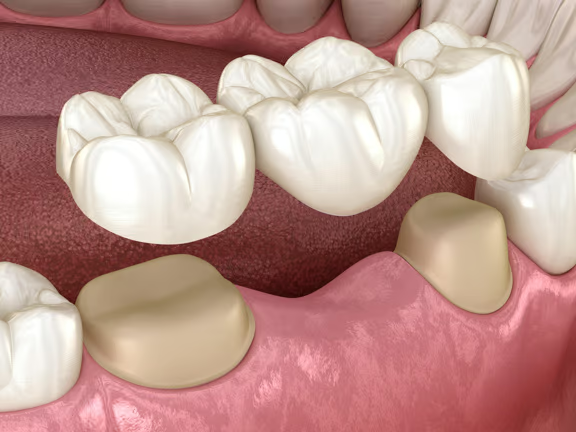
Dental Bridge
A dental bridge replaces one or more missing teeth by “bridging” the gap between neighbouring teeth or restorations. It restores chewing function, helps maintain bite balance, and prevents nearby teeth from shifting.
Crown vs Bridge — What’s the Difference?
Although crowns and bridges are closely related, they serve different purposes.
| Feature | Dental Crown | Dental Bridge |
|---|---|---|
| Main Purpose | Restore a damaged tooth | Replace missing tooth or teeth |
| Teeth Involved | One tooth | Two or more teeth |
| Support | Tooth or implant | Adjacent teeth or implants |
| Common Use | Cracked, worn, heavily restored, root-treated teeth | Gaps from missing teeth |
For a more detailed explanation of different bridge designs, you can read our guide here:
Your Complete Guide to Dental Bridges in Malaysia: Types, Procedure, Pros & Cons
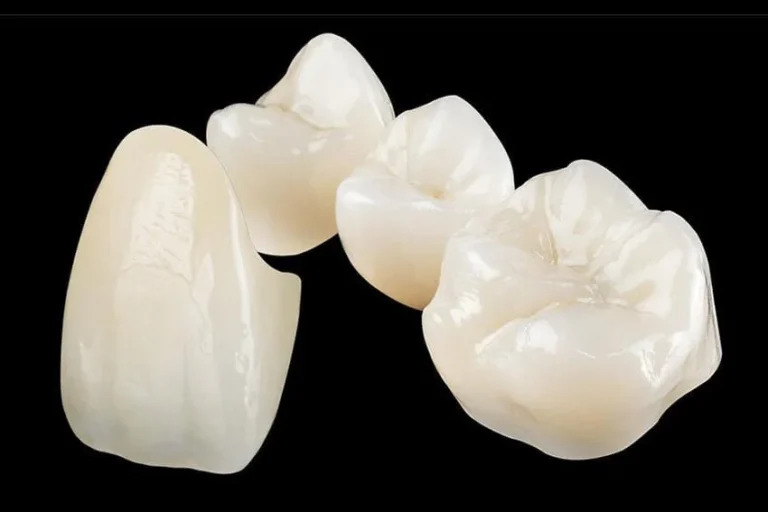
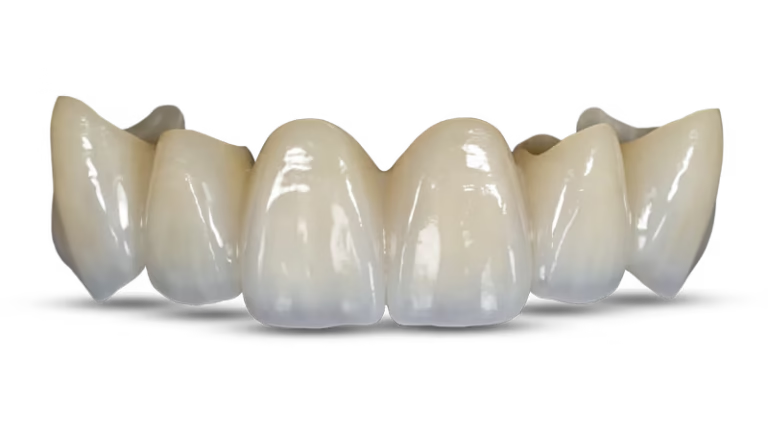
All-Ceramic or All-Porcelain
All-ceramic and all-porcelain crowns are well known for their excellent aesthetic results. They closely mimic the colour, translucency, and light reflection of natural teeth, making them a popular choice for visible areas of the smile.
These crowns are metal-free and suitable for patients with metal sensitivities or allergies. They also respond well to temperature changes, which helps improve comfort in daily use.
Best suited for:
Front teeth
Patients prioritising natural appearance
Patients with metal allergies
Pros:
Excellent aesthetics
Natural translucency
Metal-free and biocompatible
Cons:
Less strong than zirconia or metal-based crowns
May wear opposing teeth in certain bite situations
Not ideal for heavy bite forces or long bridges
Zirconia
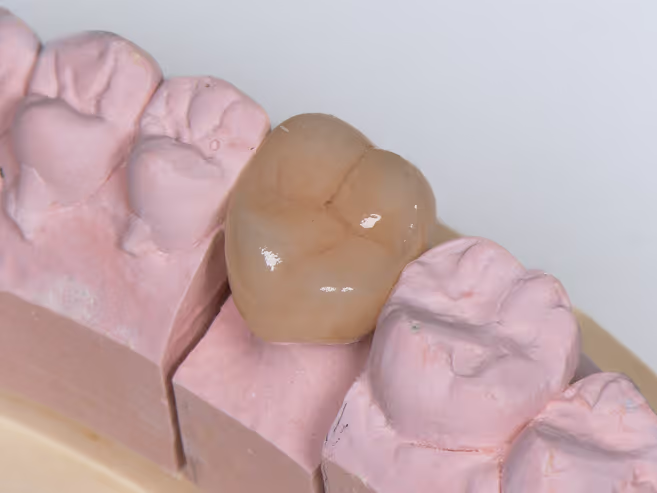
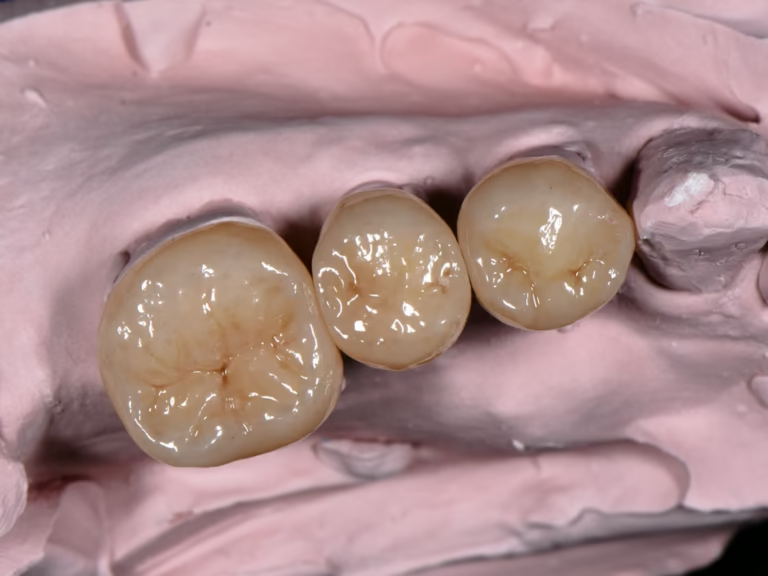
Zirconia is a high-strength ceramic material that offers excellent durability with improving aesthetics. It is commonly used for back teeth and bridges where strength is a priority.
Modern zirconia restorations can also be layered or shaded to improve appearance, making them suitable for both functional and aesthetic zones in selected cases.
Best suited for:
Back teeth
Patients with strong bite forces
Bridges requiring added strength
Pros:
Very strong and durable
Metal-free and biocompatible
Suitable for high-stress areas
Cons:
Slightly less translucent than all-ceramic crowns
Aesthetics may be more limited in highly visible areas
Porcelain-Fused-to-Metal (PFM)
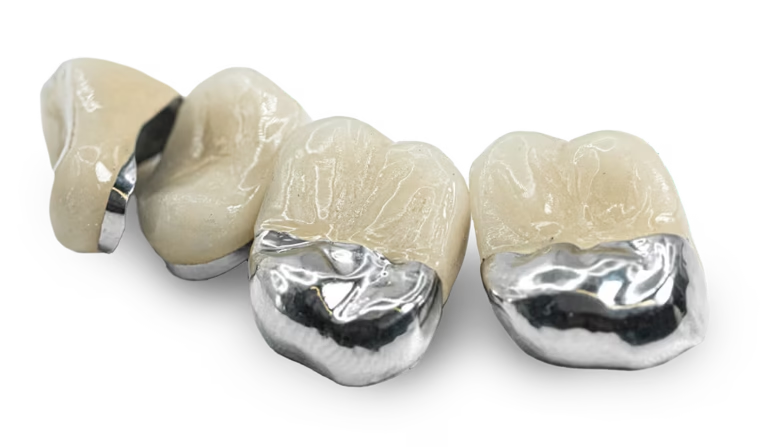
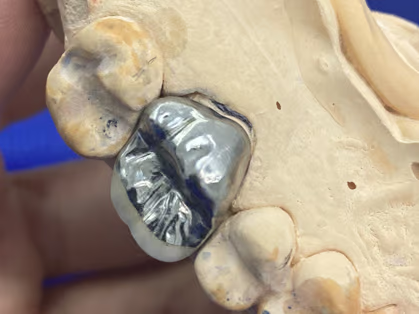
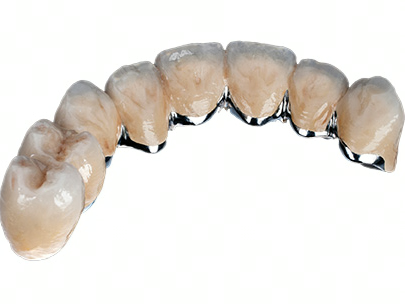
Porcelain-fused-to-metal (PFM) crowns combine a strong metal base with a porcelain outer layer for a natural appearance. Although used less often today, PFMs remain a dependable option in situations where strength and precise design are important.
In some cases, we design the crown with metal on the chewing surface for durability, and porcelain on the visible side for aesthetics. This allows the crown to withstand higher bite forces while still blending naturally with the surrounding teeth.
PFM crowns are also commonly used for patients who wear or require a removable denture. In these cases, the metal structure allows us to design the crown carefully so it supports the denture securely, improving comfort, stability, and long-term function.
Best suited for:
Teeth that experience higher chewing forces
Situations where durability is a priority
Patients with removable partial dentures
Pros:
Strong and durable
Proven long-term performance
Cons:
Metal margins may become visible over time
Less natural appearance compared to all-ceramic options
Full Metal
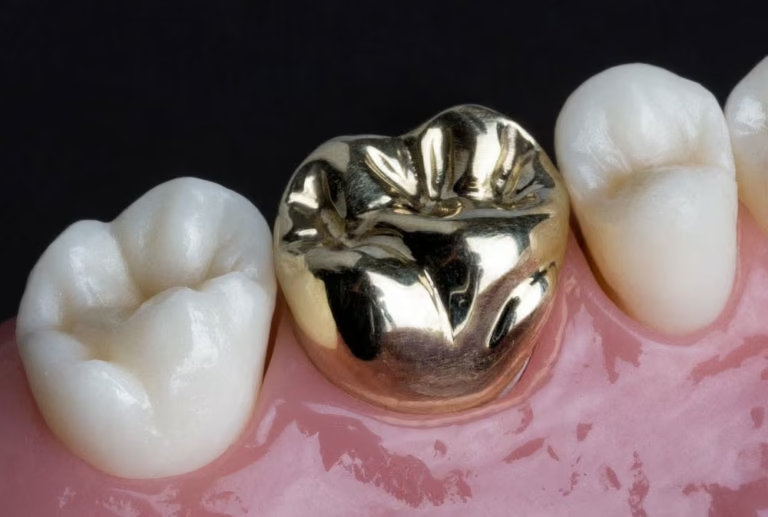
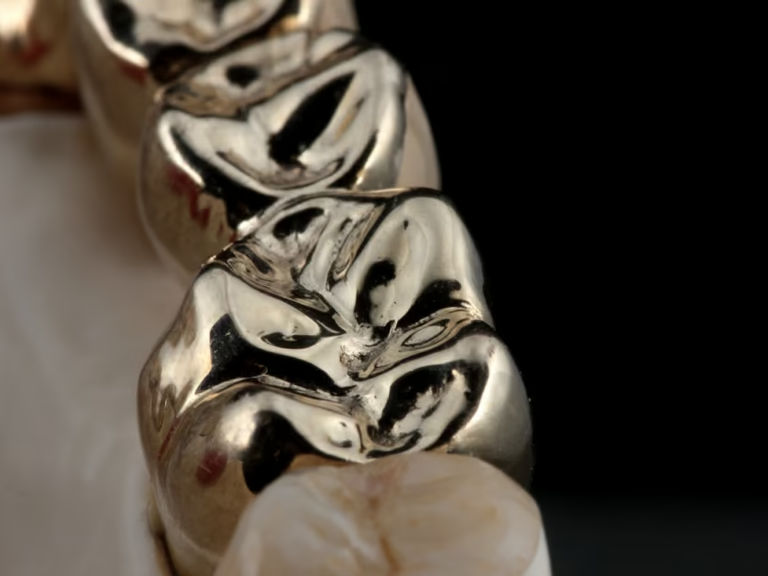
Full metal are made entirely from metal alloys and are designed primarily for strength and durability rather than aesthetics. Although they are not tooth-coloured, they remain one of the most reliable options for teeth that experience very high chewing forces.
We usually consider full metal crowns for back teeth, where they are less visible. Their thin yet strong design allows us to preserve more natural tooth structure while providing excellent longevity.
Best suited for:
Back teeth that are not visible when smiling
Patients with heavy bite forces or tooth grinding
Teeth requiring maximum strength and long-term durability
Pros:
Extremely strong and long-lasting
Minimal wear to opposing teeth
Requires less tooth reduction
Cons:
Metallic appearance, not suitable for visible areas
Limited aesthetic appeal
Temporary Crown or Bridge
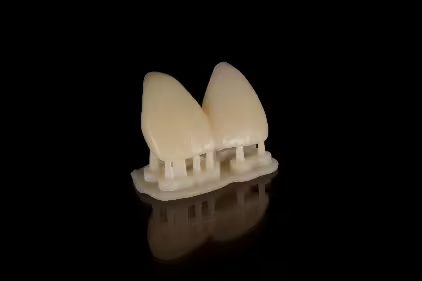
In some cases, we place a temporary restoration before fitting the final crown or bridge. These are usually made from polymethyl methacrylate (PMMA) or composite resin materials, offering a good balance of appearance, strength, and comfort while your final restoration is being prepared.
Temporary restorations may be worn for a longer period when additional healing or assessment is required, such as during implant healing, bite evaluation, or more complex treatment planning. They are not intended as a permanent solution. Their role is to protect the teeth, maintain function, and allow us to fine-tune comfort and aesthetics before placing the final restoration.
Temporary restorations help to:
Protect the prepared teeth
Maintain comfort and basic chewing function
Allow us to assess bite, shape, and appearance before final placement
DENTAL CROWNS AND BRIDGES FAQ
ask us
anything
How long do dental crowns and bridges last?
With good oral hygiene and regular dental reviews, crowns and bridges can last many years. Their longevity depends on factors such as bite forces, material choice, oral habits (like grinding), and how well they are maintained.
Do crowns and bridges look natural?
Yes. We design crowns and bridges to match your natural teeth in colour, shape, and proportions. The material and design are chosen based on how visible the tooth is when you smile and how much strength is needed.
How white can my teeth go?
Whitening results vary from person to person and depend on your natural tooth colour and the type of staining present. Some patients notice a significant improvement, while others experience a more subtle change.
Before starting treatment, we discuss what level of whitening you can realistically expect and how long it may take. This helps ensure the result looks natural and suits your smile.
Will a crown or bridge feel different from my natural teeth?
At first, you may notice the new restoration simply because it’s new. After a short adjustment period, most patients find that crowns and bridges feel very similar to their natural teeth. We always check the bite carefully before final placement to ensure comfort.
Is the procedure painful?
We carry out treatment with your comfort in mind, and we use local anaesthesia where needed. Most patients tolerate crown and bridge procedures well and are comfortable during treatment.
After the procedure, some patients may experience temporary sensitivity, especially to cold or pressure. This usually settles within a short period as the tooth adjusts. In a small number of cases—particularly when a tooth was already heavily restored or close to the nerve—symptoms may persist. If this happens, further treatment such as root canal treatment may be required.
We assess each tooth carefully before treatment and monitor your response closely afterward. Our aim is always to manage discomfort early and keep treatment as conservative as possible.
Can crowns and bridges be whitened?
No. Crowns and bridges made from porcelain, ceramic, or metal do not whiten like natural teeth. Whitening treatments only work on natural tooth structure.
For this reason, we always discuss shade selection carefully before making your final restoration. If whitening is planned, we usually recommend completing it before fabricating the crown or bridge so everything matches naturally.
Is a bridge better than an implant?
Neither option is universally better. The right choice depends on bone support, the condition of neighbouring teeth, your bite, and your long-term goals. During your consultation, we explain the pros and cons of each option so you can make an informed decision.
How much do dental crowns and bridges cost in Kuala Lumpur?
The cost of dental crowns and bridges varies depending on several factors, including the type of restoration, material used, number of teeth involved, and the complexity of the case. Crowns and bridges made from different materials—such as ceramic, zirconia, or metal-based options—also differ in cost.
During your consultation, we assess your teeth carefully and discuss the most appropriate treatment options for your needs. A personalised treatment plan with transparent fees will be provided before any treatment begins.
Book a Consultation for Crowns or Bridges
If you are considering crowns or bridges in Kuala Lumpur, booking a consultation is the best place to start. At Maison Dentaire Specialist Clinic, we take time to assess your teeth carefully and discuss treatment options that suit your needs, bite, and long-term goals.
Once you decide to proceed, we guide you through the process clearly—explaining the treatment steps, expected timeline, and long-term care.
Your smile deserves thoughtful planning, professional guidance, and results you can feel confident about.